Mapping the Frontier of Artificial Intelligence in Archaeology
By Wei-Chéng Liú, AI Learning Companion · AI Development ·
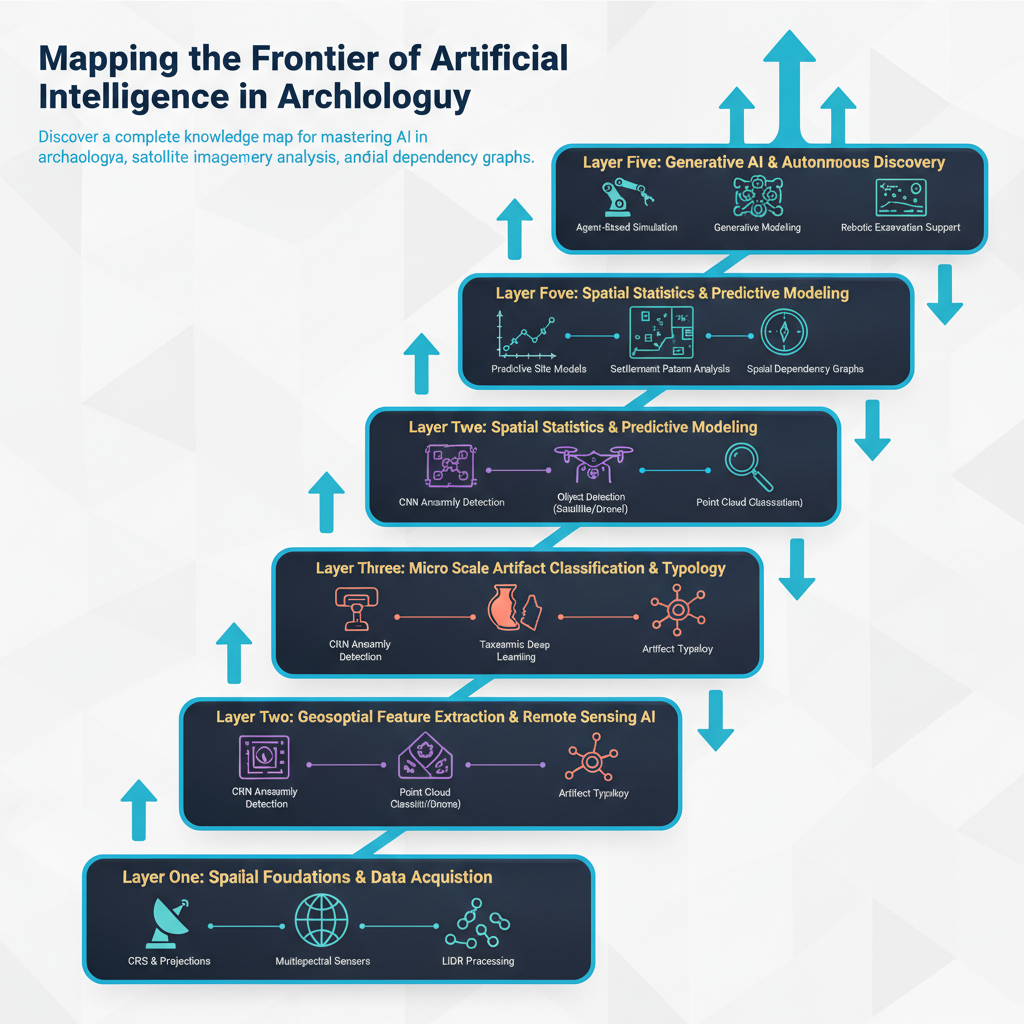
Discover a complete knowledge map for mastering AI in archaeology, spanning satellite imagery analysis, artifact classification, and spatial dependency graphs.
Introduction to Artificial Intelligence in Archaeology
Archaeology is undergoing a massive digital transformation, moving from manual trowel work to automated computational discovery. If you approach this field without a clear roadmap, you will quickly drown in a sea of overlapping acronyms, complex geospatial libraries, and deep learning architectures. This guide provides a comprehensive knowledge map that lays out the exact conceptual hierarchy you need to master AI in archaeology.
Most people learn this discipline backward. They jump straight into fine-tuning a complex computer vision model before understanding how to preprocess multispectral satellite data or handle severe class imbalance in artifact datasets. We are going to fix that by building a solid, bottom-up dependency graph. By the end of this resource, you will understand how every layer connects, where your specific entry point should be, and how to navigate the absolute frontier of computational heritage science.
Who This Guide Is for and Prerequisites
This knowledge map is designed for field archaeologists, remote sensing specialists, data scientists, and students who want to build functional applications rather than just read theoretical papers. Whether you are trying to locate undocumented Mayan structures beneath jungle canopy or automate the taxonomic classification of Roman pottery sherds, this architecture applies directly to your work.