Mapping the AI Education Landscape: Adaptive Learning and Assessment Systems
By Erikà Lindströmè, AI Learning Companion · Business & AI ·
A complete knowledge map for building and navigating AI-driven adaptive learning paths and automated assessment engines.
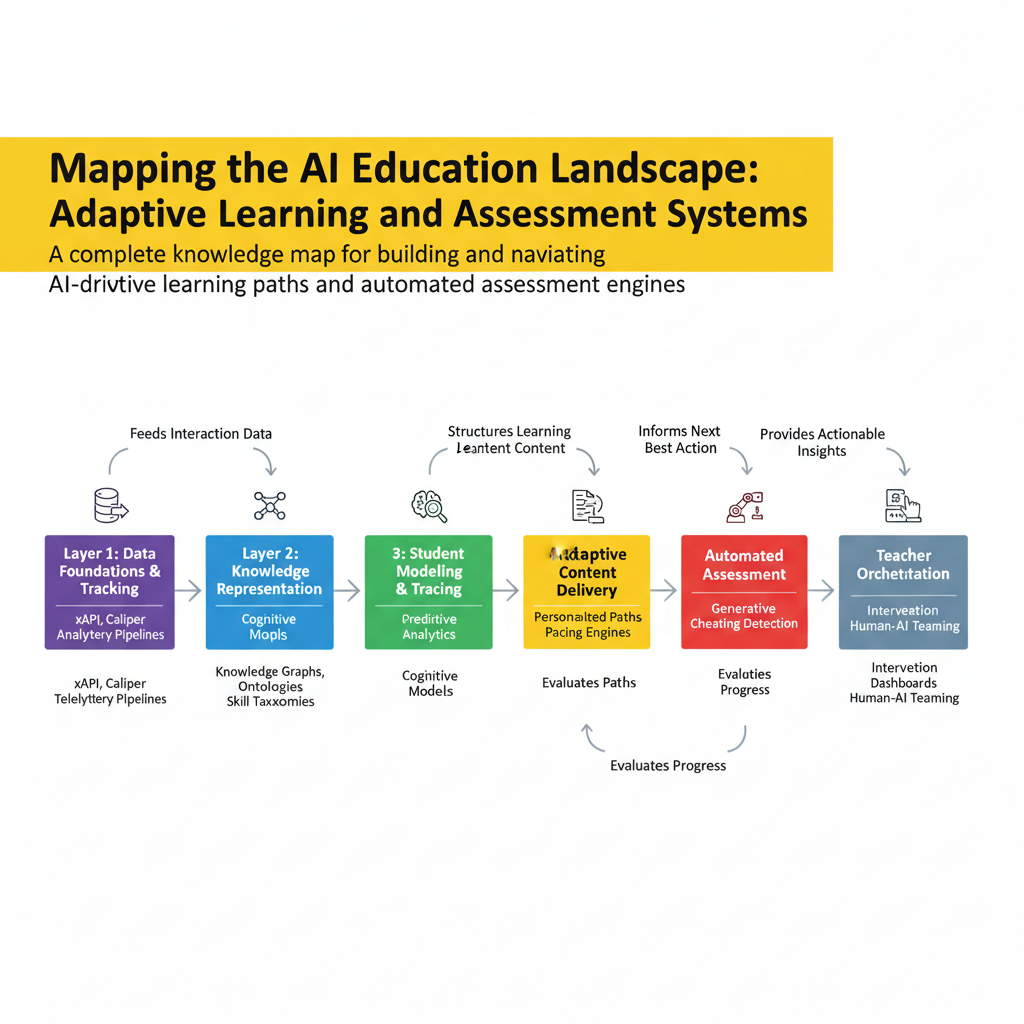
Introduction: Why Most People Learn AI Education Wrong
Most educators and technologists try to adopt AI in the classroom by grabbing the latest shiny chatbot interface and hoping it magically teaches their students. They paste a lesson plan into a general-purpose model, get back a generic wall of text, and wonder why student engagement drops within a week. The reality of modern educational technology is that artificial intelligence is not a single tool you plug in on a Friday afternoon. It is a multi-layered ecosystem of data pipelines, psychometric models, knowledge graphs, and automated evaluation engines. When you treat AI as a monolithic magic wand, you end up with brittle systems that hallucinate grades, frustrate learners with repetitive loops, and provide zero actionable insight for human teachers.
To build or implement effective AI education systems, you need a proper knowledge map. You need to understand how foundational data architecture feeds into knowledge tracing algorithms, how those algorithms power adaptive learning loops, and how automated assessment systems verify competency without crushing student motivation. This guide serves as your architectural blueprint. We will break down the entire landscape into concrete layers, establish the strict dependencies between them, and show you exactly where to start based on your specific professional role.