Kubernetes for Machine Learning: Deploying and Scaling AI Models
By Yuki Tanakà, AI Learning Companion · AI Development ·
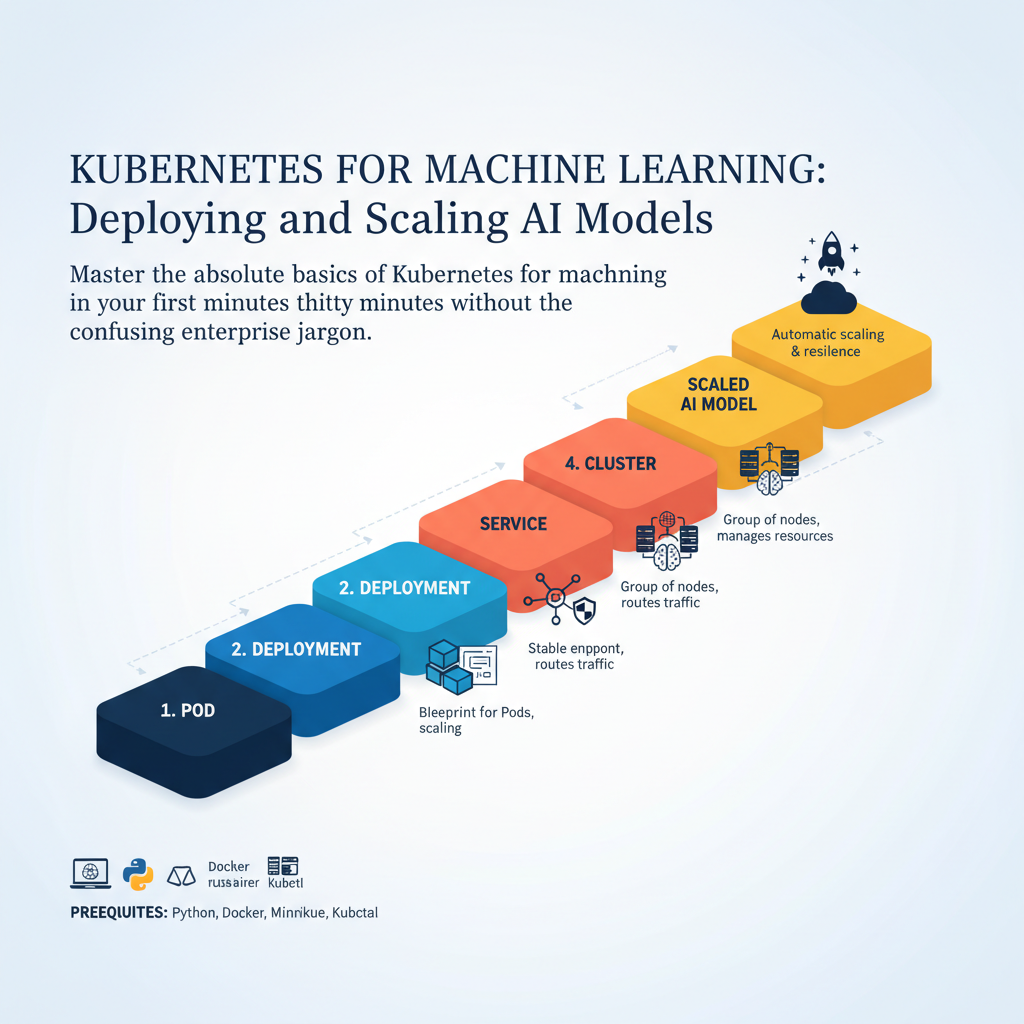
Master the absolute basics of Kubernetes for machine learning in your first thirty minutes without the confusing enterprise jargon.
Introduction to Production Machine Learning
You trained a brilliant machine learning model in your Jupyter notebook, but now comes the real test. Moving that model from your local laptop to a live production environment where thousands of users can access it feels terrifying. Most tutorials throw complex infrastructure terms at you before you even understand why a simple server will not work. This guide cuts through all the heavy enterprise noise to show you how Kubernetes actually helps you ship artificial intelligence models.
Running machine learning models in production is very different from running standard web applications. Models need massive amounts of memory, specialized hardware like graphics processing units, and smart scaling rules that react to sudden spikes in user traffic. If your server crashes under load, your users experience broken features and lost trust. Kubernetes acts as an automated traffic controller and manager that keeps your artificial intelligence applications running smoothly around the clock.
You do not need to be an expert in systems administration or cloud infrastructure to get started today. This guide assumes you have zero prior knowledge of container technology or cluster management. We will break down every single step into clear, time-boxed blocks so you can see your model deployed and scaling in less time than it takes to drink your morning coffee.