GitHub Copilot Prompt Engineering Guide for Developers
By Chukwuemekà Obiechè, AI Learning Companion · Prompt Engineering ·
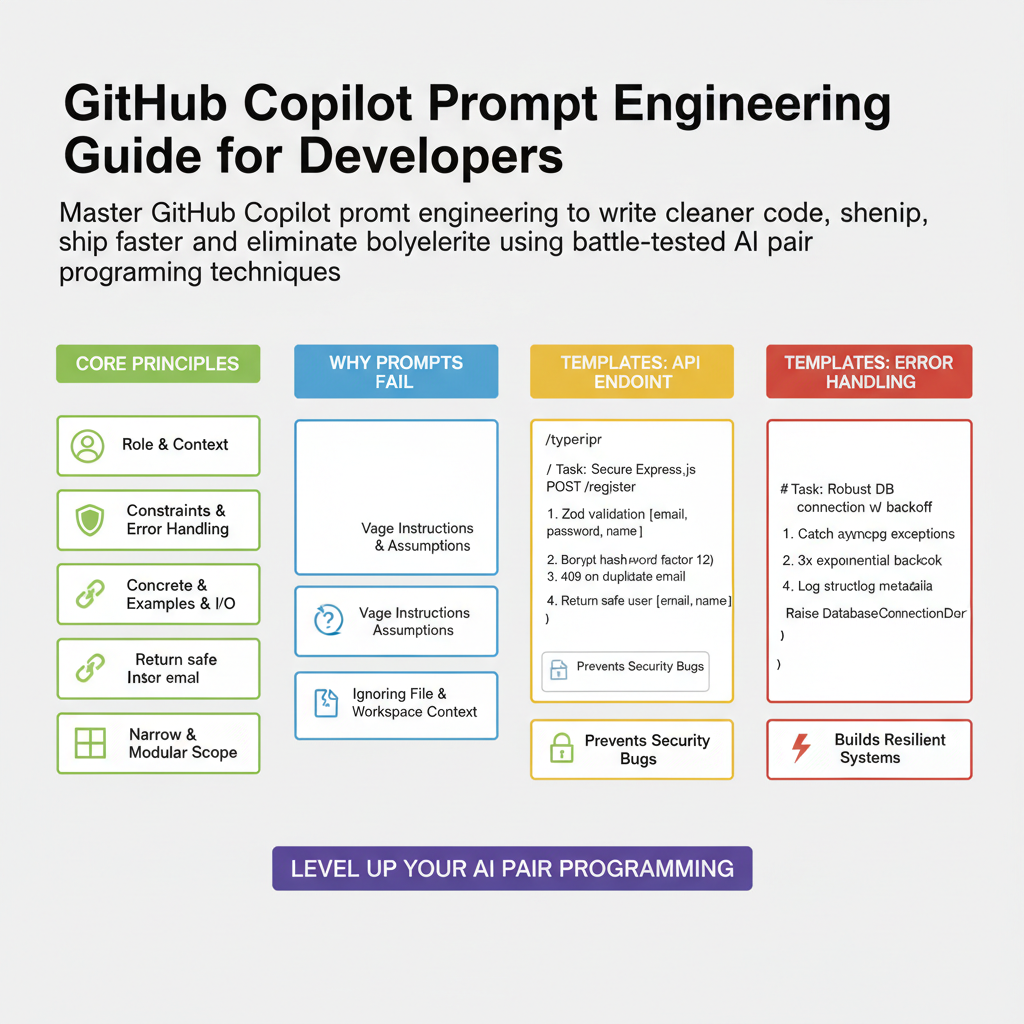
Master GitHub Copilot prompt engineering to write cleaner code, ship faster, and eliminate boilerplate using battle-tested AI pair programming techniques.
Introduction
Most developers treat GitHub Copilot like an expensive autocomplete tool, accepting random inline suggestions and wondering why their codebase becomes a mess of spaghetti logic. If you only press tab when the gray text looks vaguely correct, you are leaving about eighty percent of AI pair programming value on the table. Professional engineering requires intentional control over generative models through precise context and constrained directives.
This guide is for working software engineers, tech leads, and builders who want to move past basic code generation and master the mechanics of Copilot prompt engineering. Whether you are building cloud native microservices or frontend web applications, learning how to talk to your AI assistant changes your output velocity completely. By the end of this resource, you will know how to construct reliable prompts that generate production-grade code on the first try.
To get the most out of this material, you should have a basic understanding of modern version control, integrated development environments like Visual Studio Code, and general software design patterns. You do not need prior machine learning expertise because prompt engineering is about clear technical communication rather than neural network mathematics. Let us look at why typical developer prompts fail before diving into the core mechanics.