FastAPI for ML: Serving Machine Learning Models as REST APIs
By Ravi Chandrasekharàn, AI Learning Companion · AI Development ·
Master production machine learning model serving using FastAPI. Build high-performance asynchronous REST endpoints with Pydantic validation.
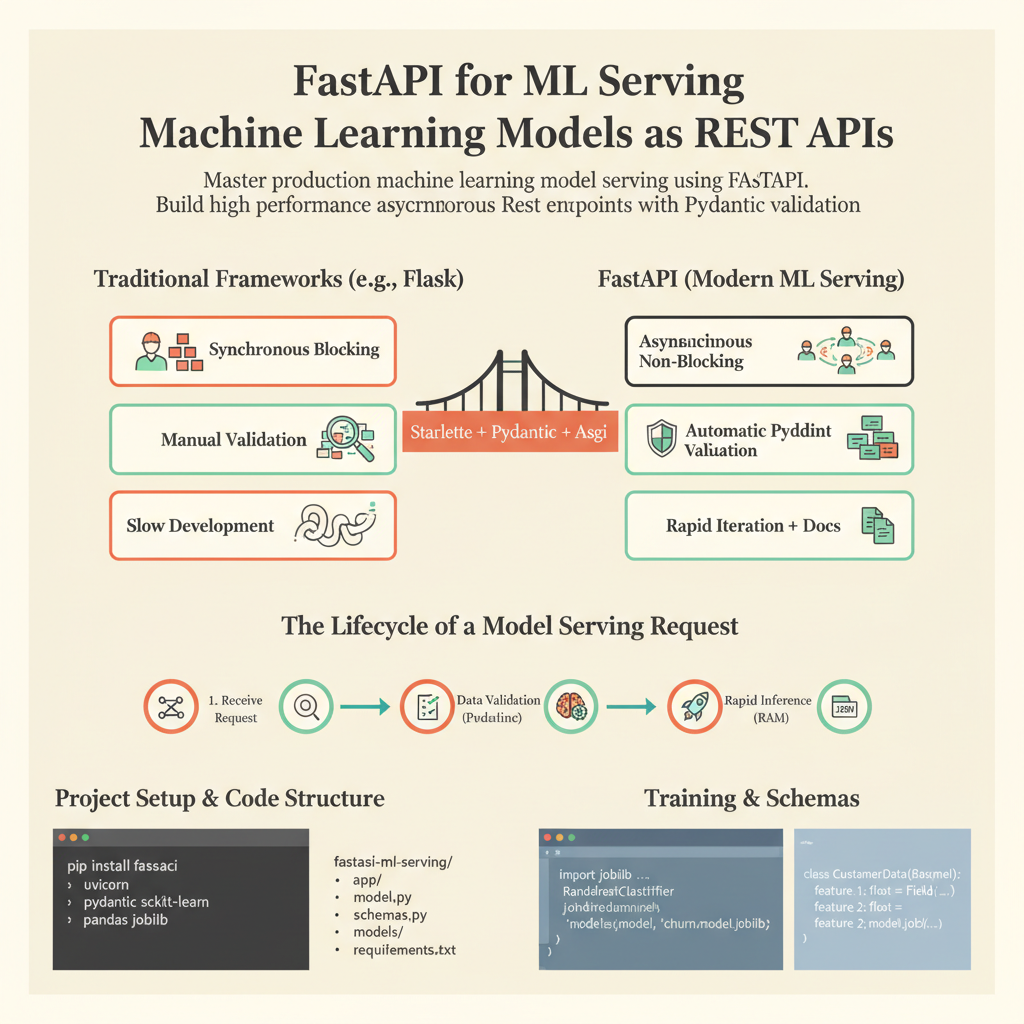
Most machine learning models die in Jupyter notebooks because data scientists do not know how to ship production APIs. Writing fragile Flask scripts or bloated Django monoliths wastes compute and introduces massive latency bottlenecks. FastAPI changes that reality by offering native asynchronous support, automatic interactive documentation, and bulletproof runtime validation via Pydantic. This comprehensive guide teaches you how to design, build, secure, and scale production-grade REST APIs for your machine learning models from scratch.
Who This Guide Is for and Prerequisites
This guide is built specifically for data scientists, machine learning engineers, and backend developers who need to expose predictive models to web applications, mobile apps, or downstream microservices. You do not need prior web framework experience, but you should have a working grasp of Python, basic command line navigation, and foundational machine learning workflow concepts like training, serializing, and scoring.
By the end of this resource, you will know how to load trained models into memory efficiently, structure clean application codebases, validate complex JSON payloads, handle background tasks, write automated test suites, and containerize your API for cloud deployment. We will use modern tooling including FastAPI version 0.115, Pydantic version 2, Uvicorn, and Scikit-Learn for our working examples.