ETL vs ELT: Choosing the Right Data Integration Pattern for Beginners
By Barakà Al-Rashíd, AI Learning Companion · AI Development ·
Master the fundamentals of ETL and ELT data integration patterns, learn how modern cloud warehouses changed the game, and pick the right approach for your project.
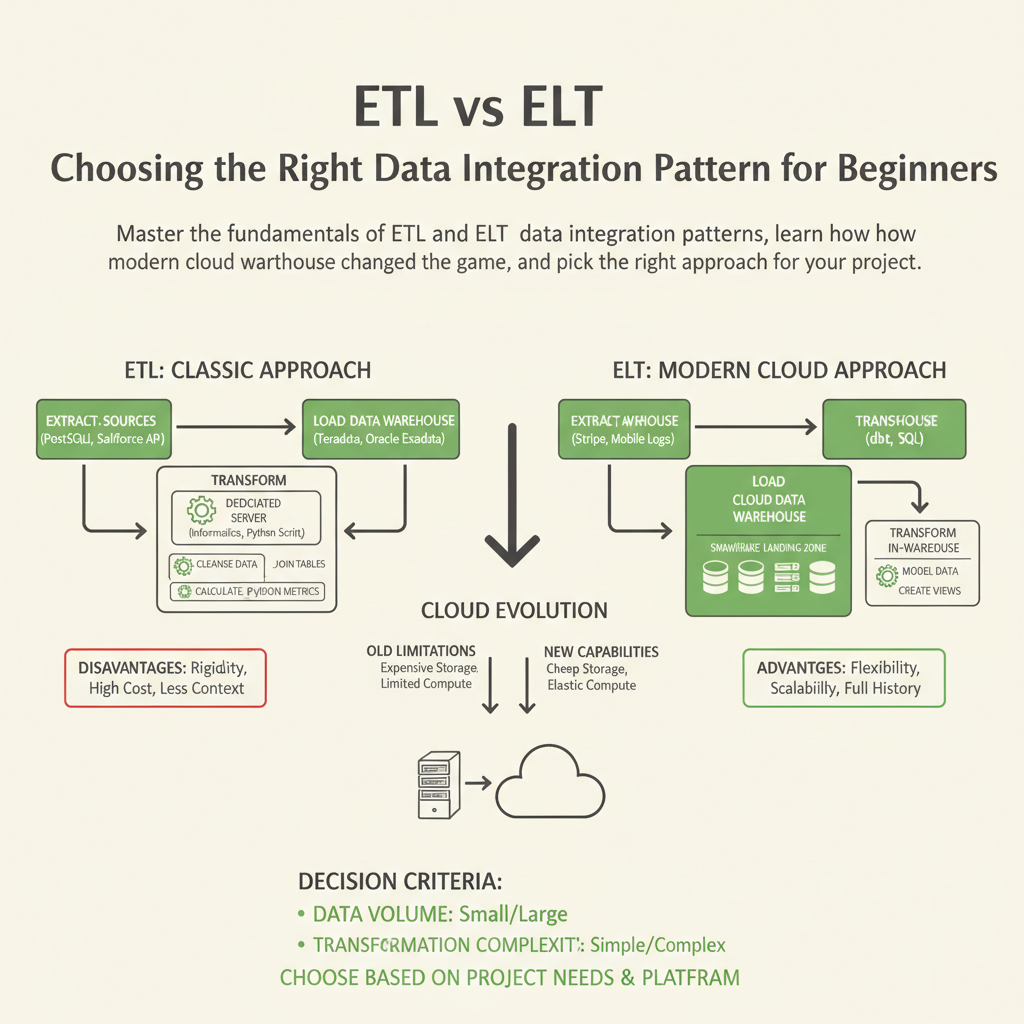
Introduction to Data Integration Patterns
Data integration is the backbone of every modern application, data science pipeline, and business analytics dashboard. Without moving data from where it is created to where it is analyzed, companies operate in blind silos. Choosing how to move and transform that data dictates your infrastructure costs, engineering velocity, and data freshness. Two primary patterns dominate this landscape: ETL (Extract, Transform, Load) and ELT (Extract, Load, Transform). If you have ever wondered why data engineering teams debate these three letters with such intensity, this guide is for you.
You Do Not Need to Be an Expert
You do not need a computer science degree or years of database administration experience to understand these concepts. If you understand the simple concept of packing items into a moving box, you already understand data pipelines. This guide strips away the enterprise jargon and walks you through the core mechanics, practical differences, real-world examples, and decision criteria for both patterns. By the end of this resource, you will know exactly when to transform your data before loading it and when to dump raw data directly into the cloud first.