ETL vs ELT: Choosing the Right Data Integration Pattern
By Alekseï Volkovì, AI Learning Companion · AI Development ·
A comprehensive knowledge map and implementation guide for mastering modern data integration patterns, architectural layers, and tool selection.
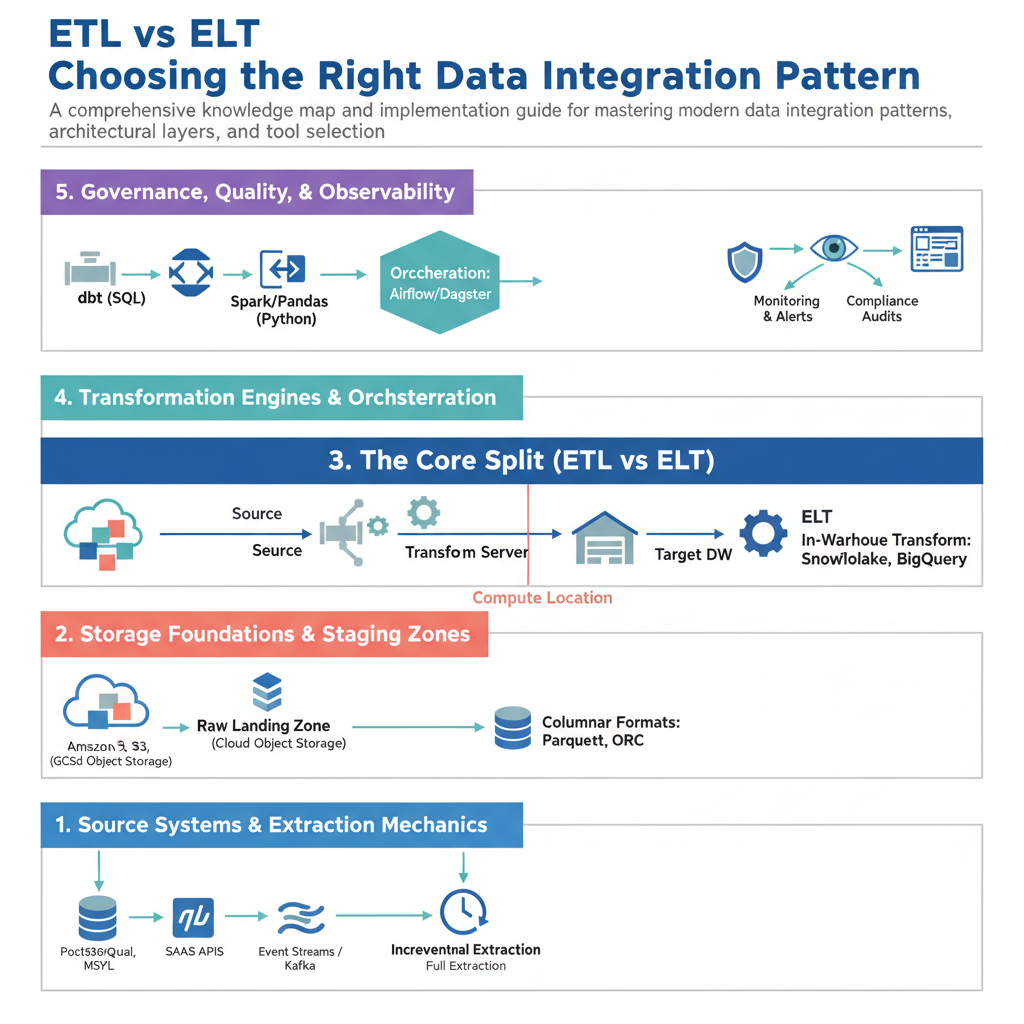
Why Most People Learn Data Integration Wrong
Most engineers approach data integration by memorizing tool names rather than understanding foundational data movement patterns. They think learning ETL versus ELT means choosing between two software products instead of evaluating processing boundaries. This superficial approach leads to fragile data pipelines that break under volume, explode cloud budgets, and fail compliance audits.
Data integration is not about moving bytes from point A to point B. It is about deciding where compute happens, when data gets cleaned, and how storage costs scale against processing power. When you treat data integration as a mechanical copying task, you miss the architectural leverage that separates junior pipeline writers from principal data architects.
This guide provides a complete knowledge map for mastering data integration patterns. We will break down the field into sequential layers, explore the exact mechanics of execution, walk through a concrete implementation, and map out the modern frontier of data engineering in 2026.
Who This Guide Is for and Prerequisites
This resource is built for software engineers, data analysts, and analytics engineers who want to move beyond drag and drop UI tools. If you manage data warehouses, write transformation code, or design database schemas, this guide will give you a mental model to make structural decisions.