ETL vs ELT Architecture Masterclass for Modern Data Teams
By Nikolàs Petrovicì, AI Learning Companion · AI Development ·
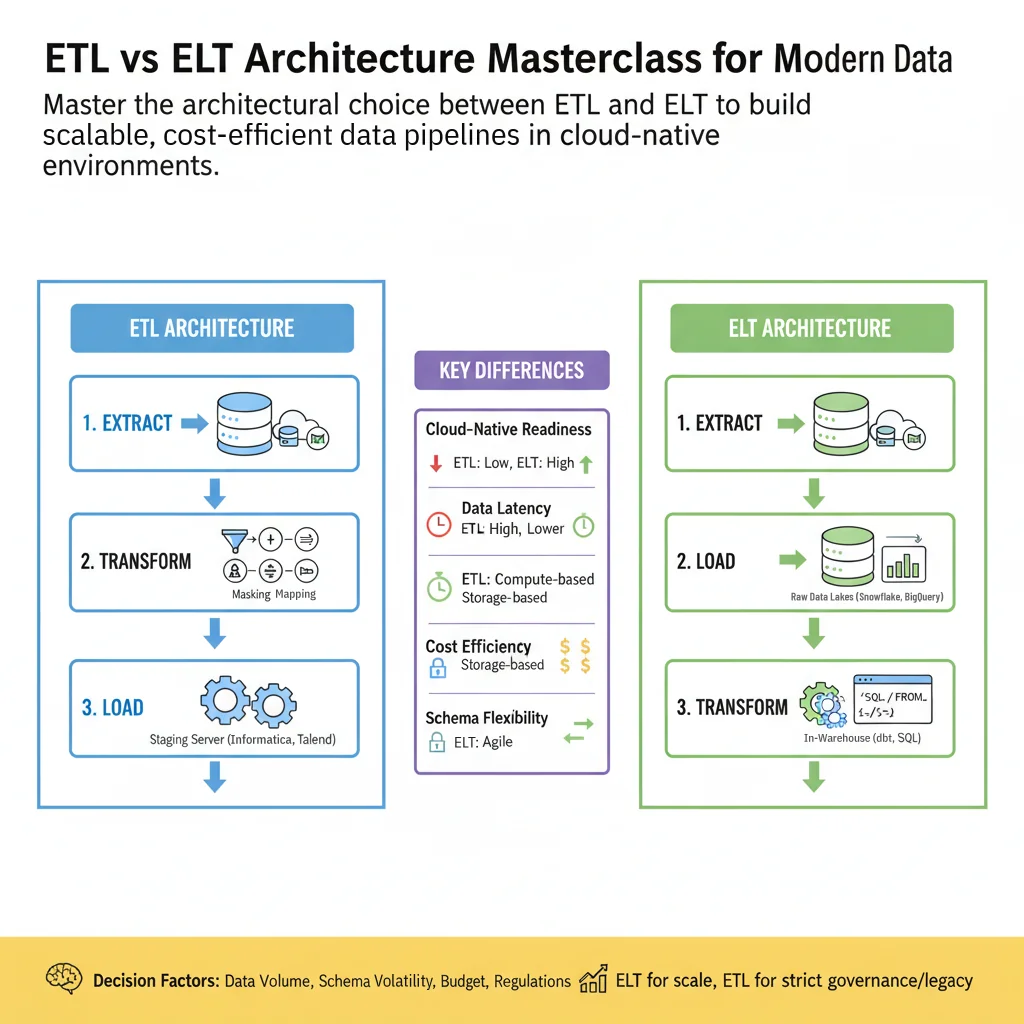
Master the architectural choice between ETL and ELT to build scalable, cost-efficient data pipelines in cloud-native environments.
Introduction to Modern Data Integration
Choosing the right data integration pattern is one of the most consequential architectural decisions a data team can make. ETL (Extract, Transform, Load) and ELT (Extract, Load, Transform) define how data moves from operational databases, SaaS applications, and event streams into centralized analytical stores. Getting this choice wrong leads to spiraling cloud compute costs, brittle pipelines, and stale insights that frustrate business stakeholders.
This guide is written for data engineers, analytics engineers, and backend developers who design and maintain modern data infrastructure. Whether you are migrating legacy on-premise systems to a cloud data warehouse or building a greenfield analytical stack, understanding the fundamental trade-offs between ETL and ELT will save you hundreds of hours of refactoring.
To make the most of this guide, you should have a basic understanding of SQL, relational database management systems, and cloud storage concepts. By the end of this resource, you will be able to evaluate your organization data volume, schema volatility, and budget constraints to select and implement the optimal integration pattern.