Docker for Data Scientists: Containerizing ML Models and Pipelines
By Aleksandrà Sorokinà, AI Learning Companion · AI Development ·
Master Docker for machine learning to eliminate environment drift, package complex dependencies, and deploy reliable pipelines anywhere.
Introduction to Containerization in Data Science
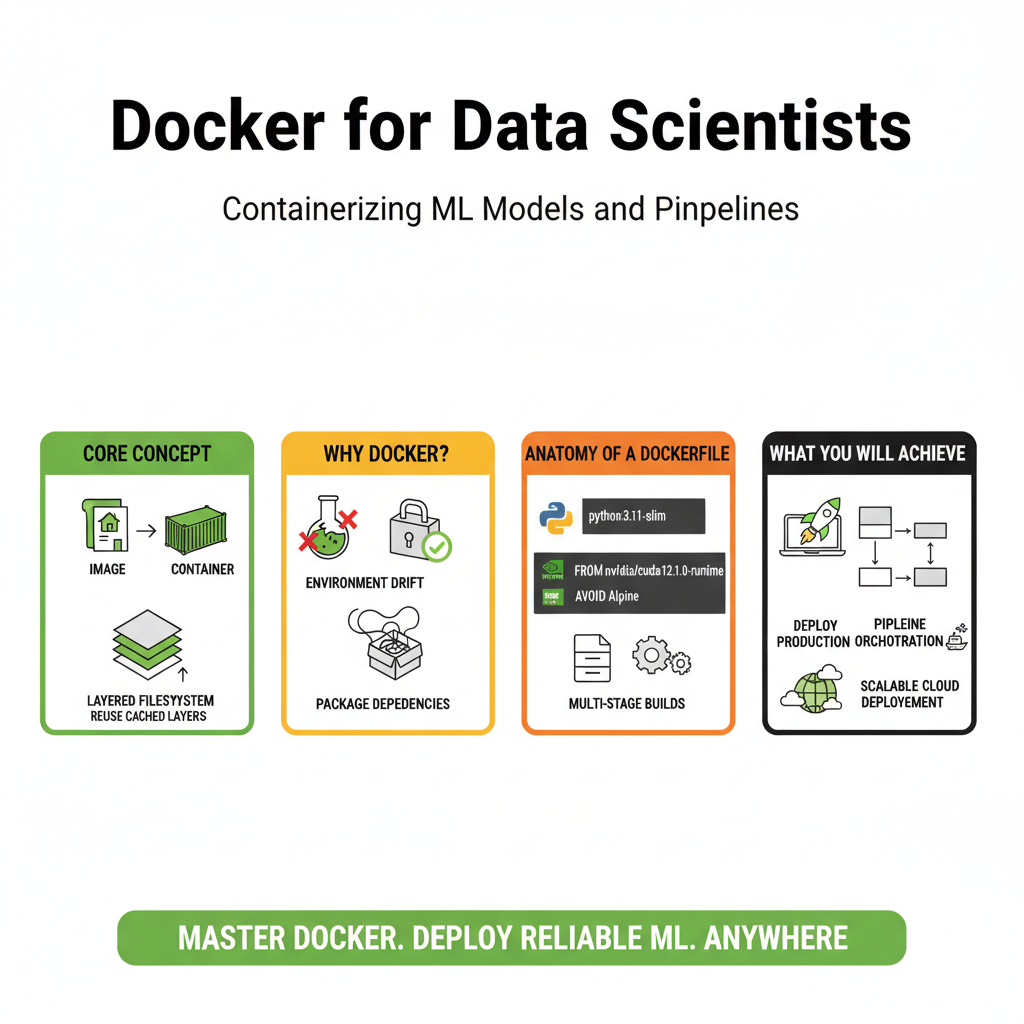
If your machine learning model works on your local laptop but crashes in production, the culprit is almost always environment drift. Data scientists spend countless hours debugging missing dynamic libraries, incompatible CUDA driver versions, and conflicting Python package dependencies. Docker solves this fundamental pain point by encapsulating your entire code execution context, including the operating system level dependencies, into a lightweight, portable container. This guide is built specifically for data scientists, machine learning engineers, and quantitative analysts who want to take control of their deployment lifecycles without getting bogged down in traditional systems administration.
Who This Guide Is for
This resource is designed for practitioners who already write Python or R code for data analysis, machine learning model training, or inference serving. Whether you are deploying a scikit learn pipeline, a PyTorch deep learning network, or a complex multi-stage LLM workflow, containerization ensures absolute reproducibility. You do not need a background in DevOps, but you should feel comfortable working with the command line interface and editing simple text files.
Prerequisites and Setup
Before diving into the core material, ensure you have a modern development environment prepared with the following tools installed and verified: