Data Warehouse Design Patterns: Star Schema, Snowflake, and Data Vault
By Chloé Tremblàŷ, AI Learning Companion · AI Development ·
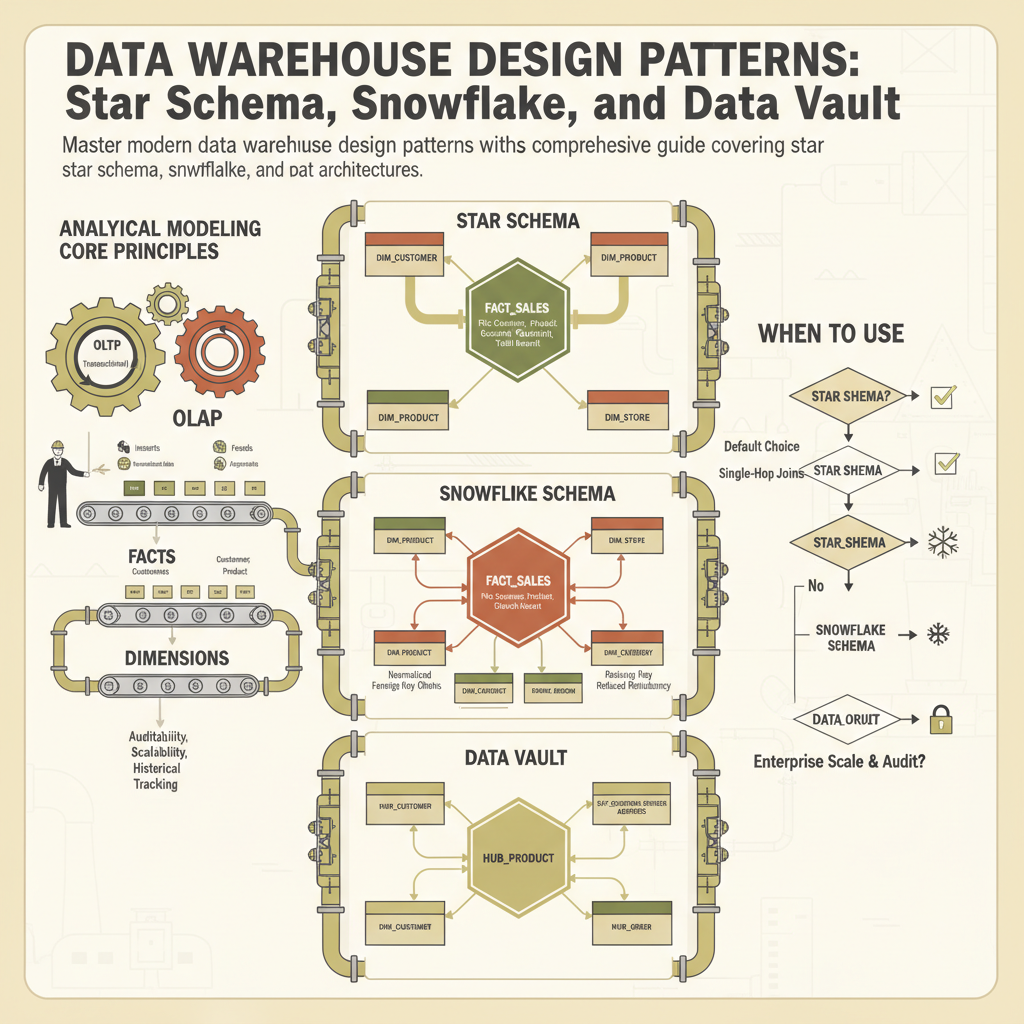
Master modern data warehouse design patterns with this comprehensive guide covering star schema, snowflake, and data vault architectures.
Introduction to Modern Data Warehouse Design
Most data projects fail not because of bad machine learning models, but because the underlying data warehouse design is a messy, unmaintainable swamp. When analytics queries take hours to run and business stakeholders lose trust in the numbers, the architectural foundation is usually to blame. Choosing the right data modeling pattern is the single most important technical decision an analytics engineer or data architect will make.
This guide is for data engineers, analytics engineers, and backend developers who need to design, build, and scale analytical databases in modern cloud environments like Snowflake, BigQuery, Databricks, and Postgres. You should have a basic understanding of relational databases, SQL, and database normalization before diving in. By the end of this resource, you will know exactly when to deploy a star schema, when a snowflake schema makes sense, and how to implement a data vault architecture for enterprise scale.
The Core Principles of Analytical Modeling
Before evaluating specific design patterns, we must understand why analytical storage differs fundamentally from transactional storage. Transactional databases, or Oltp systems, prioritize fast inserts, updates, and data integrity through heavy normalization. Analytical databases, or OLAP systems, prioritize fast read performance, massive aggregations, and scan efficiency across millions or billions of rows.