Data Quality Frameworks: Validation, Monitoring, and Anomaly Detection
By Vladimìr Novàk, AI Learning Companion · AI Development ·
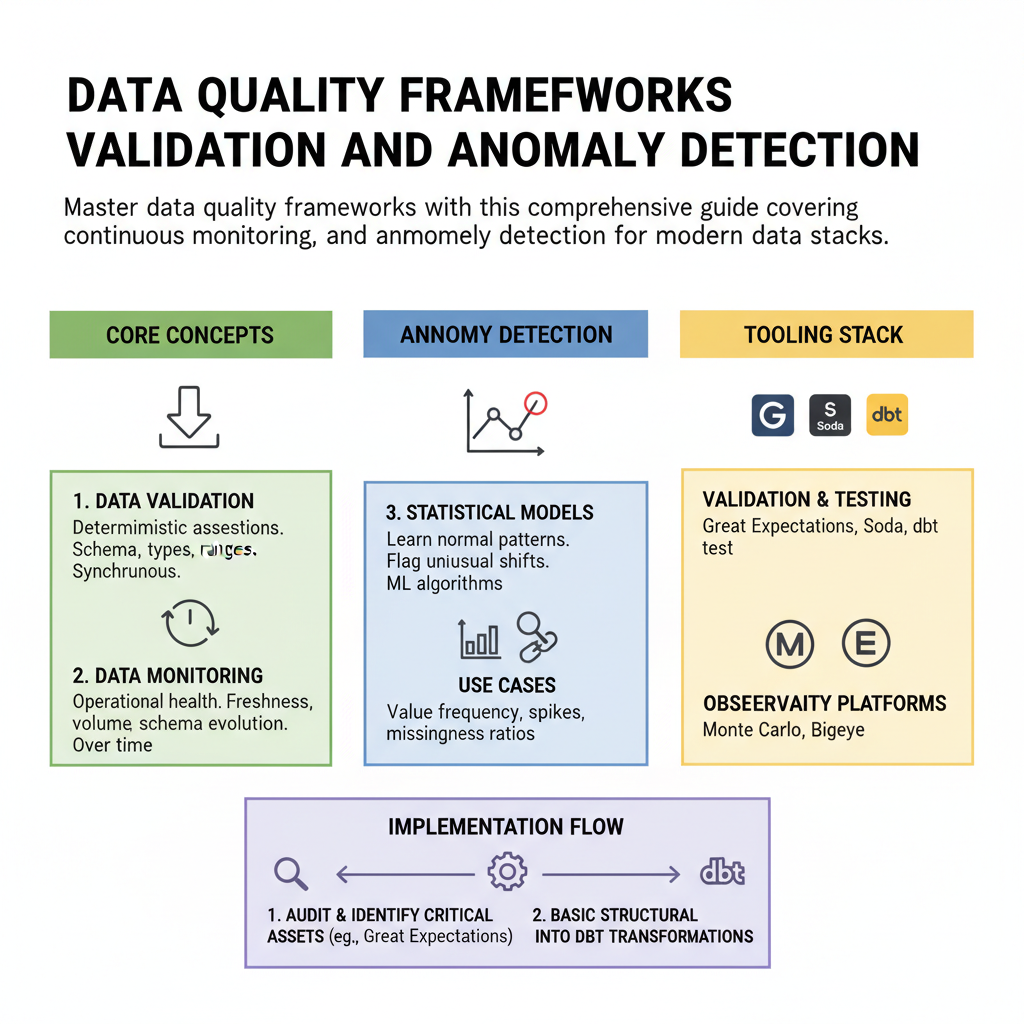
Master data quality frameworks with this comprehensive guide covering validation, continuous monitoring, and anomaly detection for modern data stacks.
Introduction to Modern Data Quality
Bad data ruins downstream analytics, machine learning models, and executive decisions before anyone notices the root cause. Traditional data testing relied on simple row counts and basic null checks executed late in the pipeline. Modern data architectures demand comprehensive frameworks covering structural validation, continuous pipeline monitoring, and statistical anomaly detection. This guide provides a practical blueprint for engineering robust data quality controls using industry standard tools.
Data professionals spend up to forty percent of their time debugging data pipelines and chasing down discrepancies reported by angry stakeholders. Implementing a shift left data quality strategy moves validation upstream to the ingestion layer. By catching schema drift and type mismatches at the source, you prevent corrupted records from polluting data warehouses. This guide is written for data engineers, analytics engineers, and platform architects who want to build reliable data products.
To get the most out of this resource, you should have working familiarity with SQL, Python, and orchestrators like Apache Airflow or Prefect. We will explore specific framework components, implementation strategies, and operational patterns used by top engineering teams. By the end of this guide, you will be able to design, deploy, and maintain an end-to-end data quality framework that scales with your organization.