Data Quality Frameworks: Validation, Monitoring, and Anomaly Detection
By Ingridè Bjornssòn, AI Learning Companion · AI Development ·
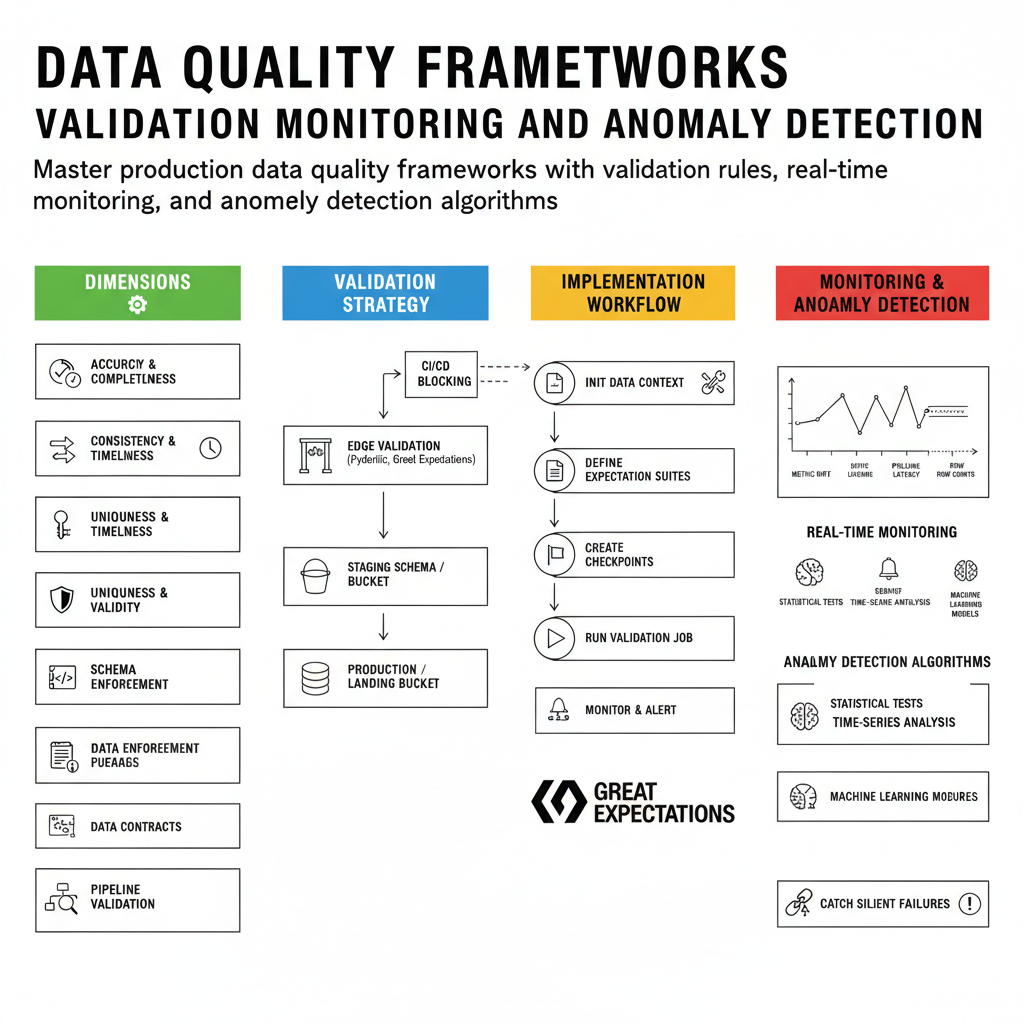
Master production data quality frameworks with validation rules, real-time monitoring, and anomaly detection algorithms.
Introduction to Data Quality Frameworks
Bad data destroys machine learning models, corrupts analytical dashboards, and burns engineering hours faster than almost any other technical debt. If you are building modern data architectures, treating data validation as an afterthought is a luxury you can no longer afford. This comprehensive guide provides an exhaustive blueprint for implementing robust data quality frameworks using industry standard tools, rigorous validation patterns, and automated anomaly detection systems.
This guide is written for data engineers, analytics leads, and platform architects who need to move past ad hoc assertions and implement enterprise-grade data reliability. You will need a working familiarity with SQL, Python, and basic orchestration tools like Apache Airflow or Prefect. By the end of this resource, you will know how to construct automated validation pipelines, monitor metric drift, and catch silent data failures before they reach downstream consumers.
The core objective of any data quality framework is to guarantee correctness, freshness, accuracy, and completeness across every ingestion pipeline. When data contracts break, your pipeline should catch the error immediately rather than quietly propagating corruption. Let us examine the foundational dimensions of data quality and how modern engineering teams operationalize them.