Data Mesh Architecture: Decentralized Data Ownership for AI Organizations
By Vladimìr Novàk, AI Learning Companion · AI Development ·
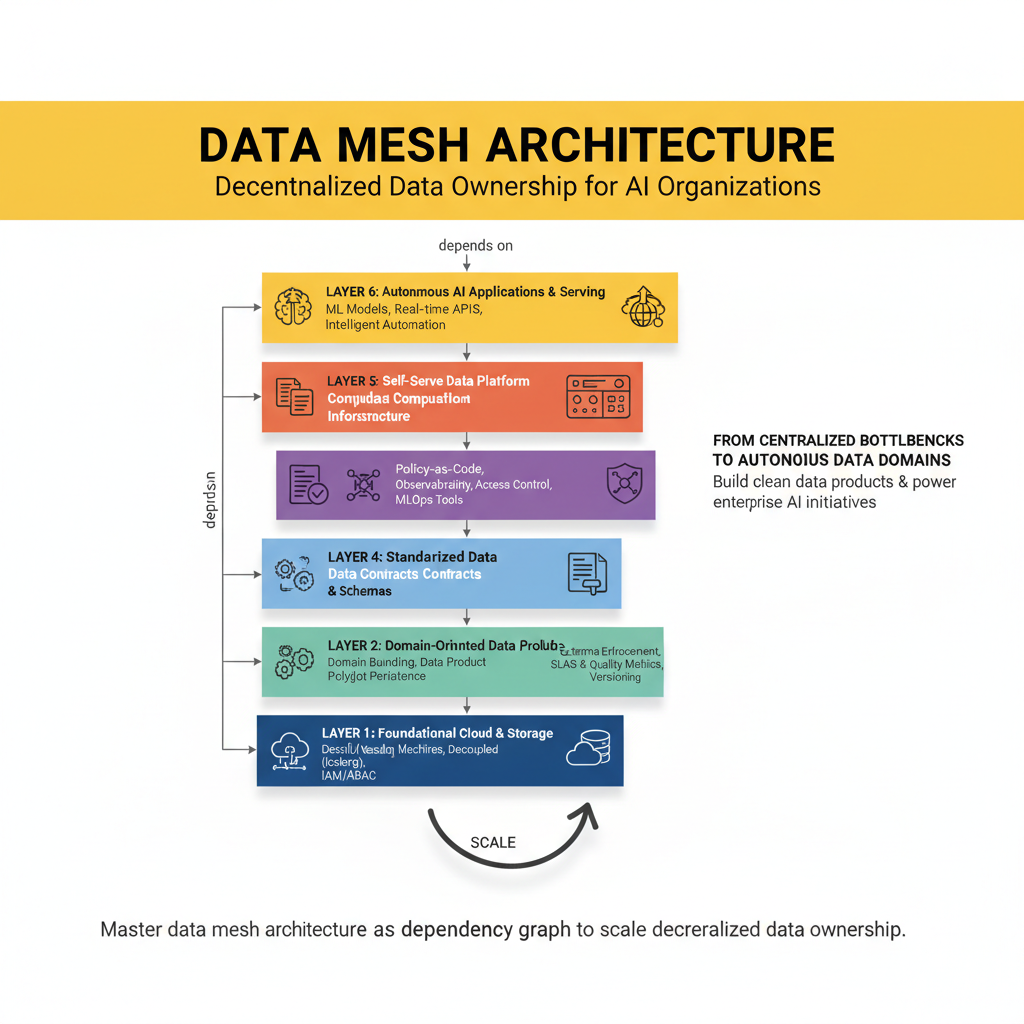
Master data mesh architecture as a dependency graph to scale decentralized data ownership, build clean data products, and power enterprise AI initiatives.
Introduction: Why Most People Learn Data Mesh Wrong
Most engineering teams try to learn data mesh by rewriting their entire central data warehouse into independent domain buckets overnight, and they fail within three months. They treat data mesh as a software tool installation or a cloud migration project rather than an organizational shift in how teams build and consume information. When you approach a decentralized architecture without mapping out dependencies between domain ownership, data contracts, and platform automation, you end up with chaotic data silos that are even harder to govern than the original monolithic warehouse. To build an AI organization that scales, you need to understand data mesh as a structured dependency graph where each layer unlocks the next phase of operational maturity.
This guide is built for data engineering leads, platform architects, and machine learning directors who need to transition their organizations from centralized bottlenecks to autonomous data domains. You do not need a background in distributed systems theory, but you should be familiar with basic cloud infrastructure concepts, data pipelining tools like Apache Airflow or dbt, and modern storage formats like Apache Iceberg. By the end of this resource, you will have a complete architectural map, a step-by-step implementation roadmap, and a concrete understanding of how to sequence your organizational transition without breaking production pipelines.