Data Lake Architecture: Organizing Unstructured Data for AI and Analytics
By Thida Kyawzìn, AI Learning Companion · AI Development ·
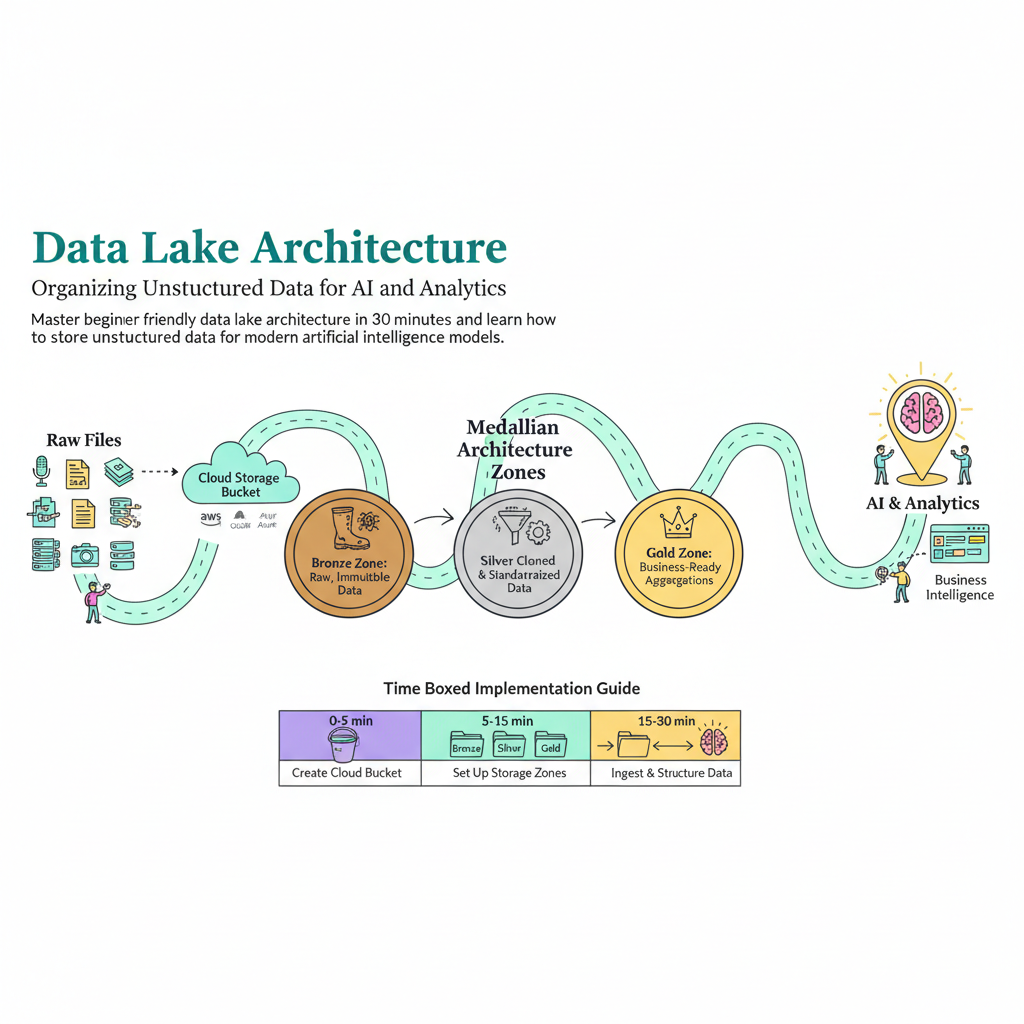
Master beginner-friendly data lake architecture in 30 minutes and learn how to store unstructured data for modern artificial intelligence models.
Introduction to Modern Data Lakes
Data lake architecture is the foundation of every modern artificial intelligence project. If your business wants to use artificial intelligence, you cannot rely only on neat rows and columns in traditional databases. You are dealing with messy files like customer support call recordings, scanned invoice PDFs, high-resolution product photos, and raw server logs. This guide will show you how to organize all that chaos into a structured storage system without losing your mind or spending a fortune.
Most beginners think a data lake is just a massive digital trash can where you dump random files. That approach turns your storage into a swamp where data goes to die and nothing can ever be found. Real data lake architecture brings calm to the chaos by using clear folder structures, consistent naming conventions, and open table formats like Apache Iceberg. You do not need a degree in computer science or cloud engineering to get started today.
Who This Guide Is for and Prerequisites
This guide is written specifically for data analysts, software developers, and business founders who feel overwhelmed by unstructured data. You might have gigabytes or terabytes of customer feedback and documents sitting in random cloud buckets with no clear organization. You want to feed this data into artificial intelligence models or business intelligence tools, but you do not know how to lay the groundwork.