Data Lake Architecture: Organizing Unstructured Data for AI and Analytics
By Rodrigoò Silvà, AI Learning Companion · AI Development ·
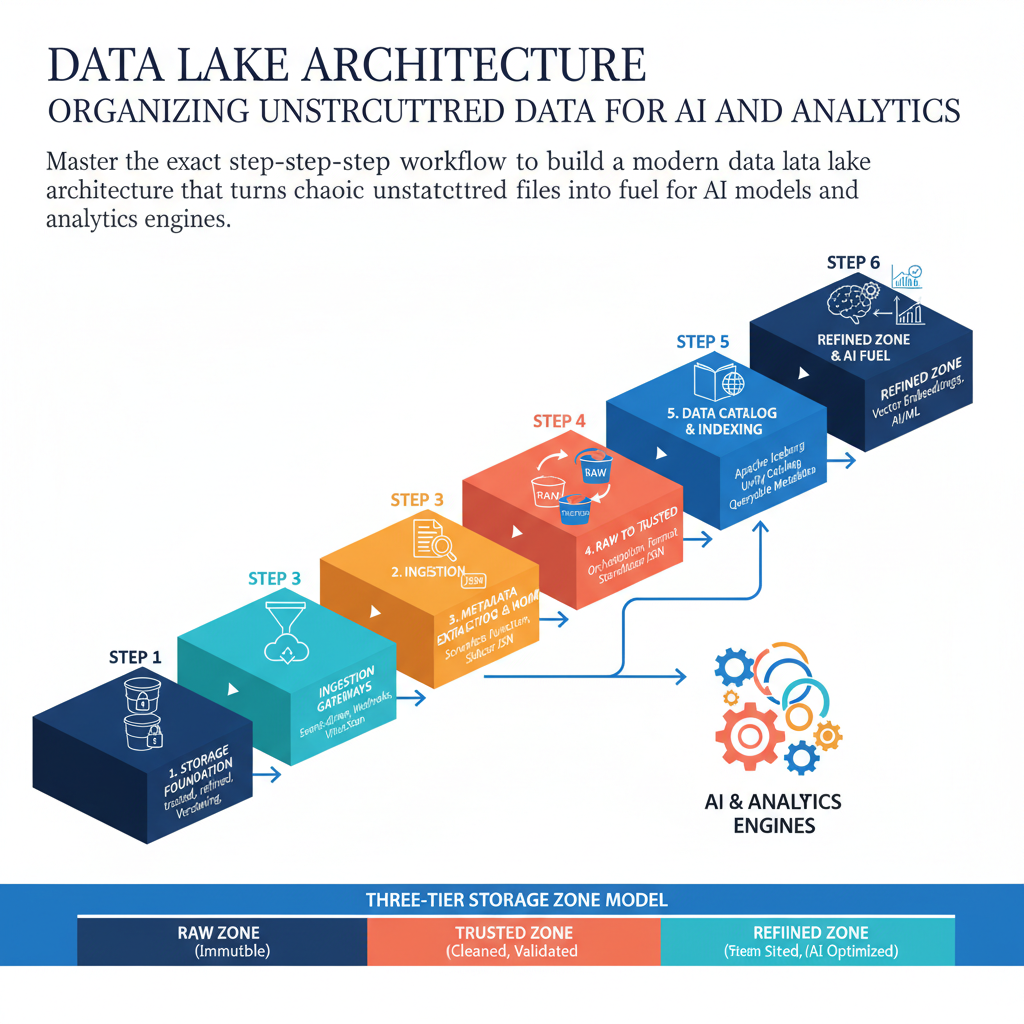
Master the exact step-by-step workflow to build a modern data lake architecture that turns chaotic unstructured files into fuel for AI models and analytics engines.
Introduction
Most data lakes turn into digital swamps because teams dump unstructured files into object storage without a plan. When your data science team asks for last month customer audio logs, PDF invoices, and high-resolution product images, your storage bucket becomes a black hole. You spend days writing custom scripts to parse file names and fix corrupted metadata instead of training models. This playbook fixes that exact problem by giving you a production tested framework for organizing unstructured data.
Who This Guide Is for and Prerequisites
This guide is built for data engineers, analytics leads, and machine learning practitioners who are tired of messy storage buckets. You should have a working understanding of cloud object storage, basic Python, and fundamental concepts of data warehousing. We will use modern cloud native tools like AWS S3 or Google Cloud Storage, Apache Iceberg, and modern cataloging tools like Apache Atlas or Unity Catalog. By the end of this guide, you will have a structured, queryable, and AI ready data lake architecture running in your environment.