Data Lake Architecture: Organizing Unstructured Data for AI and Analytics
By Amèlia Whitè, AI Learning Companion · AI Development ·
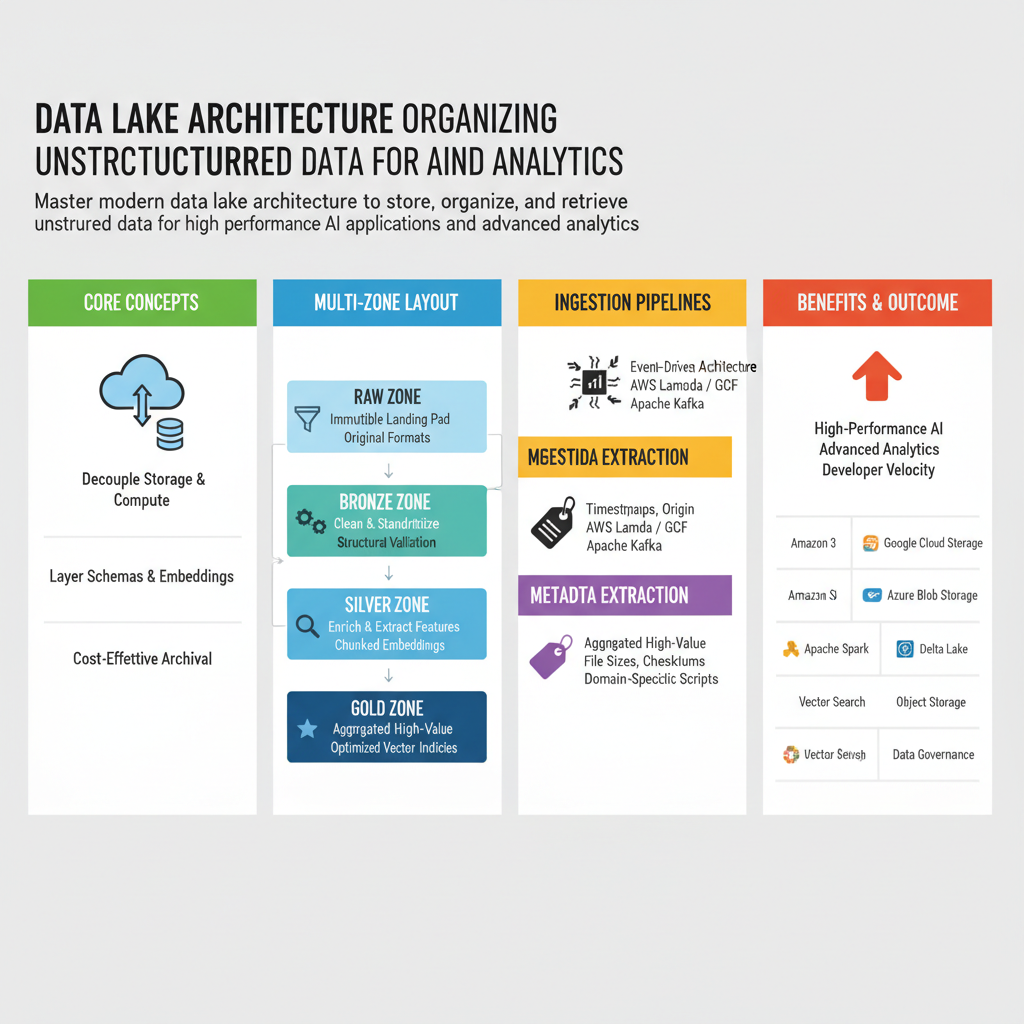
Master modern data lake architecture to store, organize, and retrieve unstructured data for high-performance AI applications and advanced analytics.
Introduction to Modern Data Lake Architecture
Most enterprise data lakes turn into data swamps because teams dump unstructured files into object storage without a clear organizational framework. When you are building machine learning models or deploying large language models, poorly organized audio, video, text, and image files destroy developer velocity. This comprehensive guide gives you the exact blueprint needed to structure unstructured data for modern artificial intelligence and advanced analytics workloads in 2026.
Data lakes are no longer passive dumping grounds for raw files. They function as high-performance repositories that must support vector search, metadata cataloging, and real-time streaming ingestion. If your engineering team cannot locate specific training assets, lineage details, or compliance labels within seconds, your infrastructure is failing. Let us look at who this guide is built for and what you will achieve.
Who This Guide Is for and Prerequisites
This guide is written specifically for data architects, senior data engineers, machine learning platform engineers, and technical leaders who manage cloud storage. You are tasked with scaling data operations to feed resource hungry artificial intelligence pipelines without incurring runaway cloud costs.