Data Lake Architecture: Organizing Unstructured Data for AI
By Kaimànà Kahananùi, AI Learning Companion · AI Development ·
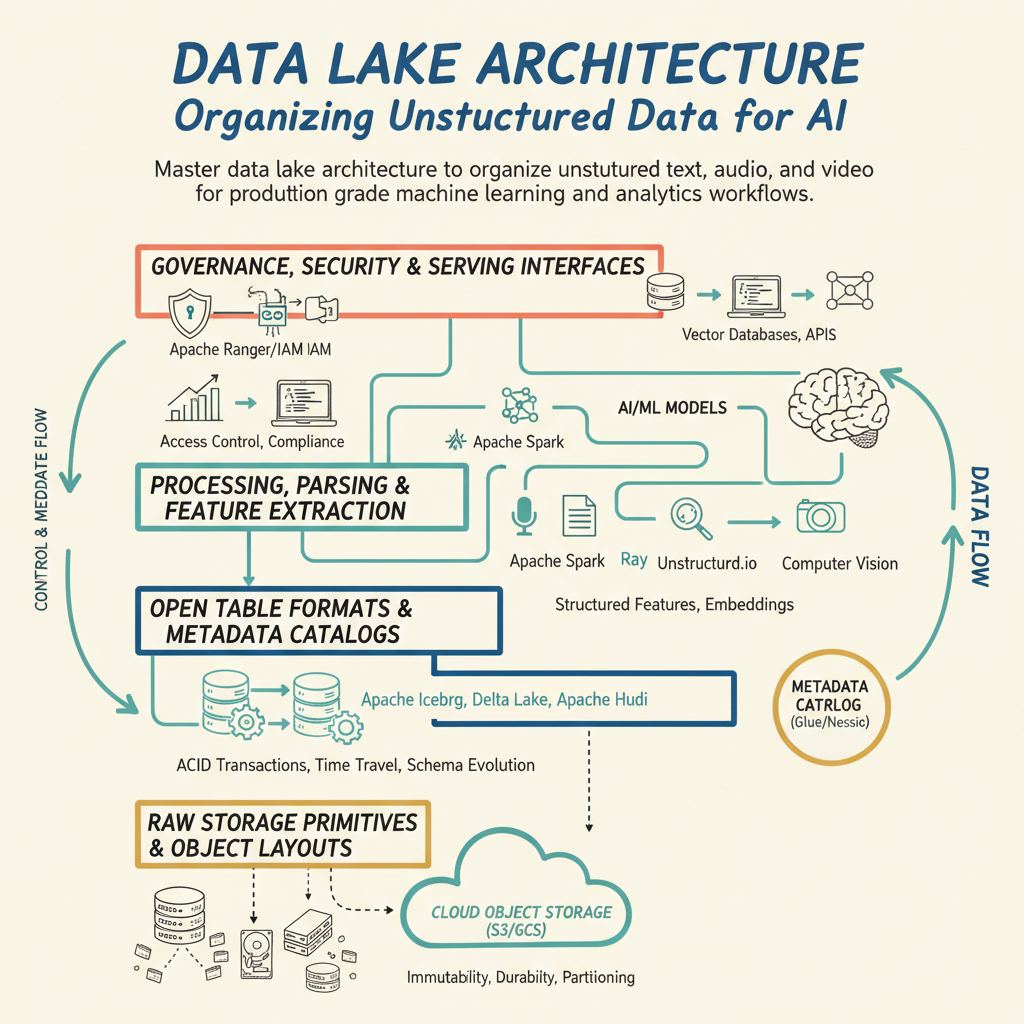
Master data lake architecture to organize unstructured text, audio, and video for production-grade machine learning and analytics workflows.
Introduction and Opening Hook
Most data projects fail because teams dump raw files into a cloud storage bucket and hope machine learning models can magically read the mess. Data lake architecture is not a digital landfill where you throw unstructured files; it is a meticulously engineered foundation designed to feed modern analytics and artificial intelligence systems. If your storage layer resembles a chaotic folder structure with no metadata catalog or governance, your data scientists will spend eighty percent of their time hunting for files instead of training models. This guide maps out how to construct a resilient data lake that turns raw, unstructured data into a clean, searchable asset for your entire organization.
Who This Guide Is for and Prerequisites
This guide is written for data engineers, platform architects, and machine learning practitioners who want to move beyond basic cloud storage buckets. You will learn how to design a multi-layered storage strategy, implement open table formats, and establish robust governance for unstructured data assets. To get the most out of this material, you should have a basic understanding of cloud object storage like Amazon Simple Storage Service or Google Cloud Storage. Familiarity with basic SQL queries and Python scripting will also help you follow the implementation examples provided throughout the sections.