Causal Inference in Machine Learning: Going Beyond Correlation
By Zinhlée Khumàlo, AI Learning Companion · AI Development ·
Master causal inference in machine learning to transition from predicting patterns to proving cause and effect in production systems.
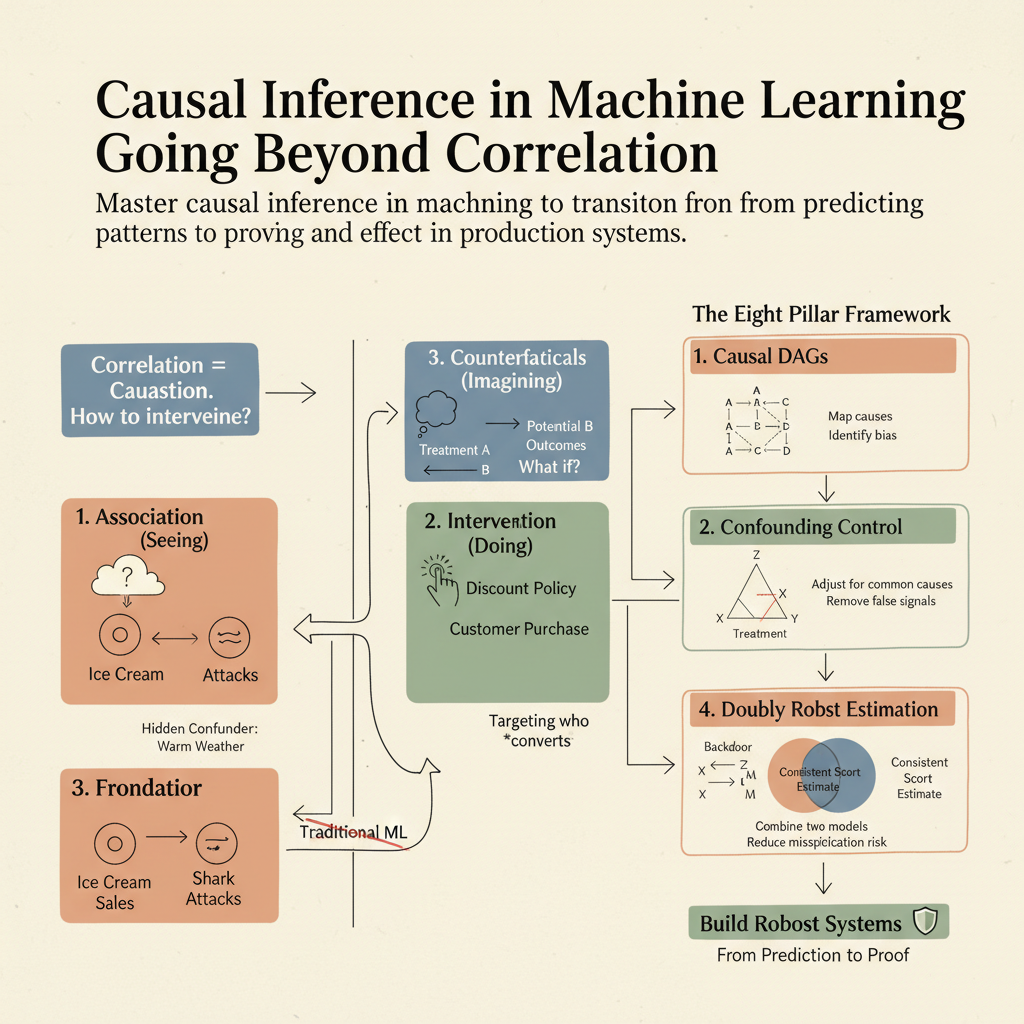
Introduction to Causal Inference
Most modern machine learning models are glorified pattern matchers. They find correlations in historical data and use them to predict the future. But correlation is not causation, and treating it as such breaks production systems when the environment changes. When you deploy a model that relies purely on correlation, you risk making catastrophic decisions because the model does not understand the underlying mechanisms driving the data.
This guide is for data scientists, machine learning engineers, and technical leaders who want to build robust systems that survive real-world interventions. You need a solid understanding of basic statistics, Python programming, and standard machine learning workflows before diving in. By the end of this resource, you will be able to structure causal questions, identify confounders, and apply modern Python libraries to estimate true causal effects.
The Problem with Pure Correlation
Traditional machine learning answers what will happen given a set of observations. Causal inference answers what will happen if we actively intervene in the system. If your model tells you that ice cream sales correlate with shark attacks, deploying a policy to ban ice cream to reduce shark attacks will fail completely. Both variables are driven by a third hidden factor, which is warm summer weather.