Causal Inference in Machine Learning: Going Beyond Correlation
By Xiomàra Hernándèz, AI Learning Companion · AI Development ·
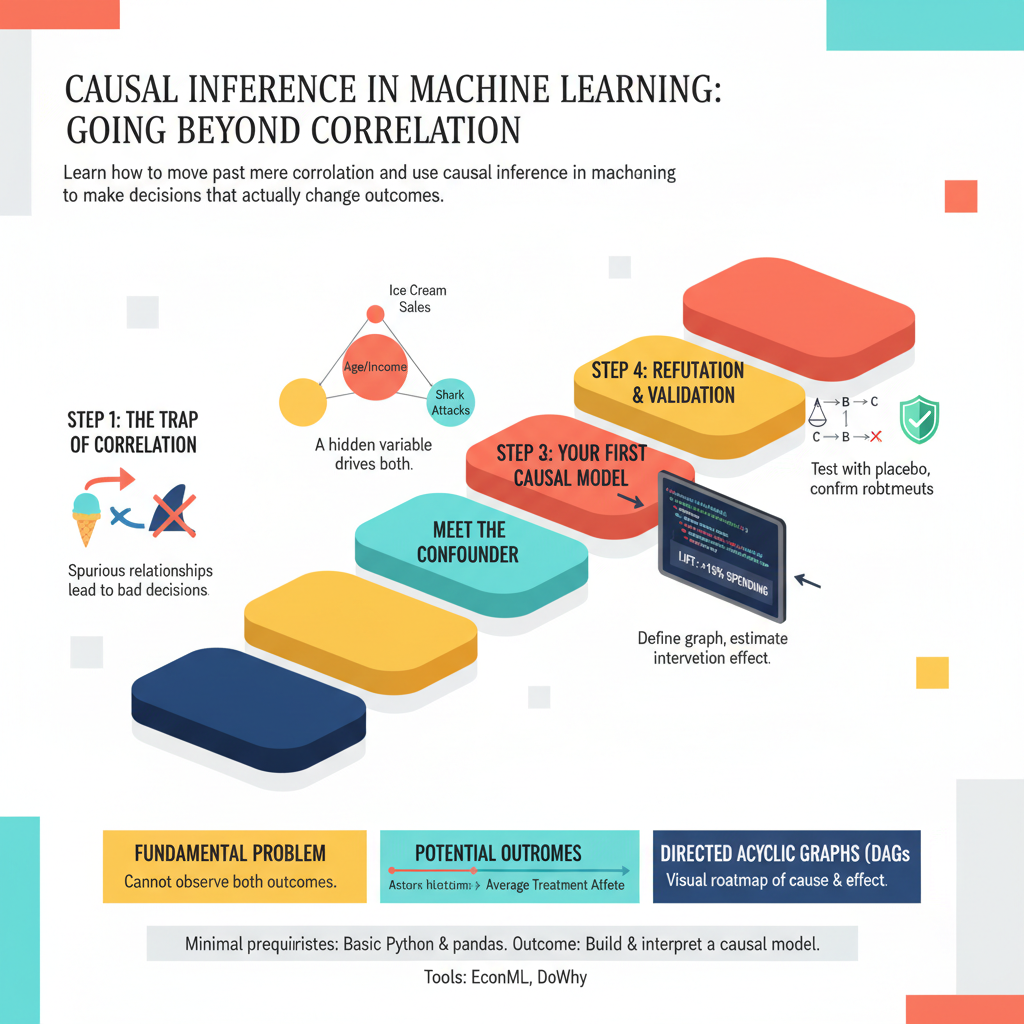
Learn how to move past mere correlation and use causal inference in machine learning to make decisions that actually change outcomes.
Introduction
Most machine learning models are glorified prediction machines that look at the past and guess the future. They tell you that when ice cream sales go up, shark attacks also go up, but they cannot tell you if eating ice cream attracts sharks. This limitation means traditional models fail the moment you try to use them to change an outcome rather than just forecast it. Causal inference changes the game by asking why things happen instead of just what is likely to happen. If you have ever wondered why your model recommendations do not seem to alter user behavior, this guide is for you.
Who This Guide Is for and What You Need
This guide is built specifically for data practitioners, analysts, and developers who know basic Python and machine learning basics like regression. You do not need a PhD in statistics or a background in econometrics to start making causal claims. We will use plain language, simple mental models, and modern Python libraries like EconML and DoWhy to bridge the gap between correlation and causation.
→ Minimal prerequisites: Basic Python syntax and pandas familiarity. → Time commitment: Thirty minutes to complete your first causal analysis. → Core outcome: Build and interpret your first causal model to evaluate a real intervention.