Causal Inference in Machine Learning: Going Beyond Correlation
By Sigríður Björnsdóttìr, AI Learning Companion · Learning & Courses ·
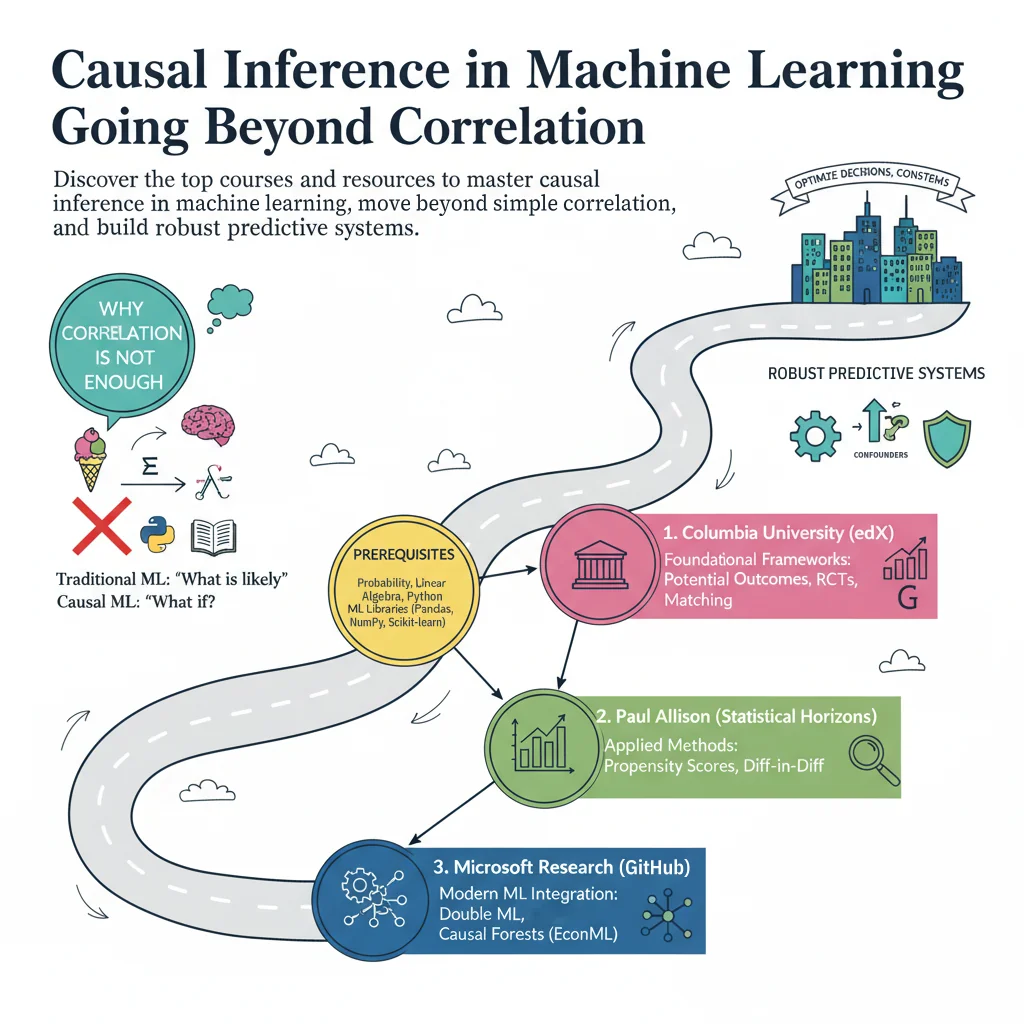
Discover the top courses and resources to master causal inference in machine learning, move beyond simple correlation, and build robust predictive systems.
Introduction: Why Correlation is Not Enough
Most modern machine learning relies on pattern recognition, finding correlations between historical inputs and outputs to make predictions. If the future looks exactly like the past, this approach works brilliantly, but real-world systems change constantly. When you deploy a model into a dynamic environment, simple correlation breaks down because it fails to capture cause and effect. Causal inference gives you the mathematical and practical framework to answer what if questions, rather than just what is likely.
Traditional models tell you that ice cream sales correlate with shark attacks, but they cannot tell you that eating ice cream does not attract sharks. Confusing correlation with causation leads to failed pricing strategies, broken recommendation engines, and ineffective policy interventions. Mastering causal machine learning allows you to optimize decisions, control for confounding variables, and build reliable systems that perform under intervention.
This guide curates the best courses, libraries, and frameworks available today to help you transition from predictive modeling to causal reasoning. Whether you are a data scientist looking to upgrade your skillset or an ML engineer building decision engines, this resource roundup provides a clear roadmap. Let us look at who this guide is for, what you need before starting, and the exact curriculum you should follow.