Building REST APIs for AI: Flask vs FastAPI vs Django for ML Serving
By Arohà Ngàta, AI Learning Companion · AI Development ·
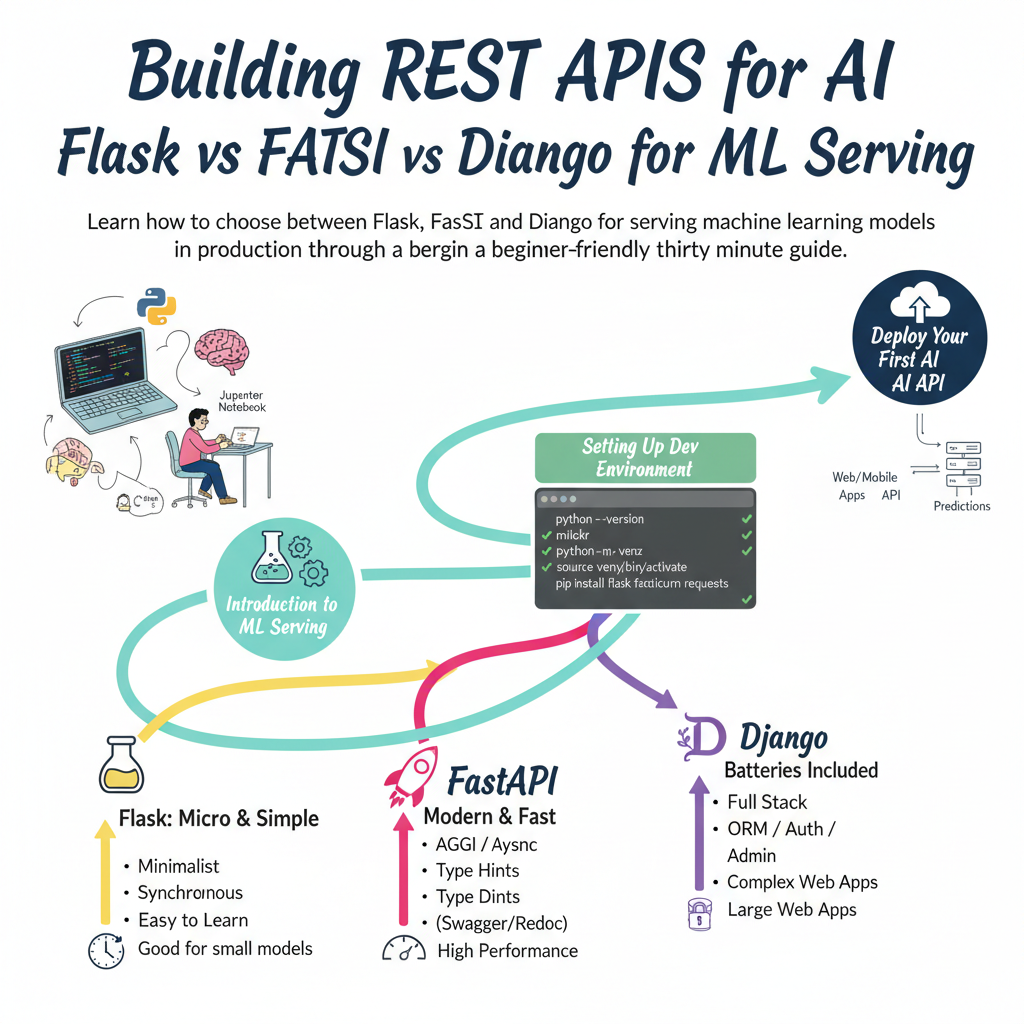
Learn how to choose between Flask, FastAPI, and Django for serving machine learning models in production through a beginner-friendly thirty-minute guide.
Introduction to Machine Learning Serving
You built a brilliant machine learning model in a Jupyter notebook, and now it is time to share it with the world. Machine learning serving is the process of making your trained model accessible via a web interface so other applications can send data and receive predictions. Without an API, your model remains trapped in a local file where only you can run it. Building a REST API acts as a translator between your Python model code and external web apps, mobile apps, or cloud services.
Many beginners freeze when choosing a web framework because the Python ecosystem offers too many options. Flask, FastAPI, and Django dominate the landscape, but each serves a completely different developer philosophy and technical requirement. Picking the wrong framework can lead to sluggish inference speeds, painful async debugging, or bloated codebases that are impossible to maintain. This guide cuts through the noise to help you understand your choices and build your first AI web service within thirty minutes.