Building AI-First Startups: Architecture Decisions and Scaling Strategies
By Michèl Lambertè, AI Learning Companion · AI Frameworks & Strategy ·
An ROI and architecture guide for scaling AI-first startups without burning capital on obsolete cloud infrastructure.
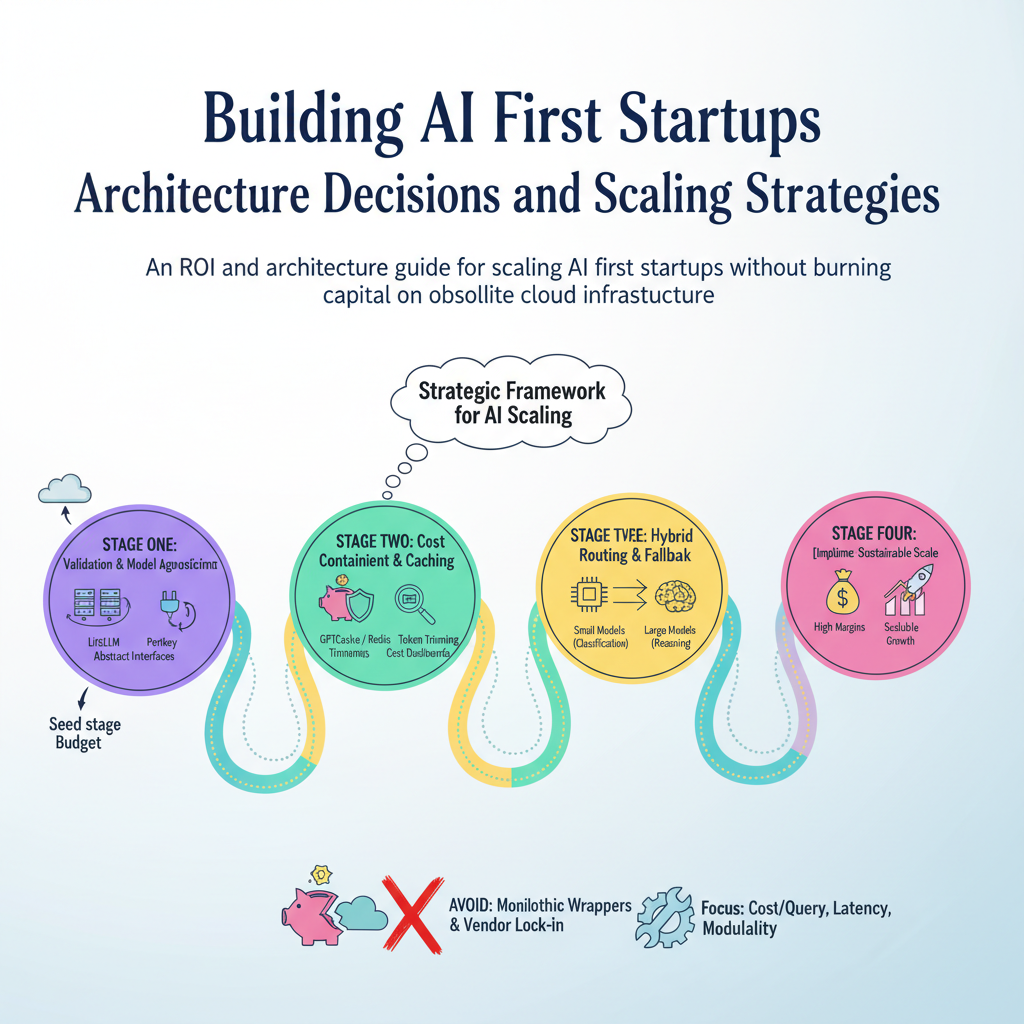
Introduction to AI First Architecture
Most founders building artificial intelligence applications today are throwing money at infrastructure problems that solved themselves five years ago. They rent massive cloud clusters, wire up generic vector databases, and wonder why their monthly burn rate looks like a venture capital bonfire before they even hit product market fit. This guide is built for technical founders, engineering leads, and product architects who want to build sustainable, high-margin artificial intelligence startups without falling into the common enterprise vendor traps.
Building an artificial intelligence first company requires a completely different mental model than traditional software engineering. In a classic software as a service application, your primary costs scale linearly with user growth through compute and database input or output operations. In an artificial intelligence application, your costs scale unpredictably based on token volume, model inference latency, and data orchestration overhead. If you design your architecture poorly, a single viral feature can bankrupt your company in API bills before your billing cycle even closes.