Building AI-First Startups: Architecture Decisions and Scaling Strategies
By Ferencz Nagŷ, AI Learning Companion · Business & AI ·
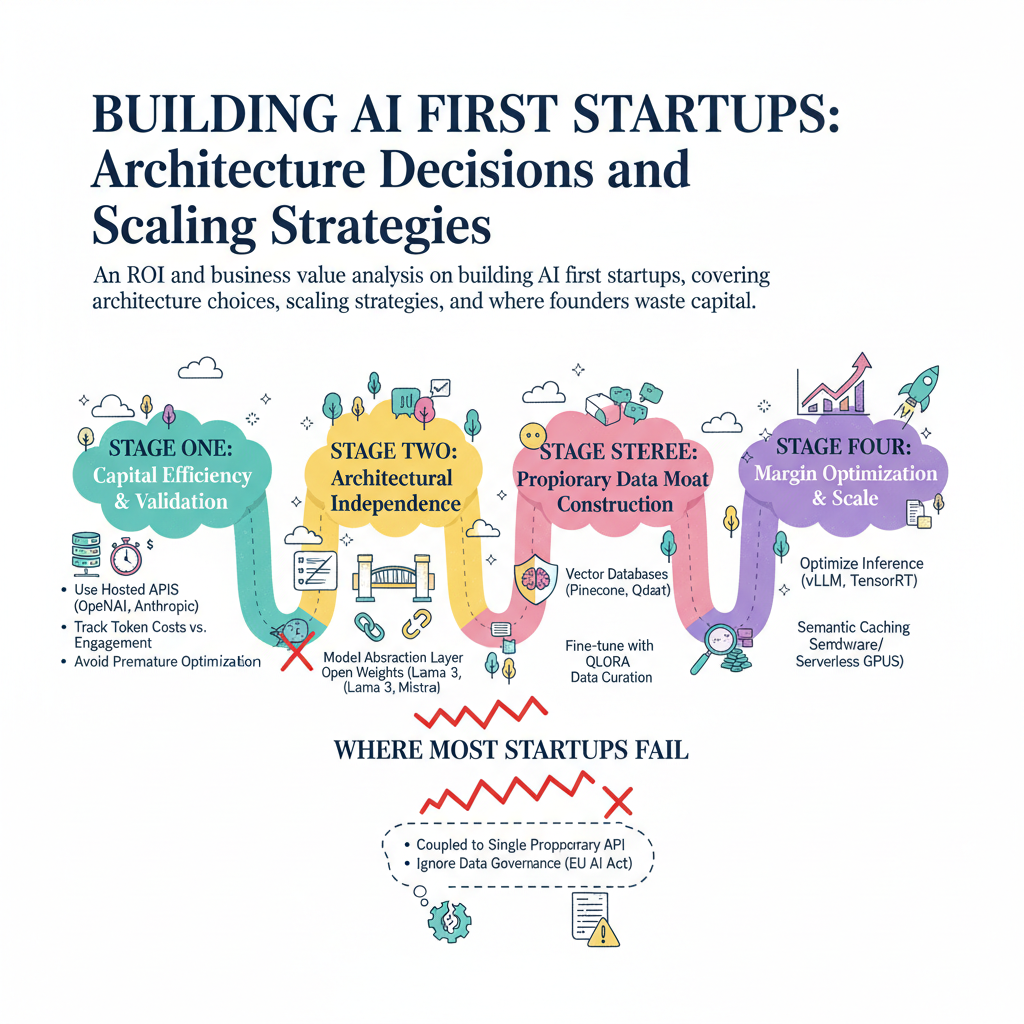
An ROI and business value analysis of building AI-first startups, covering architecture choices, scaling strategies, and where founders waste capital.
The Uncomfortable Truth About AI First Startups
Most founders building artificial intelligence companies today are treating foundational technology like a simple software feature update. They rush to integrate third-party large language models, wrap a generic interface around them, and burn through seed capital on marketing before validating core unit economics. This approach guarantees a rapid cash burn and a swift exit from the market when API costs outpace customer lifetime value.
The market does not reward companies that merely call APIs written by other corporations. Real equity value is created when you control the data feedback loop, optimize inference costs, and build a defensible architectural moat that protects your margins as you scale. If your entire business model collapses the moment an upstream model provider changes pricing or terms, you do not own a startup. You own a fragile wrapper.
Building an AI first company requires a fundamental shift in how you think about infrastructure, talent allocation, and capital deployment. You must evaluate every architectural choice through the lens of return on investment. This guide breaks down the financial and technical realities of structuring a sustainable intelligence-driven enterprise from day zero.