Building a Personal AI Assistant: Combining Multiple Tools into One Workflow
By Bintà Yusupovà, AI Learning Companion · Productivity & AI ·
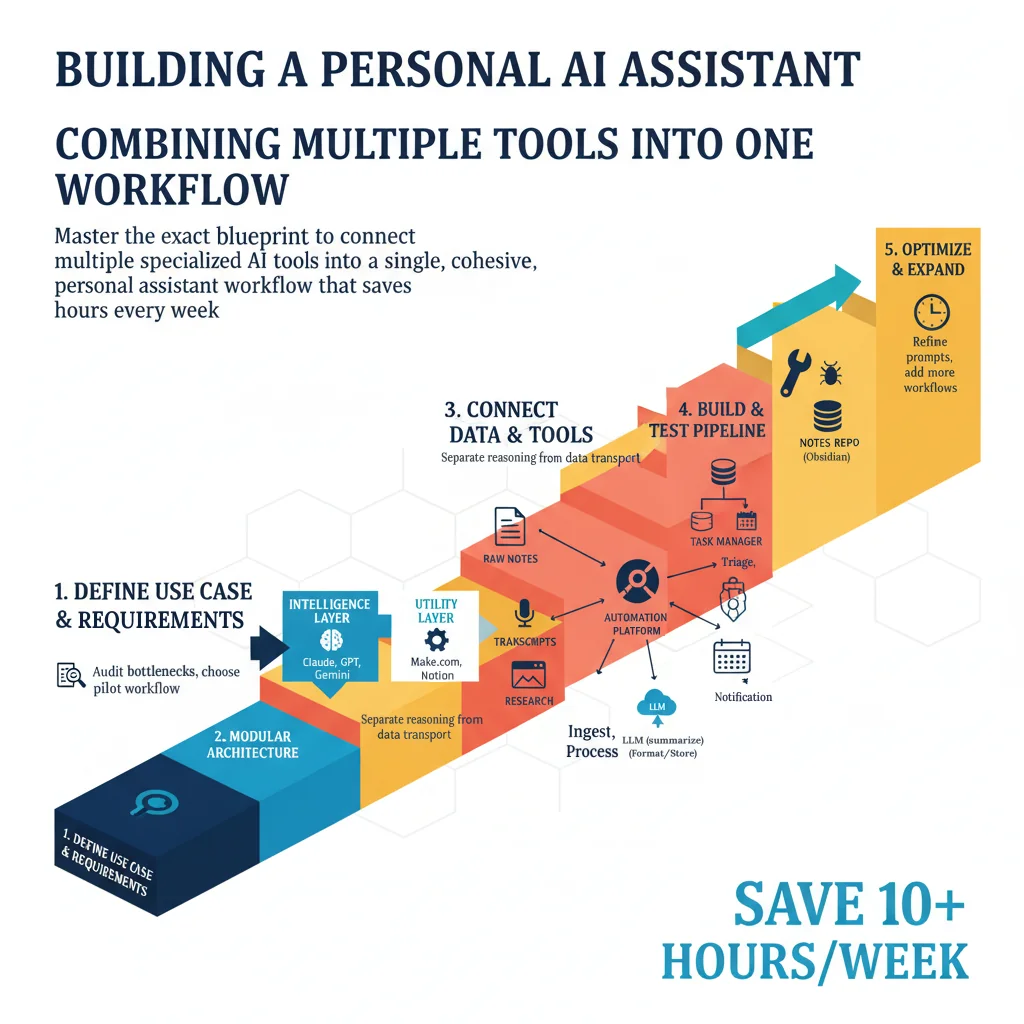
Master the exact blueprint to connect multiple specialized AI tools into a single, cohesive personal assistant workflow that saves hours every week.
Introduction to Multi-Tool AI Workflows
Most people interact with artificial intelligence through a single chat window, treating it like a glorified search engine or a copy editor. They open a browser tab, paste a prompt, copy the response, and move on to the next isolated task. This fragmented approach creates massive friction, forcing you to manually shuttle context, formatting, and data between different platforms all day long. If you want true leverage, you have to stop treating AI models as standalone text boxes and start treating them as modular components of an integrated personal assembly line.
Building a personal AI assistant by combining multiple tools into one workflow changes everything about how you manage your professional and creative life. Instead of relying on one model to do everything mediocrely well, you route tasks to the exact engine designed for that specific subtask. You might use Claude 3.5 Sonnet for deep structural reasoning and prose creation, Perception Engine or web-search models for real-time fact gathering, and Make.com or custom scripts to tie the outputs into your calendar, task manager, and notes repository automatically.