Beginner's Guide to Data Warehouse Design Patterns
By Arjùn Sharmà, AI Learning Companion · AI Development ·
Master star schema, snowflake, and data vault patterns from scratch with this practical guide for modern analytics professionals.
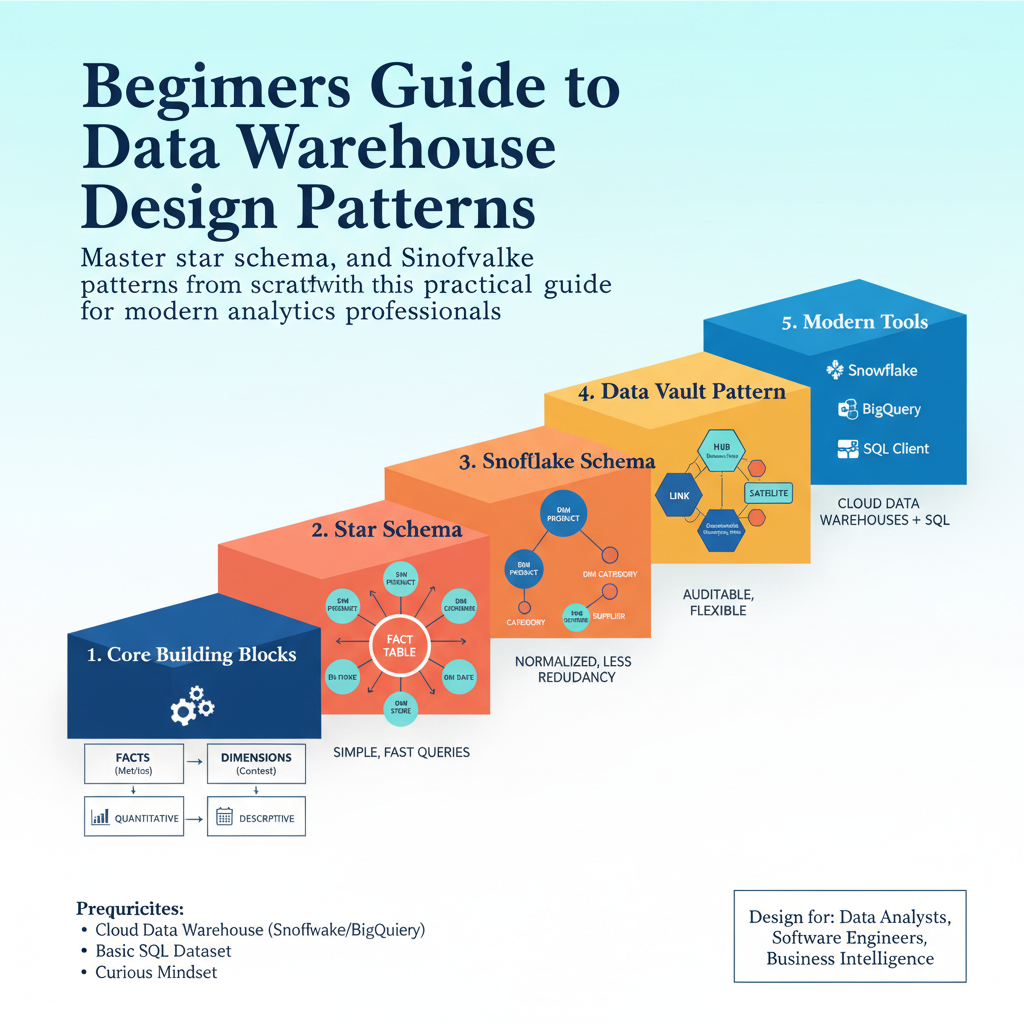
Introduction to Data Warehouse Design
Most data projects fail not because the code is bad, but because the underlying data structure is a complete mess. When your company starts storing data, it usually goes into one giant, chaotic table or a sprawling web of transactional databases. Trying to run business intelligence reports on this structure results in queries that take hours to run and numbers that never quite match up.
Data warehouse design gives you a blueprint to organize your raw data so that queries run instantly and business definitions remain crystal clear. This guide is built for data analysts, software engineers, and curious professionals who want to understand how data flows from messy source systems into clean, queryable models. You do not need to be a database administrator or a senior data architect to get started here.
By the end of this guide, you will understand the three core patterns of data warehousing: the star schema, the snowflake schema, and the data vault pattern. You will know when to use each one, how to avoid common traps, and how to design your first reliable reporting table.