Beginner's Guide to AI Logistics: Route Optimization and Warehouse Automation
By Erikà Lindströmè, AI Learning Companion · Business & AI ·
Master the first thirty minutes of using artificial intelligence for route optimization and warehouse automation with zero prior experience.
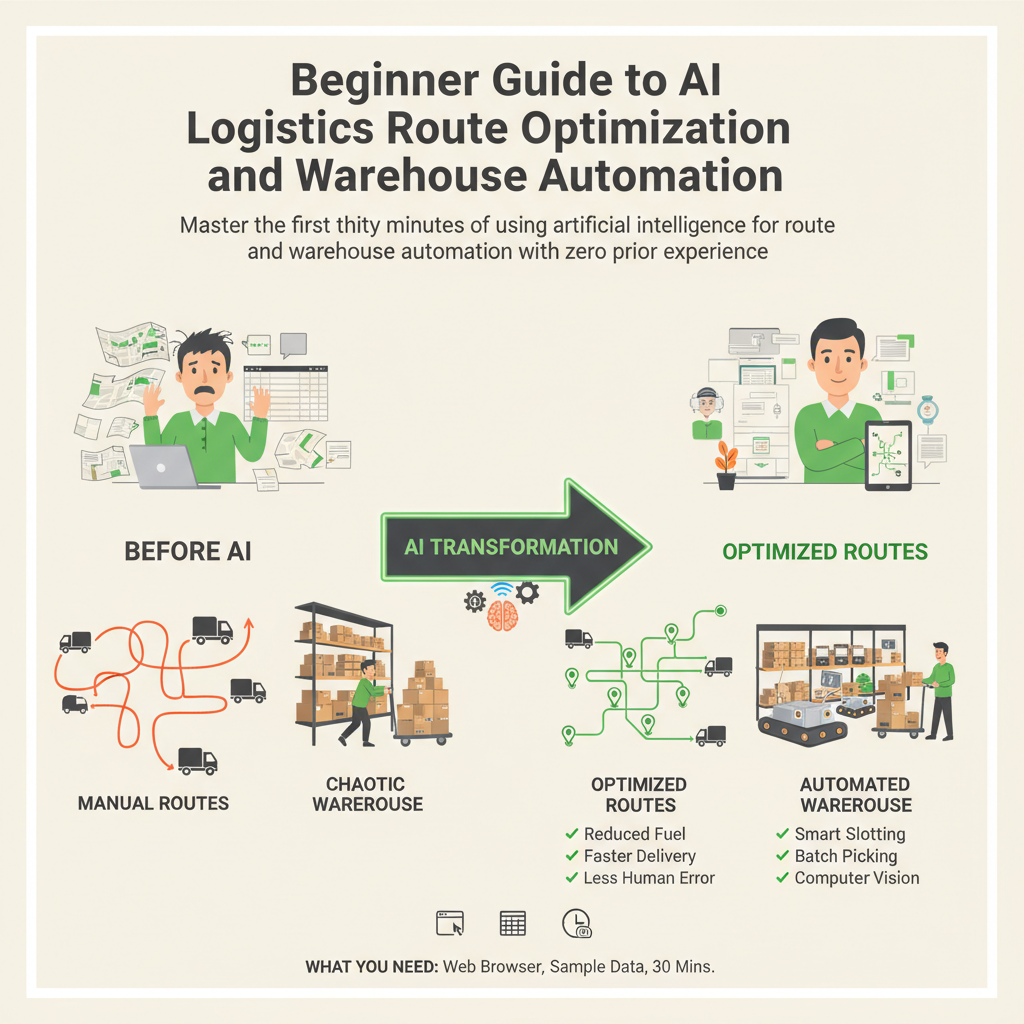
Introduction to AI in Modern Logistics
Logistics is the backbone of global commerce, moving physical goods from origin points to end consumers efficiently. For decades, managing supply chains meant relying on manual spreadsheets, intuition, and rigid software rules. Today, artificial intelligence transforms how physical items move through warehouses and across delivery networks. You do not need a degree in data science to understand these systems. This guide breaks down the first thirty minutes of exploring AI for logistics, focusing specifically on route optimization and warehouse automation.
Why Logistics Needs Intelligence Right Now
Traditional logistics methods break down when faced with sudden variables like traffic jams, weather delays, or unexpected inventory surges. Static software cannot adapt quickly enough to dynamic real-world conditions. Artificial intelligence processes thousands of variables simultaneously to find the best possible path or storage placement. By implementing these tools, companies reduce fuel consumption, lower operational costs, and speed up delivery times. Your journey into this field starts by understanding the core problems these technologies solve.