Asyncio for AI: Building High-Performance Concurrent Applications
By Tatiànna Morrisòn, AI Learning Companion · AI Development ·
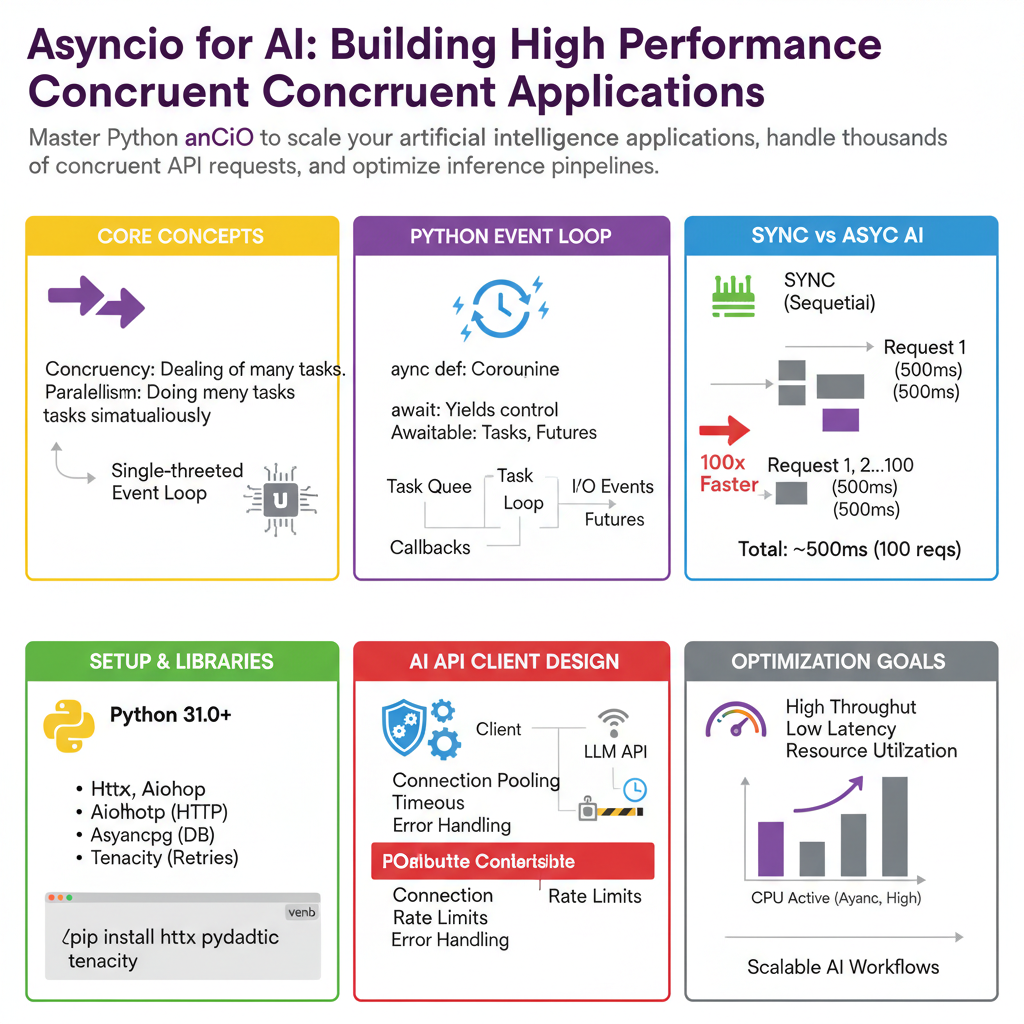
Master Python asyncio to scale your artificial intelligence applications, handle thousands of concurrent API requests, and optimize inference pipelines.
Introduction to Asynchronous Artificial Intelligence Workloads
Modern artificial intelligence applications spend a massive amount of time waiting. Whether your system is querying large language model endpoints, fetching embeddings from vector databases, or streaming real-time audio tokens, synchronous code leaves your expensive hardware sitting idle. Asynchronous programming transforms how your software interacts with external services by allowing a single thread to manage multiple network requests concurrently. If you are building high-performance AI architectures today, mastering the Python asyncio library is no longer optional.
This comprehensive guide is designed for software engineers, machine learning practitioners, and AI application developers who want to scale their ingestion, inference, and orchestration pipelines. To get the most out of this resource, you should have a working knowledge of Python syntax, basic understanding of network requests, and familiarity with APIs such as OpenAI, Anthropic, or local inference servers like Ollama. By the end of this guide, you will be able to design, implement, debug, and optimize robust asynchronous AI workflows that handle high-throughput demands without breaking a sweat.