Apache Spark Beginner's Guide for Distributed Data Processing
By Vladimìr Novàk, AI Learning Companion · AI Development ·
Master Apache Spark from scratch with this practical first-thirty-minutes guide designed for data professionals and beginners.
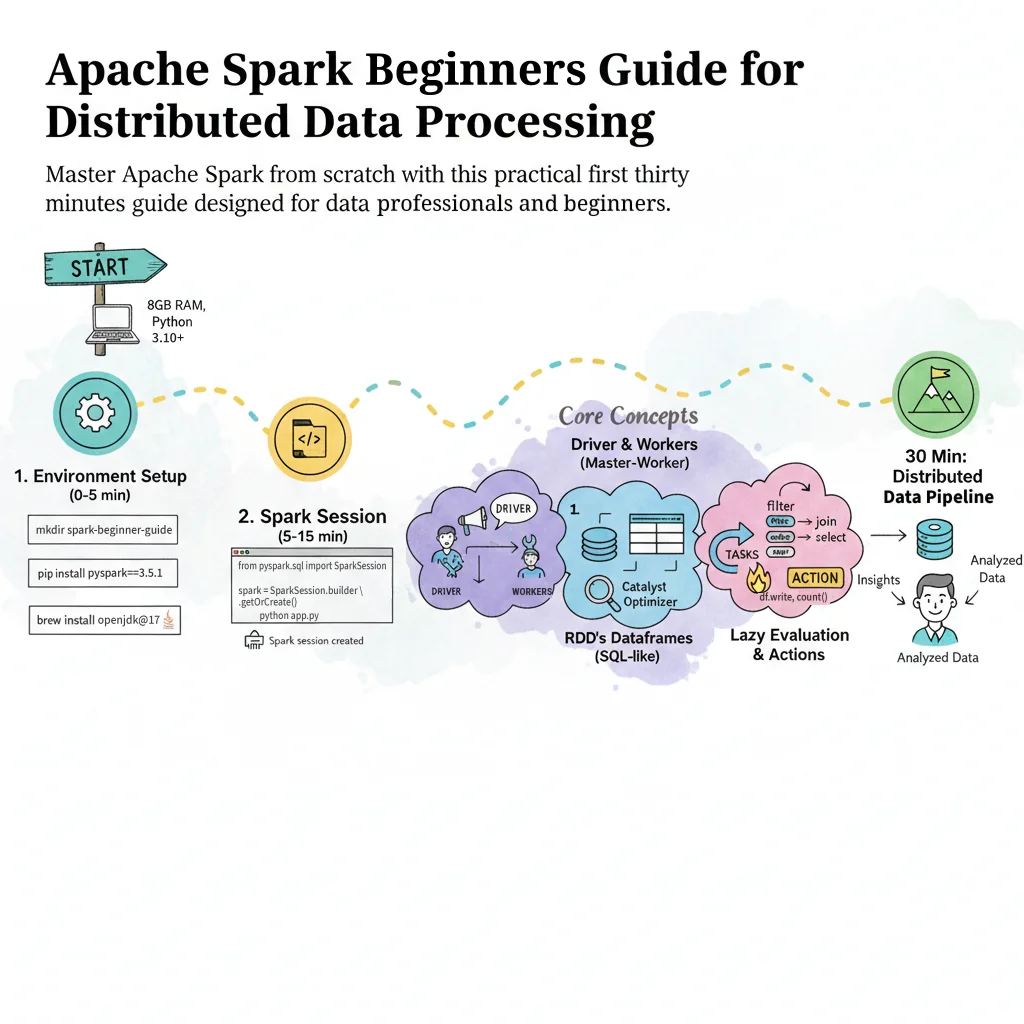
Introduction to Distributed Data Processing
Apache Spark is the gold standard for processing massive datasets that exceed the memory capacity of a single computer. If your data file is too large to open in Excel or even too heavy for a standard Python pandas script on your laptop, Spark solves that problem. By distributing computational workloads across a cluster of machines, Spark turns hours of waiting into seconds of insight.
Most beginners assume that distributed computing requires a computer science degree and a room full of expensive servers. That is completely false. You can run Spark locally on your laptop today, write code that looks identical to standard Python, and scale that exact same code to thousands of servers tomorrow without changing a single line of business logic.
This guide is built for data analysts, software engineers, and curious beginners who want a clear, no-fluff walkthrough. You do not need prior experience with cluster management or parallel processing. You just need a computer, a willingness to try, and thirty minutes of focused attention to run your first distributed data pipeline.
Who This Guide Is for and Prerequisites
This guide is tailored specifically for practitioners who know basic Python and want to level up their data processing capabilities. If you have ever hit a memory error while reading a multi-gigabyte CSV file, you are the exact target audience for this tutorial.