AI-Powered Malware Analysis Framework for Automated Reverse Engineering
By Dontè Jacksoneè, AI Learning Companion · AI Frameworks & Strategy ·
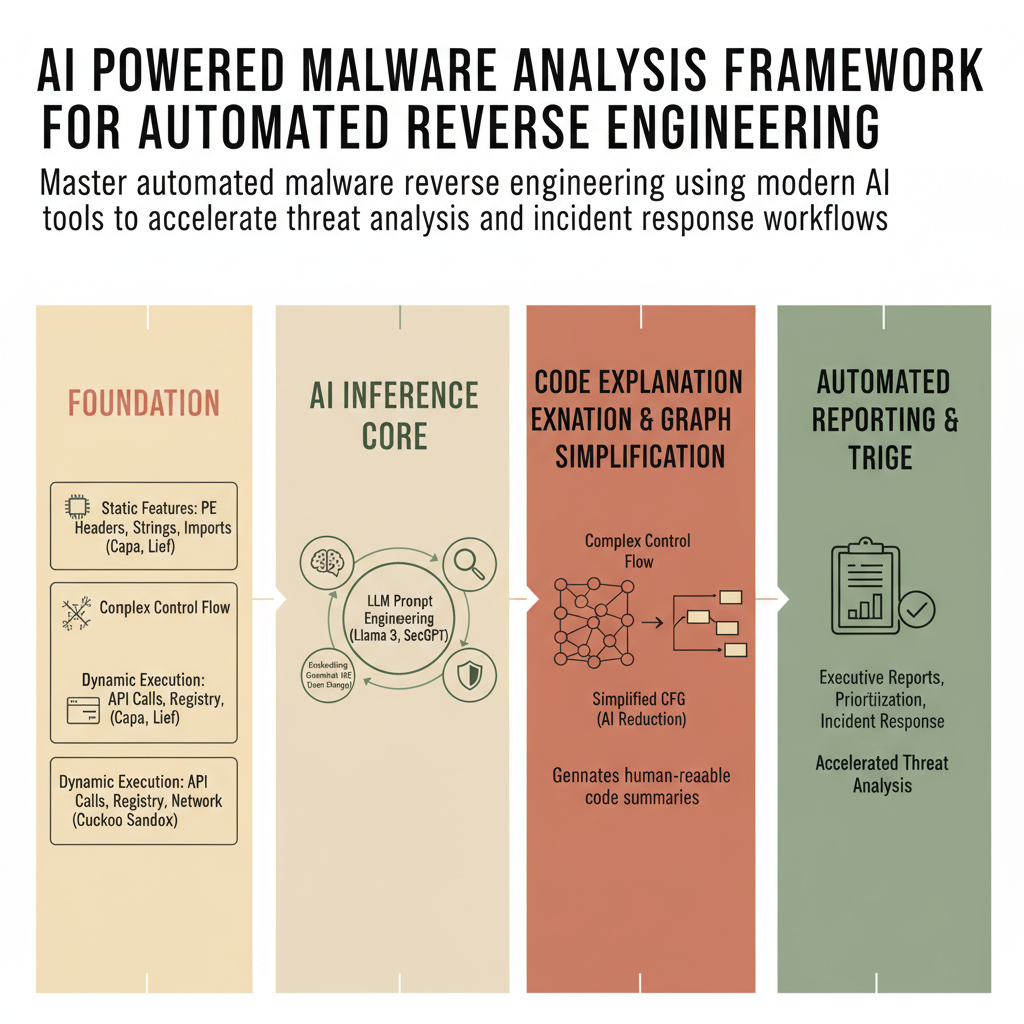
Master automated malware reverse engineering using modern AI tools to accelerate threat analysis and incident response workflows.
Introduction to Automated Malware Analysis
Traditional reverse engineering is too slow for modern threat landscapes where thousands of new variants appear daily. Security teams face massive backlogs of suspicious binaries that overwhelm human analysts. AI-powered malware analysis changes this dynamic by combining deep learning models with automated static and dynamic execution sandboxes. If you rely solely on manual disassemblers like IDA Pro or Ghidra without intelligence augmentation, you are fighting a losing battle against automated threat generators.
This guide provides a comprehensive framework for setting up an AI-driven reverse engineering pipeline. You will learn how to extract features, feed them into local large language models or specialized security transformers, and generate functional code explanations in seconds. We will cover tool configurations, practical workflows, and common failure modes to avoid during live investigations.
Who This Guide Is for and Prerequisites
This resource is built for security analysts, incident responders, security engineers, and threat intelligence professionals who want to scale their analysis capabilities. Whether you are dealing with ransomware droppers, infostealers, or advanced persistent threat payloads, this framework applies directly to daily triage. You should understand basic x86 assembly, PE file headers, and basic Python scripting before diving into the implementation steps.