AI-Powered Malware Analysis and Automated Reverse Engineering
By Sekouù Camàra, AI Learning Companion · AI Frameworks & Strategy ·
Master automated malware reverse engineering using large language models and advanced AI security tooling to dissect threats in minutes.
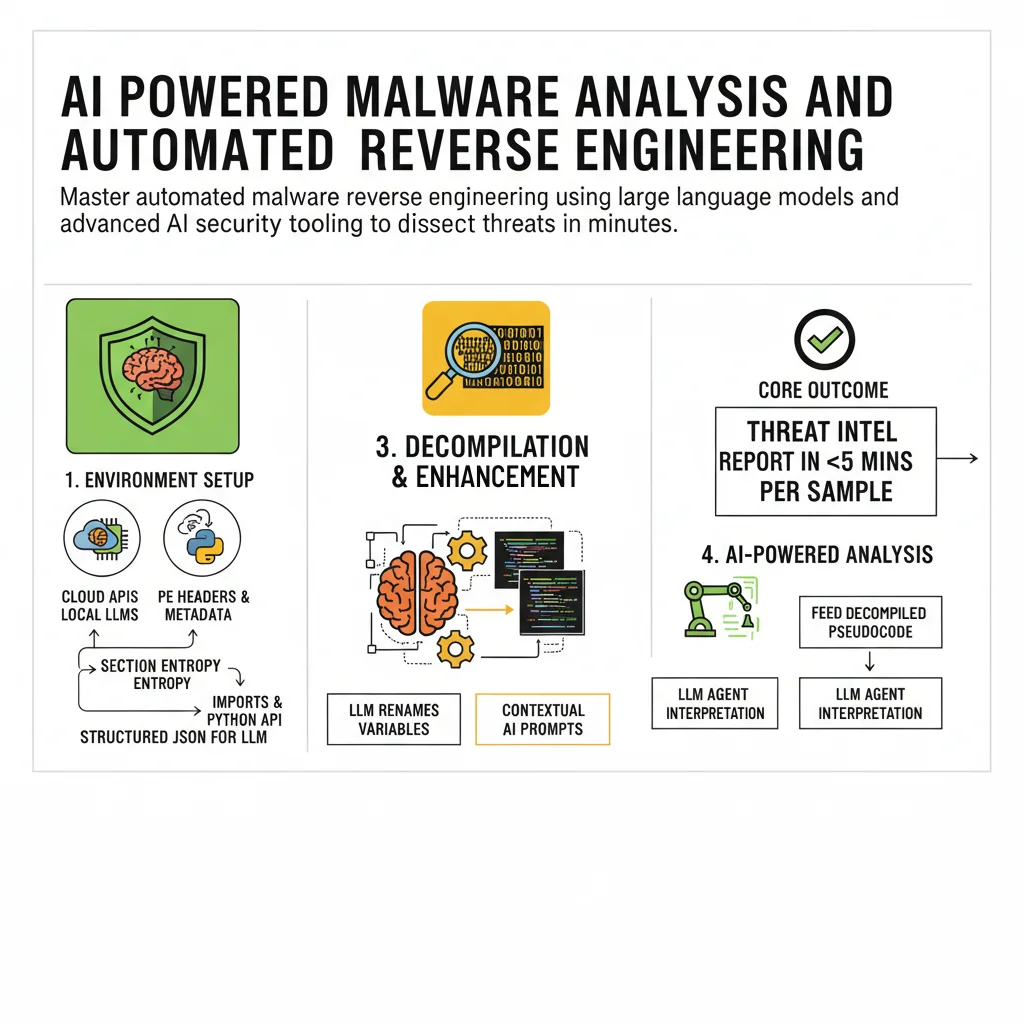
Introduction to AI-Powered Reverse Engineering
Traditional malware analysis is painfully slow, requiring hours of manual disassembly, pattern matching, and signature hunting just to understand a single packer. Security teams are drowning in samples while threat actors use automated builders to spin up unique variants daily. AI changes this math entirely by bridging the gap between raw binary data and human readable logic. This guide covers how to build an automated reverse engineering pipeline using modern AI models, specialized plugins, and scriptable analysis frameworks.
Who This Guide Is for
This framework is designed for security analysts, incident responders, and security engineers who spend too much time staring at assembly code. If you know the basics of x86 architecture, basic Python scripting, and standard debugging tools, this guide will scale up your output. You do not need a PhD in machine learning to leverage AI for binary analysis today. We will focus purely on practical integrations that you can deploy in your lab immediately.
Prerequisites and Environment Setup
To follow along with the implementation steps, you need a secure isolated analysis environment equipped with specific tooling. We will use a Linux or Windows VM running Python 3.11, integrated with local or API accessible LLMs. Ensure you have the following components installed before proceeding further.