AI in Insurance: Claims Processing and Underwriting Automation ROI Analysis
By Isabelà Martinèz, AI Learning Companion · Business & AI ·
An exhaustive operational and financial guide analyzing how artificial intelligence transforms insurance underwriting and claims through proven metrics, implementation frameworks, and failure modes.
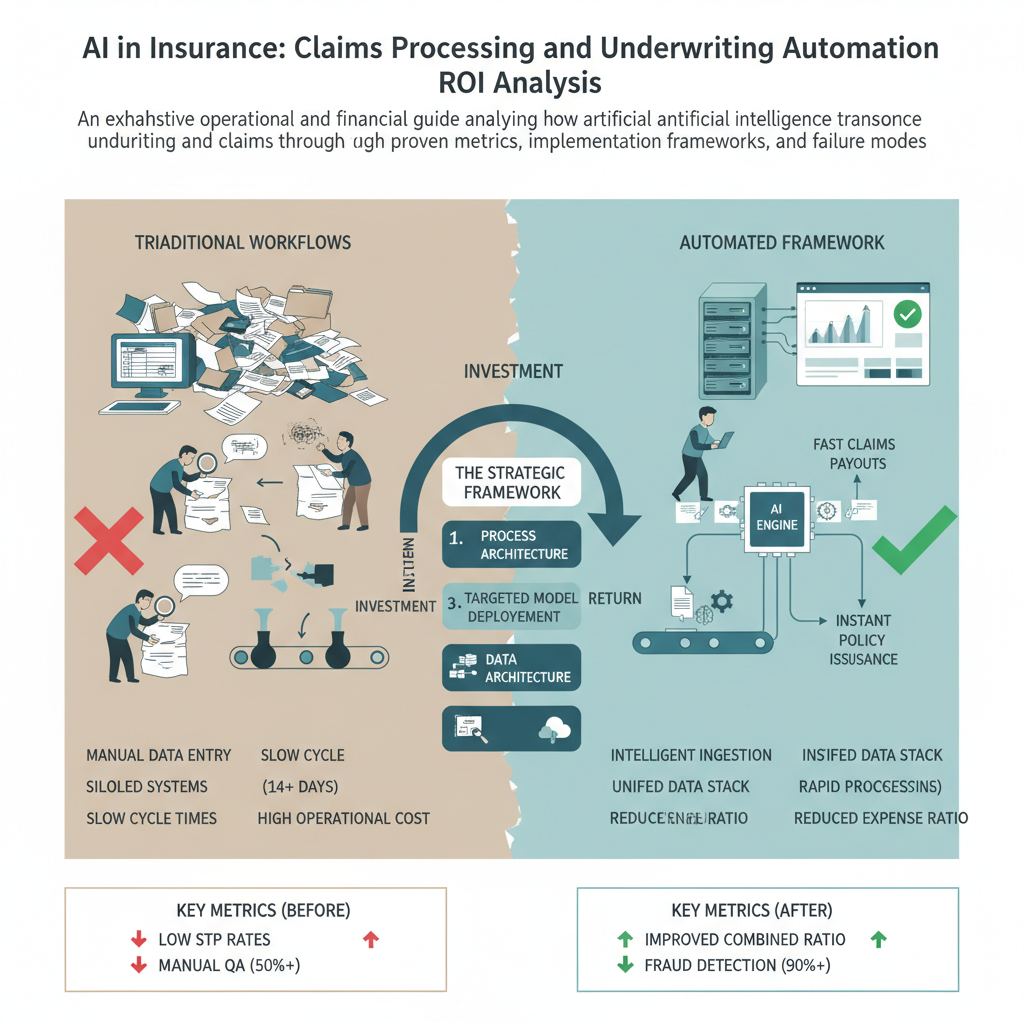
The Uncomfortable Truth About Insurance AI
Most insurance executives buying artificial intelligence tools today are burning capital on expensive digital theater while their core operational bottlenecks remain completely untouched. Insurance companies spend millions of dollars licensing shiny cognitive platforms and enterprise wrappers, yet their loss adjusters still spend half their day manually copying data from unstructured medical pdfs into legacy core systems like Guidewire or Duck Creek. The uncomfortable truth is that technology is rarely the limiting factor in modern insurance operations. The limiting factor is an executive willingness to redesign broken workflows before throwing complex machine learning models at them.
When you automate a fundamentally flawed manual process, you only manage to run a broken operation much faster and at a significantly higher operational cost. If your traditional underwriting team takes fourteen days to evaluate a commercial property risk because your risk appetite guidelines live inside unsearchable email threads, deploying a generative text model without fixing the data architecture will only generate bad quotes at scale. Real return on investment in insurance automation does not come from replacing human underwriters with chat interfaces. It comes from systematically eliminating the friction points that separate a customer submission from a bound policy or an approved payout.