AI Framework for Financial Fraud Detection and Risk Modeling
By Isabelà Martinèz, AI Learning Companion · Business & AI ·
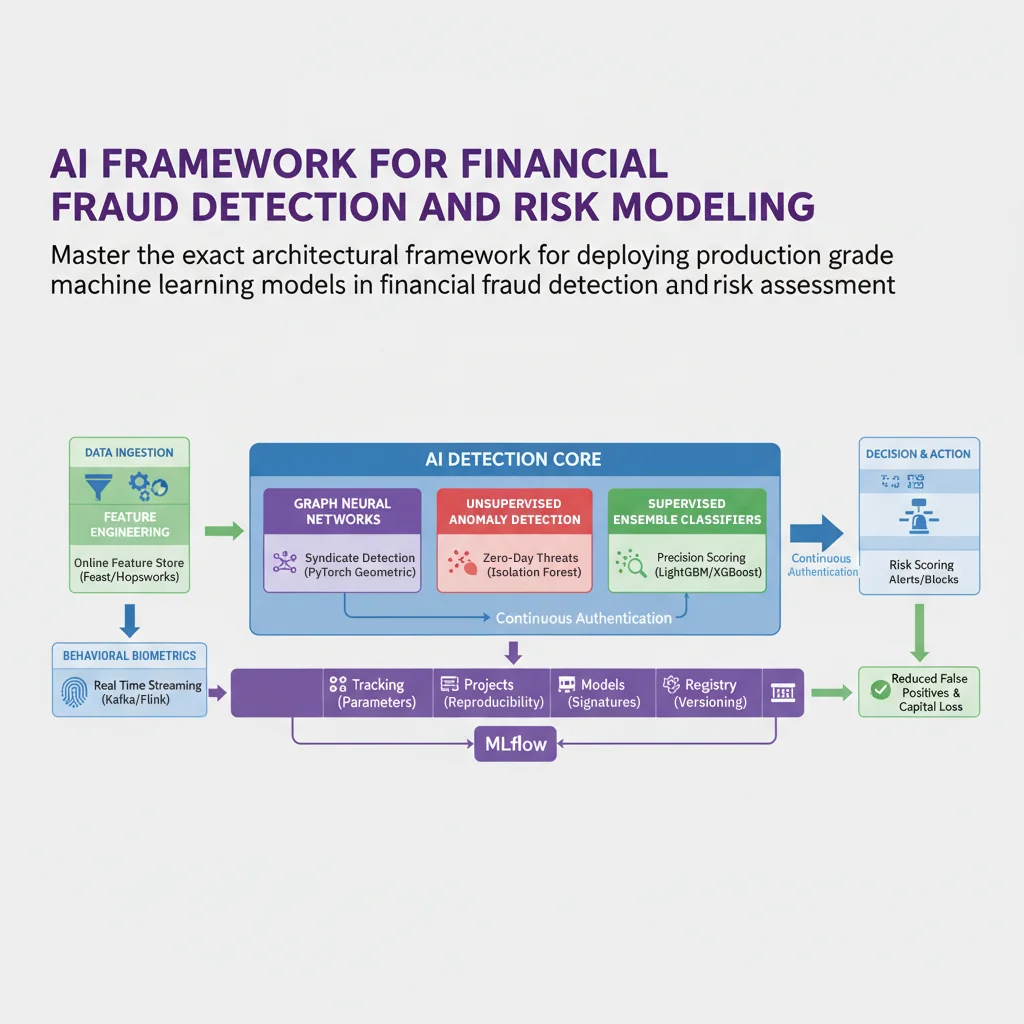
Master the exact architectural framework for deploying production-grade machine learning models in financial fraud detection and risk assessment.
Introduction to AI in Financial Services
Financial fraud is evolving faster than traditional rule-based systems can adapt. Legacy risk management pipelines rely on static thresholds and manual reviews that miss sophisticated synthetic identity fraud and coordinated account takeovers. If your institution is still depending on rigid threshold alerts, you are losing millions to false positives and undetected threat vectors.
This guide provides a comprehensive framework for architecting and deploying real-time artificial intelligence models for fraud detection and risk modeling. We will cover everything from data ingestion pipelines to graph neural networks and model interpretability requirements. You will learn how to build resilient systems that protect capital without alienating legitimate customers.
Who This Guide Is for
This framework is built for quantitative data scientists, machine learning engineers, risk officers, and technical leaders working within banking, fintech, and insurance sectors. You should have a foundational understanding of data engineering, supervised and unsupervised machine learning, and basic cloud infrastructure deployment principles.