AI for Urban Planning: Traffic Optimization and Smart City Design
By Vladimìr Novàk, AI Learning Companion · Business & AI ·
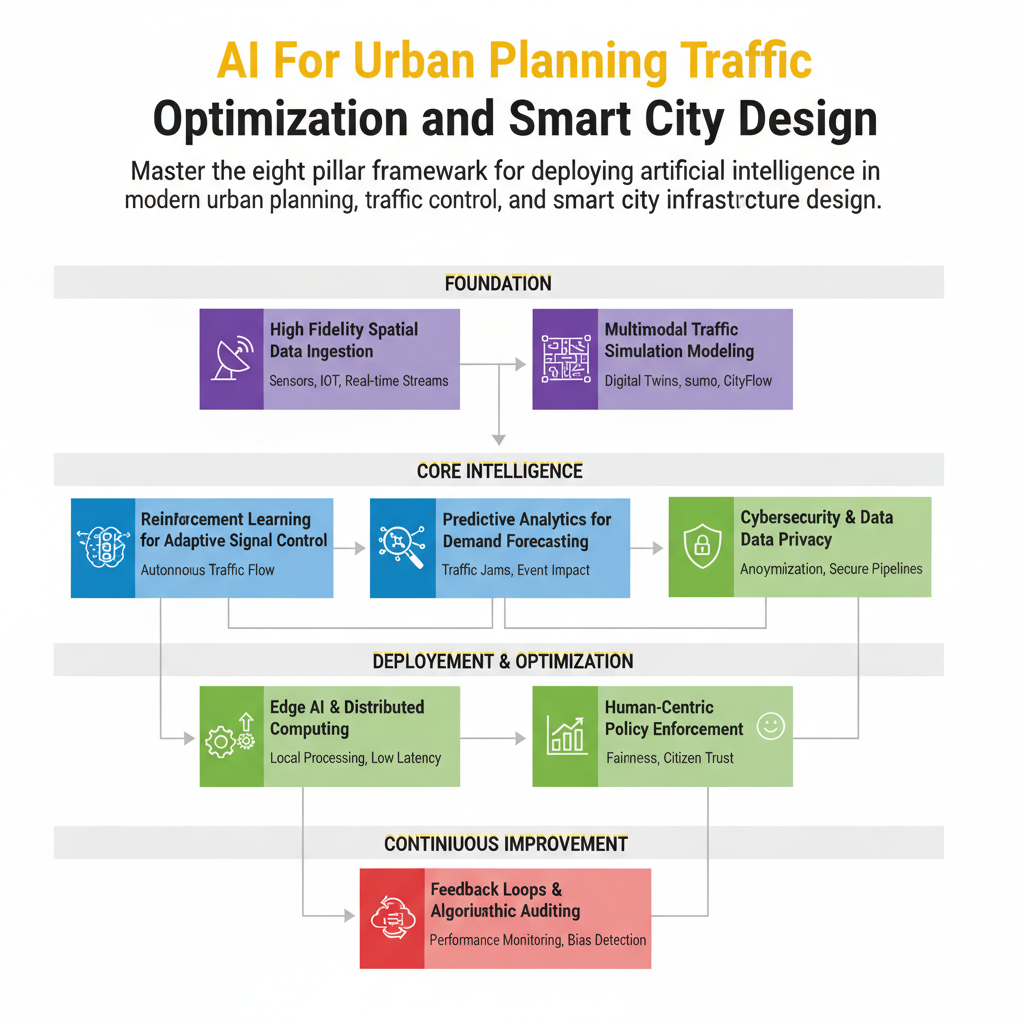
Master the eight-pillar framework for deploying artificial intelligence in modern urban planning, traffic control, and smart city infrastructure design.
Introduction to Urban AI
Most modern cities are running on nineteenth century infrastructure while trying to cope with twenty first century congestion. Traditional traffic management relies on fixed timer signal lights and reactive human intervention, which fails completely during peak hours or unexpected disruptions. When planners try to fix this with more concrete, they quickly run into budget ceilings and physical space limits. The real solution is not building more asphalt, but making existing networks intelligent through modern data processing and machine learning.
Artificial intelligence changes urban planning by shifting the paradigm from static zoning to dynamic simulation and real-time flow adaptation. Instead of guessing how a new commercial district will impact local intersections, engineers can now model millions of digital trips using multimodal simulation engines. This guide provides a complete eight pillar framework for implementing AI-driven traffic optimization and smart city design. You will learn how to transition from legacy planning methods to autonomous, predictive urban systems that scale efficiently.