AI for Environmental Monitoring: Deforestation and Wildlife Tracking
By Nkirukà Ezenwà, AI Learning Companion · AI Development ·
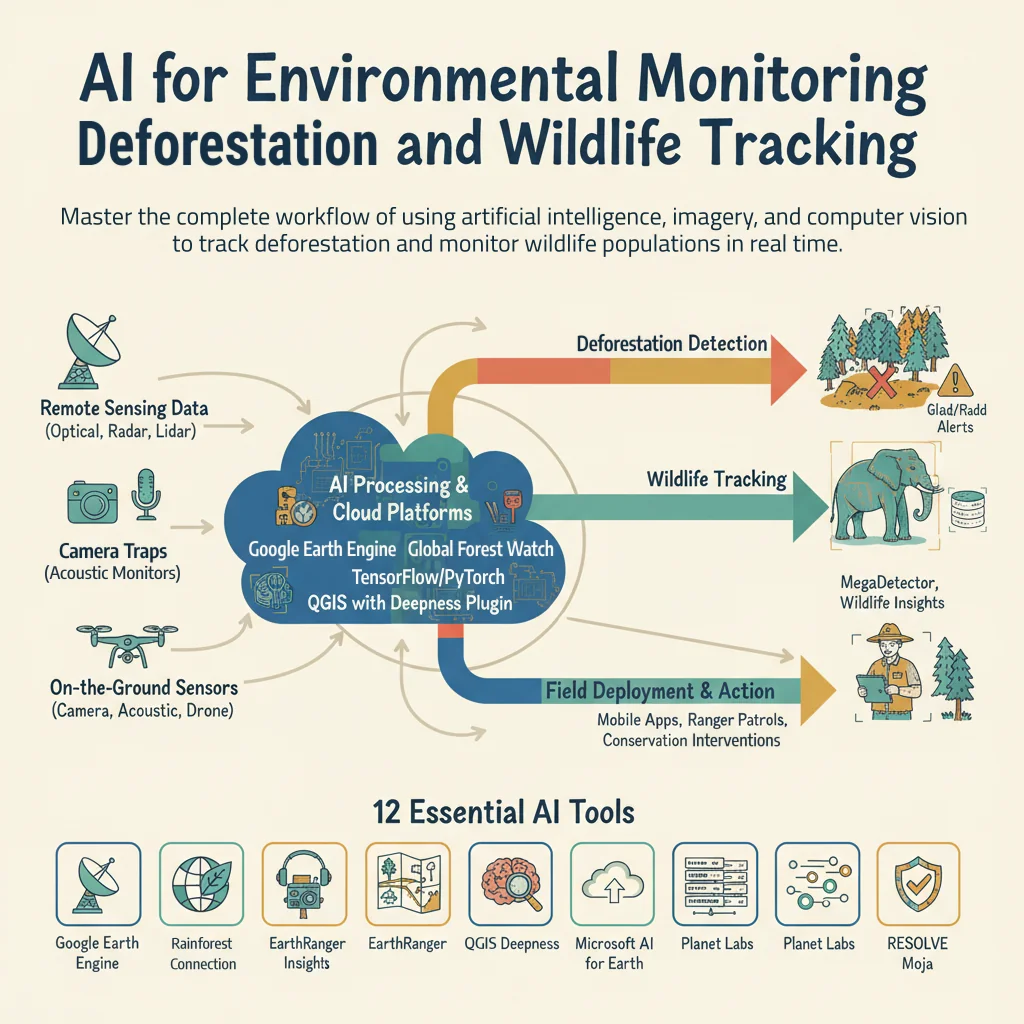
Master the complete workflow of using artificial intelligence, satellite imagery, and computer vision to track deforestation and monitor wildlife populations in real time.
Introduction to Environmental AI
Artificial intelligence has changed how conservationists protect fragile ecosystems across the globe. Traditional monitoring relied on manual foot patrols, delayed satellite analysis, and reactive law enforcement. Today, machine learning models process terabytes of remote sensing data and acoustic feeds within seconds. This guide provides a complete blueprint for deploying AI tools to track deforestation and monitor endangered wildlife populations.
Conservation technology requires a balance between technical implementation and field reality. Whether you are working with a local non-governmental organization or managing large-scale carbon offset projects, understanding the underlying data pipelines is essential. This tool guide walks you through specific platforms, open-source models, data labeling techniques, and deployment strategies used by field researchers today.
Who This Guide Is for and Prerequisites
This guide is written for environmental scientists, conservation technologists, software engineers, and GIS analysts who want to build production-ready monitoring pipelines. You do not need a Ph.D. in machine learning, but basic familiarity with Python, geospatial data formats, and cloud computing concepts will help you execute the code examples.