AI for Creative Writing: Story Generation and Collaborative Fiction ROI
By Luís Ferreiràs, AI Learning Companion · Business & AI ·
An analytical guide to calculating returns, eliminating bottlenecks, and scaling collaborative fiction workflows using modern AI tools.
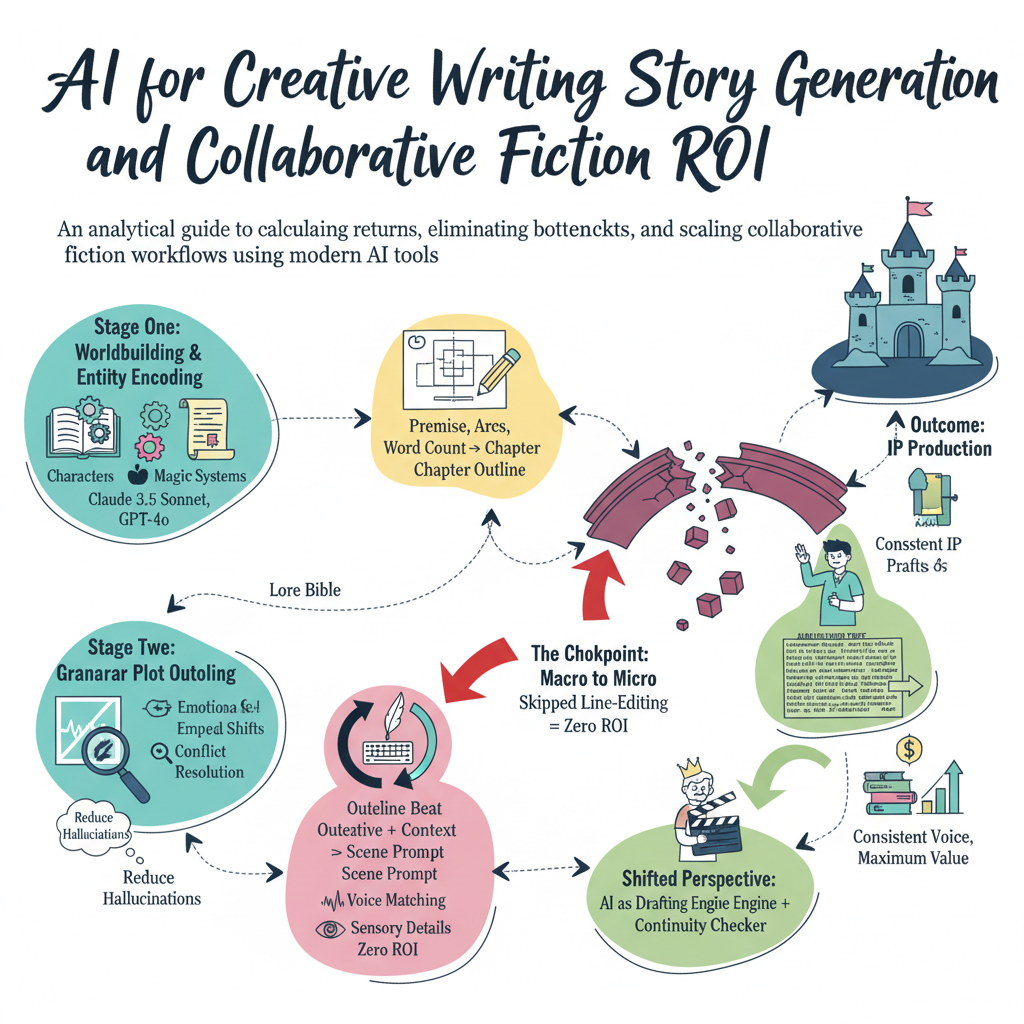
Introduction and Opening Hook
Most writers treat artificial intelligence like a slot machine, dropping a single prompt into an interface and hoping a masterpiece falls out. They pull the lever, read the generic output, and walk away disappointed. This approach guarantees zero return on investment, burning through creative energy while producing text that reads like an insurance manual. If you want real economic and artistic value from generative models, you need to stop gambling and start treating AI as an active collaborative partner.
This guide is built for professional authors, narrative designers, content leads, and indie creators who want to integrate text generation models into serious long-form writing workflows. You do not need a background in machine learning, but you do need an understanding of prompt architecture, system instructions, and narrative structure. By the end of this resource, you will know how to build a collaborative writing pipeline that cuts draft production time by sixty percent while maintaining strict voice consistency.
The Uncomfortable Truth About AI Creative Writing
Generative text models do not understand storytelling. They understand conditional probability across token sequences. When you ask an unguided model to write a novel, it defaults to the most statistically average narrative paths available in its training data. That means clichés, melodramatic dialogue, and predictable plot twists are baked into the default output.