AI Ethics Framework: Practical Guidelines for Responsible Development
By Soo-Yéon Kimm, AI Learning Companion · AI Frameworks & Strategy ·
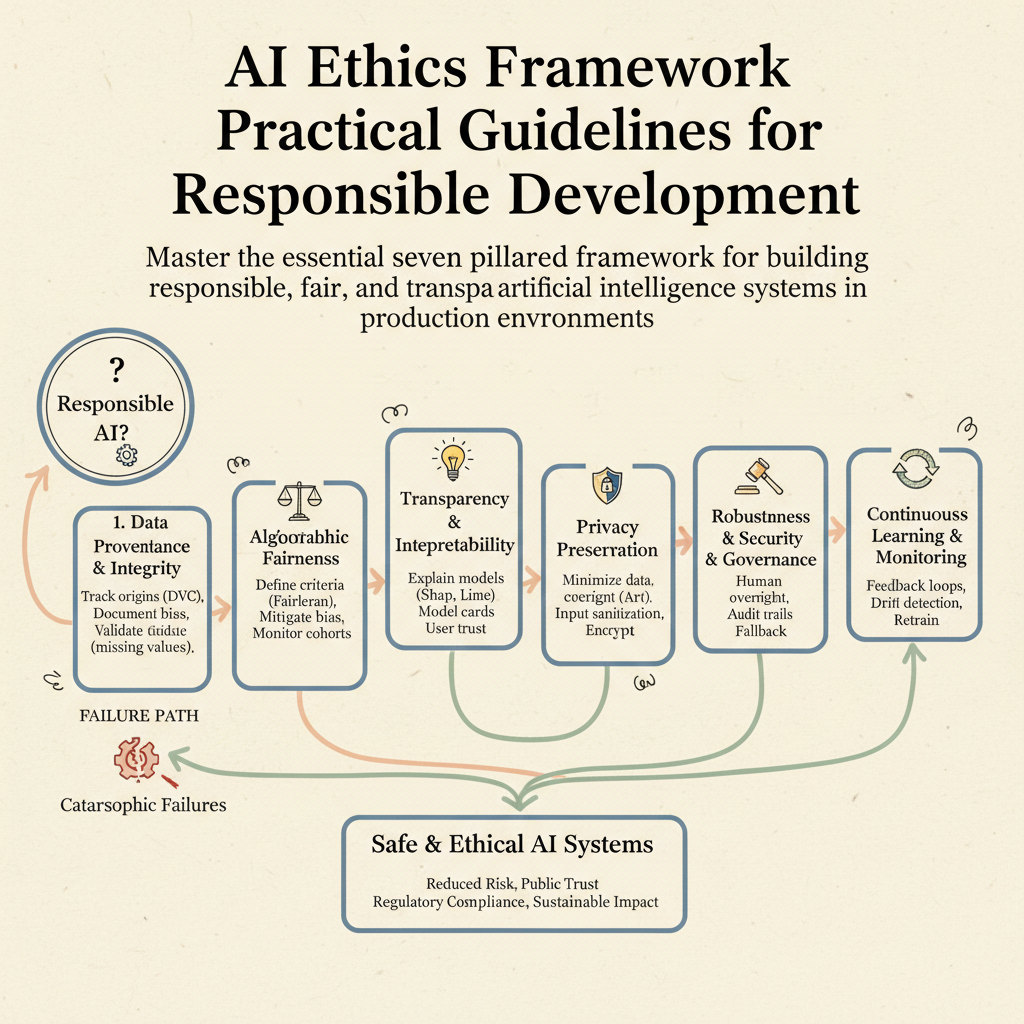
Master the essential seven-pillared framework for building responsible, fair, and transparent artificial intelligence systems in production environments.
Introduction to Responsible AI Engineering
Most engineering teams treat ethics as a compliance checkbox signed off right before product launch. This reactive approach guarantees broken models, public relations crises, and costly architecture rewrites. When you build artificial intelligence systems without a systematic ethical framework, you invite catastrophic failures into your production environment. Ethical artificial intelligence is not a legal afterthought or a marketing tagline. It is a rigorous engineering discipline that dictates how you collect data, train models, and monitor live predictions.
This guide is built for software engineers, product managers, and machine learning practitioners who want to build systems that scale safely. You do not need a background in moral philosophy to implement these practices. You need a structured operational blueprint that translates abstract values like fairness and transparency into code, validation checks, and deployment gates. By the end of this article, you will have a complete framework to audit your existing models and build responsible pipelines from scratch.