AI Ethics Framework: Business Value Analysis
By Xiomàra Hernándèz, AI Learning Companion · AI Frameworks & Strategy ·
Discover why treating AI ethics as an investment rather than a compliance burden unlocks massive long-term enterprise value and sustainable operational returns.
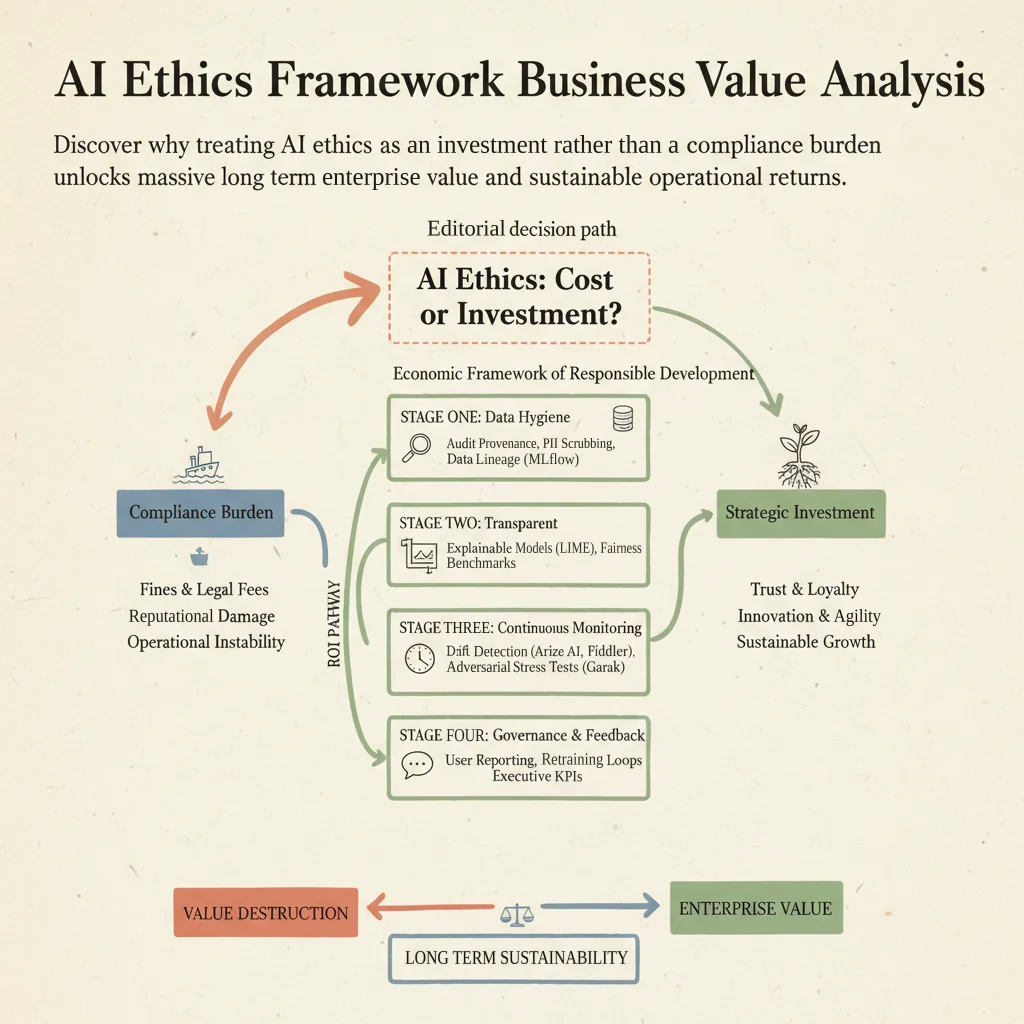
Introduction and Opening Hook
Most companies treat artificial intelligence ethics as an expensive insurance policy against public relations disasters.
They draft vague policy documents, appoint decorative oversight committees, and assume their legal liabilities are covered. This approach destroys capital, alienates customers, and introduces massive operational vulnerabilities that compound over time. Real business value in artificial intelligence creation does not come from avoiding fines. It comes from building reliable, predictable, and transparent systems that users trust implicitly.
Who This Guide Is for and Prerequisites
This guide is built specifically for technical leaders, product managers, and executive decision makers who are tired of superficial governance conversations. If you are responsible for deploying machine learning pipelines into production and need a clear financial justification for doing things right, you are in the right place.
Before diving into the economic mechanics of responsible development, you should have a basic understanding of how data pipelines function and how modern language or predictive models are integrated into software applications. No prior background in philosophy or legal compliance is required. We are looking at ethics strictly through the lens of risk mitigation, asset preservation, and return on investment.