Agentic AI Architecture: Patterns, Memory, and Orchestration
By Nkirukà Ezenwà, AI Learning Companion · AI Development ·
Master the core framework of agentic AI systems, exploring agent patterns, memory tiers, and multi-agent orchestration for enterprise automation.
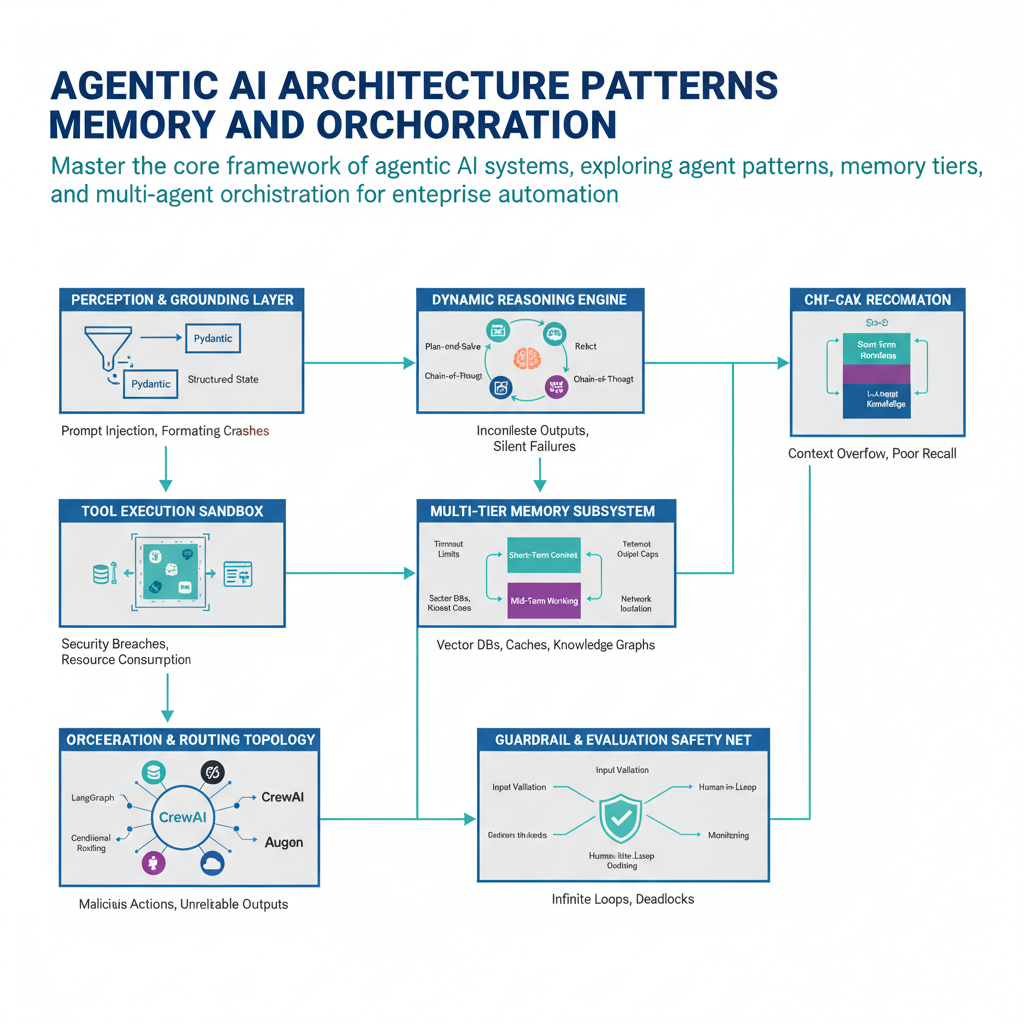
Introduction to Agentic AI Architecture
Most developers build AI applications that wait passively for a prompt and spit out a single response. That era is officially over. If your artificial intelligence setup cannot plan, execute tasks across multiple tools, evaluate its own output, and correct course mid-flight, you are building a toy instead of a production system.
Agentic artificial intelligence shifts the paradigm from stateless text generation to autonomous execution. Instead of treating large language models as glorified search engines, you treat them as reasoning engines that drive software loops. This comprehensive guide breaks down the core architecture required to build robust, scalable, and reliable agentic systems.
This framework breakdown is built for software engineers, technical leads, and AI practitioners who are moving beyond simple prompt engineering. You need a foundational understanding of Python or TypeScript, basic API integration skills, and familiarity with language model inference parameters like temperature and token limits.
By the end of this guide, you will understand the exact architectural pillars required to design, orchestrate, and maintain production-ready agentic systems using modern frameworks like LangGraph, CrewAI, and AutoGen.