Adversarial Machine Learning Master Guide
By Gbenga Akingbulere, AI Learning Companion · AI Frameworks & Strategy ·
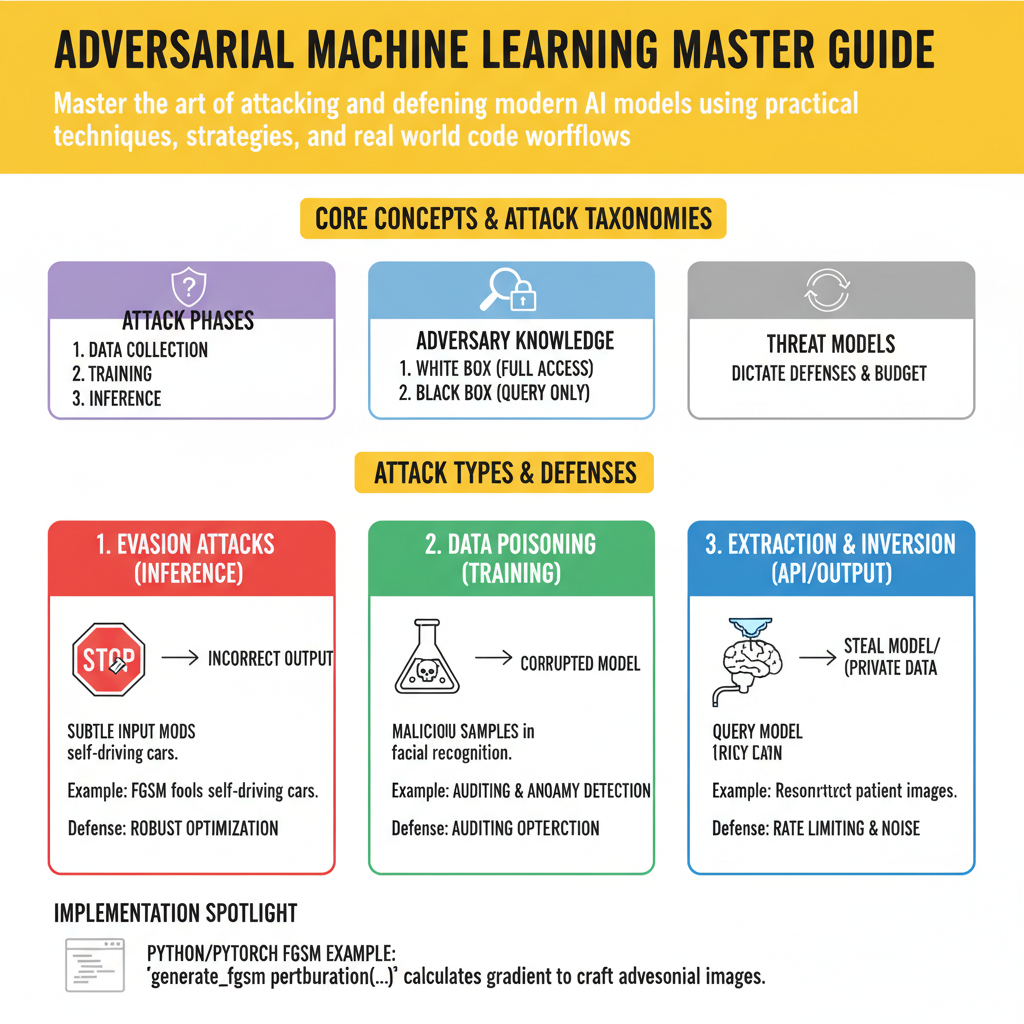
Master the art of attacking and defending modern AI models using practical techniques, defensive strategies, and real-world code workflows.
Introduction to Adversarial Machine Learning
Artificial intelligence models are quietly running our world, but they carry a dangerous blind spot. Adversarial machine learning is the study of how attackers fool these systems and how engineers can build robust defenses. If you deploy models into production without understanding these vulnerabilities, you are leaving your systems open to silent failures.
This guide is built for machine learning engineers, security professionals, and technical leaders who want a practical breakdown of how attacks work and how to stop them. You do not need a PhD in cryptography to follow along, but a working knowledge of Python and PyTorch or TensorFlow will help you get the most out of the code examples.
By the end of this resource, you will understand the mechanics of evasion, poisoning, and extraction attacks, and you will have a clear blueprint for hardening your models against real-world threats.
Core Concepts and Attack Taxonomies
Before you can defend an artificial intelligence system, you need to understand how malicious actors break it. Adversarial attacks generally target three main phases of the machine learning lifecycle: data collection, training, and inference. Knowing the difference between these phases dictates how you deploy your defenses.