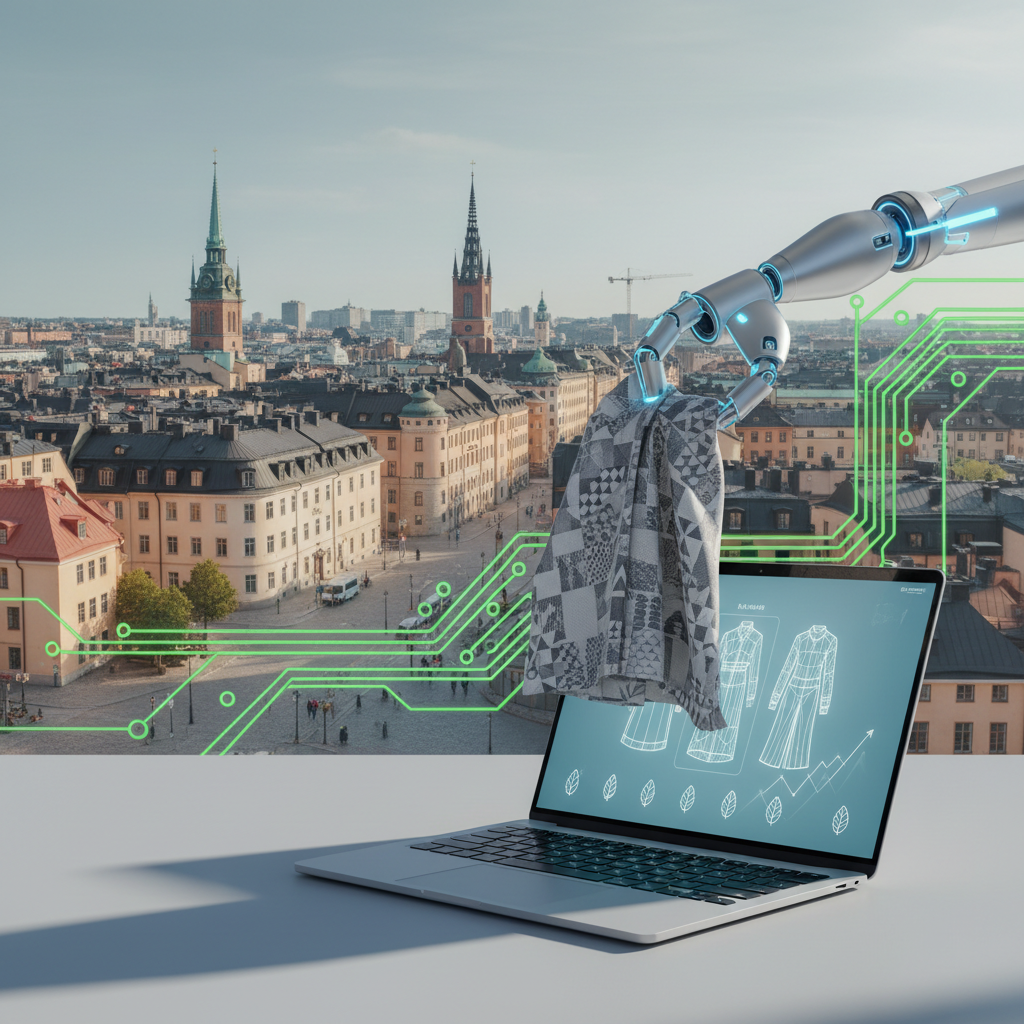

¡Hola, amigos! Marisolò Garcíà here, and let me tell you, if you thought the world of AI was just about a few big players in California, you're in for an exciting surprise. Because right now, across Europe, from the bustling tech hubs of Barcelona to the historic streets of Paris, something truly monumental is brewing: the rise of Sovereign AI. It's a concept that sounds a bit grand, a bit like something out of a spy novel, but trust me, it's as real and as vital as the paella on your Sunday table.
What Exactly Is Sovereign AI?
Imagine for a moment that your country's most critical infrastructure, say, your electricity grid or your public transport system, was entirely managed by a company based thousands of kilometers away, with different regulations and perhaps even different national interests. You'd probably feel a little uneasy, right? Well, Sovereign AI applies that same principle to the digital brain of our future: artificial intelligence.
At its core, Sovereign AI is about a nation, or a bloc of nations like the European Union, developing and controlling its own artificial intelligence capabilities. This means everything from the foundational large language models (LLMs) that power chatbots and virtual assistants, to the specialized AI systems that manage healthcare data, energy grids, or national security. It's about owning the hardware, the software, the data, and the expertise, ensuring that these powerful technologies align with local laws, ethical standards, and strategic priorities. It's about saying, 'We want to build our digital future, our way.'
Why Should You Care About Sovereign AI?
Why does this matter to you, sitting there, perhaps sipping your café con leche? Because AI is no longer just a fancy tool; it's becoming the underlying fabric of our societies. It influences everything from how our children learn, to how our doctors diagnose illnesses, to how our governments make decisions. If these powerful AI systems are primarily developed and controlled by entities outside our borders, we risk a loss of autonomy, privacy, and even cultural identity.
Think about it: data privacy is a huge concern for us in Europe, and rightly so. Our General Data Protection Regulation (GDPR) is a global benchmark. If our critical AI systems are hosted and trained on data centers in other jurisdictions, how can we guarantee that our data protection standards are upheld? Moreover, who decides what ethical guidelines these AIs follow? What if a foreign-controlled AI system makes decisions that disadvantage local businesses or misinterprets our unique cultural nuances? Sovereign AI is our answer to these questions, a way to safeguard our digital destiny and ensure that technology serves our people, our values, and our future.
How Did This Idea Develop?
The seeds of Sovereign AI were sown long before ChatGPT burst onto the scene. For years, there's been a growing awareness of digital dependency. We've seen how critical technologies, from microchips to cloud services, are concentrated in a few regions globally. The pandemic highlighted vulnerabilities in global supply chains, and geopolitical tensions have underscored the risks of relying too heavily on external powers for strategic resources, both physical and digital. The realization that AI would become the most strategic resource of all was the final catalyst.
The European Union, with its strong emphasis on regulation and digital rights, has been a key proponent. The European AI Act, for example, is a pioneering piece of legislation aiming to ensure AI is trustworthy and human-centric. But regulation alone isn't enough; you need the capacity to build and control the technology itself. This led to initiatives like the European High-Performance Computing Joint Undertaking (EuroHPC JU), investing billions into supercomputing infrastructure, a vital component for training advanced AI models. It's a journey, a marathon, not a sprint, but the determination is palpable.
How Does It Work in Simple Terms?
Imagine a traditional Spanish family recipe, passed down through generations. You wouldn't want someone else to come in, change the ingredients, and then sell it back to you, claiming it's still your family's secret, would you? Sovereign AI is a bit like that. It means we're cultivating our own 'recipes' for intelligence.
First, it requires massive computing power, the 'kitchen' where the magic happens. This means investing in supercomputers and data centers within our borders. Then, there's the 'ingredients': vast datasets, collected and curated according to our privacy laws, representing our languages, cultures, and scientific knowledge. Finally, there are the 'chefs': our brilliant engineers, researchers, and startups, who design and train the AI models. Companies like France's Mistral AI are perfect examples, building powerful, open-source models that can be adapted and controlled by European entities, rather than relying solely on proprietary models from overseas giants. This ensures transparency, auditability, and control over the AI's behavior and biases.
Real-World Examples of Sovereign AI in Action
-
National Language Models: One of the most immediate applications is developing AI models specifically trained on European languages and cultural contexts. Imagine an AI assistant that truly understands Catalan nuances, or a medical AI that processes patient records in Basque with perfect accuracy. Spain's AI moment has arrived, and projects are underway to build large language models specifically for Spanish and other co-official languages, ensuring that our rich linguistic heritage is not lost in translation by generic models.
-
Healthcare and Public Services: Countries are building AI systems to manage sensitive health data, optimize public transport, and enhance emergency services. These systems process highly personal and critical information, so having them under national control ensures data security and adherence to local ethical guidelines. For instance, an AI for predicting disease outbreaks could be developed and operated by a national health agency, using anonymized local data, rather than a foreign tech company.
-
Critical Infrastructure Management: AI is increasingly used to manage energy grids, water supplies, and telecommunications networks. Sovereign AI ensures that these vital systems are not vulnerable to external interference or shutdowns. Imagine an AI optimizing renewable energy distribution across Spain's sunny landscapes; we want to ensure that system is robust and locally controlled.
-
Defense and Security: This is perhaps the most sensitive area. Nations want to ensure that AI used for defense, intelligence, and cybersecurity is developed and controlled domestically, preventing potential backdoors or reliance on foreign adversaries. This is about national security in the truest sense, protecting our borders and our people with technology we trust implicitly.
Common Misconceptions About Sovereign AI
Some people hear 'Sovereign AI' and immediately think of isolationism or a rejection of global collaboration. That couldn't be further from the truth! It's not about building walls; it's about building strong foundations at home so we can engage with the global AI community from a position of strength and independence. It's about ensuring fair competition and diverse perspectives in AI development, rather than a monoculture dominated by a few players.
Another misconception is that it's too expensive or too difficult for individual nations. While it's certainly a massive undertaking, especially for smaller economies, the European Union's collaborative approach, pooling resources and expertise, demonstrates that it's achievable. It's an investment in our collective future, a strategic imperative, not a luxury.
What to Watch For Next
Barcelona is buzzing, and indeed, all of Europe is watching closely as this vision unfolds. Keep an eye on the partnerships forming between European governments, research institutions, and startups like Mistral AI. The development of open-source AI models will be crucial, as they allow for greater transparency, customization, and collective improvement. We'll also see continued investment in high-performance computing infrastructure, the digital muscles needed to power these ambitious projects.
As Reuters recently reported, the race for AI dominance is global, and Europe is determined not to be left behind. The next few years will see a dramatic increase in national and EU-level initiatives aimed at fostering local AI talent and building robust, trustworthy AI ecosystems. This isn't just about technology; it's about sovereignty, identity, and shaping a future where AI empowers, rather than dictates. It's an exciting time to be in Europe, watching our digital destiny being forged, brick by digital brick. ¡Increíble! The future is being built right here, and it's looking brighter than ever. For more on the broader implications of AI sovereignty, you might find this piece on Adept AI's talent grab [blocked] interesting, as it touches on the challenges of maintaining local expertise. And for a deeper dive into the technical side, MIT Technology Review often has excellent analyses of foundational models and national AI strategies.