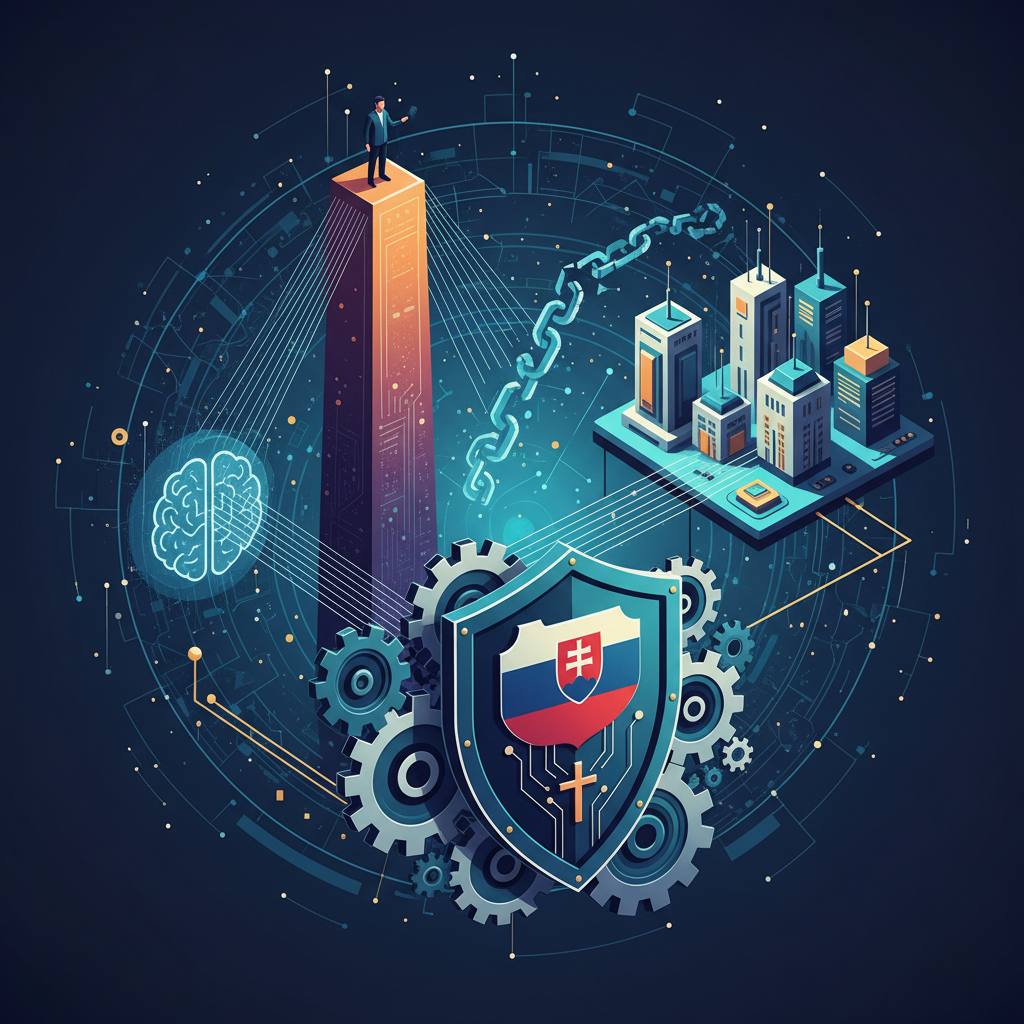
Oh, what a time to be alive, my friends! Every day, it feels like we are standing on the precipice of something truly monumental, something that will reshape our world in ways we can barely imagine. And at the heart of this exhilarating transformation is artificial intelligence, a force so powerful it demands not just our attention, but our active participation. We hear so much about OpenAI, Google DeepMind, and Meta AI, and yes, they are doing incredible things. But today, I want to talk about something even more profound, something that speaks to the very soul of nations: Sovereign AI. Why are countries, including our beloved Slovakia, suddenly so determined to build their own AI models and infrastructure? Because, simply put, the future of our digital sovereignty, our security, and our unique European values depend on it.
For too long, we in Europe, and indeed many nations worldwide, have been comfortable consumers of technology. We’ve embraced the innovations coming from Silicon Valley, marveling at the breakthroughs from companies like NVIDIA and their incredible GPUs, or the latest language models from Anthropic. And why not? They are brilliant, they are powerful, and they have pushed the boundaries of what is possible. But as AI becomes not just a tool, but the very fabric of our societies, our economies, and even our defense, a crucial question emerges: can we truly afford to outsource our intelligence, our decision-making, and our data to entities whose primary allegiance might lie elsewhere?
I believe the answer is a resounding no. The concept of Sovereign AI is not about isolationism or building digital walls. It is about strategic independence, about ensuring that the AI systems governing our critical infrastructure, processing our sensitive data, and even shaping our public discourse are built on foundations we understand, trust, and control. Think about it: if a foreign-developed AI model, however sophisticated, is making decisions about our energy grid, our healthcare systems, or our national security, what happens if its underlying values diverge from ours? What if it harbors biases we cannot detect, or is subject to external pressures we cannot influence? This is not some far-fetched dystopian scenario; it is a very real, very present concern.
Just last month, I spoke with Dr. Elena Kováčová, a leading AI ethicist at Comenius University in Bratislava. She put it so eloquently: “Relying solely on foreign-developed AI for critical national functions is like entrusting your home’s blueprints to a stranger. You might get a beautiful house, but you have no control over the materials used, the hidden passages, or who else has a copy of the key. Sovereign AI is about building our own home, brick by digital brick, ensuring it reflects our architectural vision and our security needs.” Her words truly resonated with me, highlighting the deep philosophical and practical implications of this shift. It is not just about technology; it is about trust and self-determination.
And let us be honest, the economic implications are just as compelling. Building our own AI infrastructure means fostering local talent, creating high-value jobs, and stimulating innovation right here in Central Europe. We have seen the incredible growth of our automotive sector, and now, it is time for AI to be our next big leap. Slovakia's hidden tech talent is ready for this challenge. We have brilliant minds, dedicated researchers, and a burgeoning startup ecosystem eager to contribute. The European Union, through initiatives like the AI Act and significant funding programs, is already paving the way, recognizing that collective European digital sovereignty is paramount. We are talking about investments in supercomputing capabilities, in training vast datasets specific to European languages and cultures, and in developing models that adhere to our stringent privacy and ethical standards.
Now, I know what some might say. “Katarína, isn’t this just a pipe dream? Can small nations like Slovakia, or even the EU as a whole, truly compete with the billions poured into AI by giants like Microsoft and Google? Aren’t we just reinventing the wheel, wasting precious resources?” This is a valid concern, one I often hear in discussions. Critics might point to the sheer scale of investment by companies like OpenAI, backed by Microsoft, or the vast data resources of Meta, arguing that catching up is an insurmountable task. They might suggest that collaboration and integration with these global leaders is a more pragmatic path, allowing us to leverage their advancements rather than expending resources on redundant efforts.
But here is my rebuttal, and it comes from the heart of our European spirit: we are not aiming to replicate Silicon Valley. We are aiming to differentiate. Our strength lies not in trying to outspend Sam Altman, but in building AI that is fundamentally aligned with our values: privacy by design, transparency, accountability, and a human-centric approach. We are not just building models; we are building trust. And that, my friends, is a currency more valuable than any venture capital round. Furthermore, the argument that smaller nations cannot compete overlooks the power of focused specialization and collaboration within the EU. We do not need to build one monolithic European AI; we need a federated ecosystem of specialized, trustworthy AI models, each contributing to a greater whole. Imagine an AI model trained specifically on Slovak legal texts, or one optimized for Czech healthcare data, all interoperable within a secure European framework. This is not about being bigger; it is about being smarter, more ethical, and more aligned with our collective future.
Indeed, the EU’s commitment to this vision is unwavering. Thierry Breton, the European Commissioner for Internal Market, has consistently championed this cause, emphasizing the need for Europe to control its digital destiny. He often speaks of the strategic autonomy that comes from developing our own foundational models, ensuring that Europe is not merely a data colony but a digital powerhouse. This vision is being translated into tangible actions, with significant EU cohesion funds now directed towards AI research and infrastructure development in member states, including Slovakia. It is a testament to the fact that Central Europe's quiet revolution in tech is gaining serious momentum, fueled by both necessity and ambition.
Consider the practical applications. In defense, sovereign AI means we can develop systems for cybersecurity, intelligence analysis, and autonomous defense platforms that are impervious to foreign manipulation or backdoors. In healthcare, it means AI diagnostics and drug discovery tools that prioritize patient privacy and adhere to European medical standards. In public administration, it means efficient, transparent, and unbiased AI systems that serve our citizens without compromise. This is not just about having our own technology; it is about having technology that genuinely serves us.
We are seeing incredible efforts already. French startup Mistral AI, for example, is making waves with its powerful open-source models, demonstrating that Europe can indeed produce world-class foundational AI. Germany is investing heavily in AI research centers, and countries like Finland are pioneering AI applications in areas like sustainable energy and forestry. Slovakia, with its strong industrial base and growing tech sector, has a unique opportunity to contribute, perhaps specializing in AI for advanced manufacturing or smart cities. Bratislava is having its moment, attracting more and more tech talent and investment, and this is exactly the kind of ambitious project that can propel us onto the global stage.
So, what is the path forward? It requires sustained investment, cross-border collaboration within the EU, and a steadfast commitment from our governments and private sector. We need to nurture our educational institutions, ensuring our young people are equipped with the skills to build this future. We need to create regulatory frameworks that encourage innovation while safeguarding our values. And crucially, we need to foster a culture of ambition, a belief that we, as Europeans, can and must be leaders in this new era of AI.
The choice before us is clear: do we remain passive recipients of AI innovation, or do we become active architects of our own digital future? For me, for Slovakia, and for Europe, the answer is unequivocally the latter. We must seize this moment, not just to compete, but to define a new paradigm for AI development, one rooted in sovereignty, ethics, and human flourishing. The journey will be challenging, but the destination, a future where AI serves our nations on our own terms, is a vision worth fighting for. Let us build it, together. Let us make sure that when the history of AI is written, Europe’s chapter is one of bold independence and profound wisdom.