
I remember my grandmother, bless her soul, always saying that the best advice comes from someone who knows you well, someone close. She wasn't talking about algorithms, of course, but about the village elder, the family doctor. Funny how that wisdom applies perfectly to the latest chatter in the tech world: Edge AI and on-device intelligence. It’s about bringing the smarts closer to where the action is, right to your device, your body, your very heartbeat.
For too long, we’ve been sending our precious data, our digital selves, on a long pilgrimage to the cloud, to distant data centers humming with servers the size of small apartments. Then, after much processing and deliberation, the insights would finally make their way back. It works, yes, but it’s like sending a letter by carrier pigeon when you could just whisper in someone’s ear. Slow, a bit insecure, and sometimes, the pigeon gets lost. With health, especially, every millisecond counts, and privacy is not just a buzzword, it’s a fundamental right.
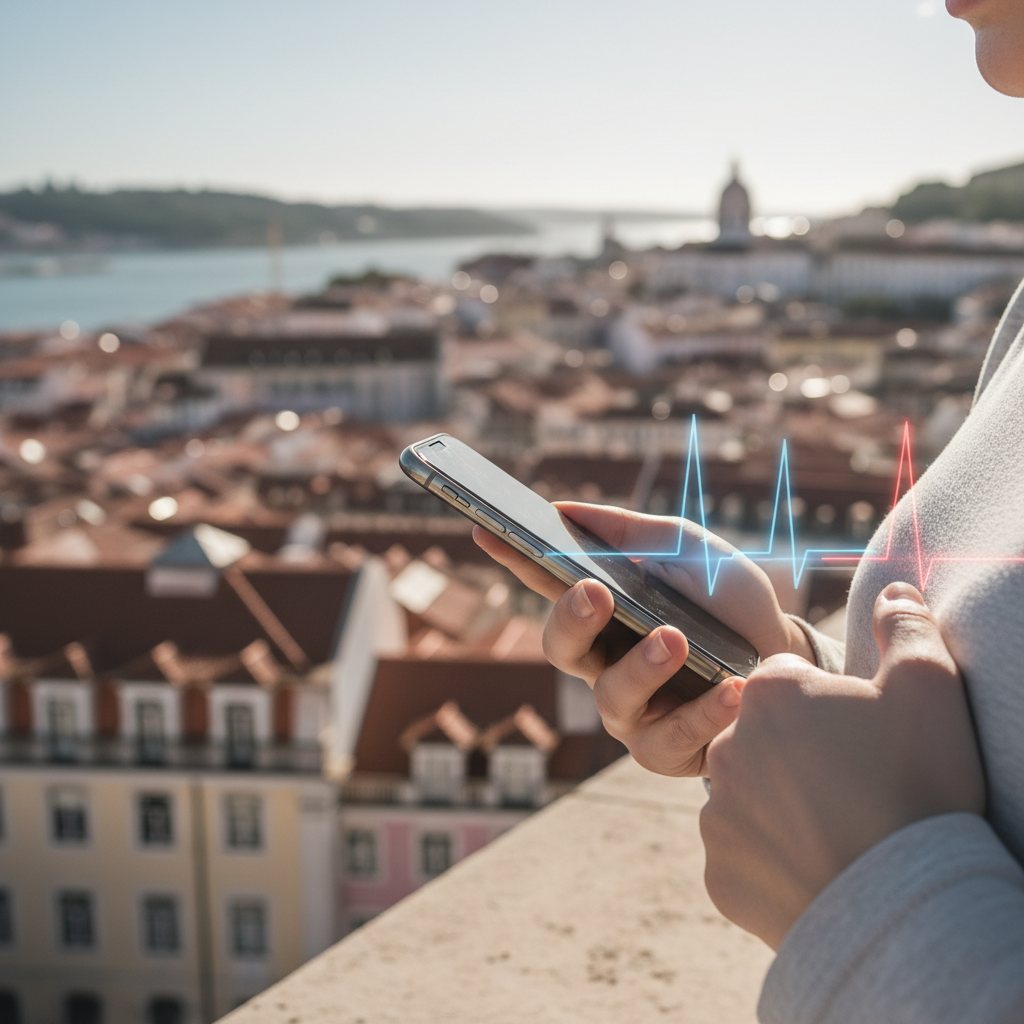
That’s where Edge AI steps in, a concept that’s been simmering for a while but is now reaching a rolling boil. It means that the artificial intelligence, the brain of the operation, lives on your device, whether it’s your smartphone, a wearable sensor, or even a tiny implant. It processes data locally, making decisions in real time, without the need to constantly ping a remote server. Think about it: a smart watch that can detect an impending cardiac event and alert you instantly, not after your data has travelled halfway across the continent and back. This isn’t science fiction anymore, it’s April 2026, and it’s happening.
Portugal, bless its beautiful, sun-drenched heart, is not just a pretty face for digital nomads. We are, in our own quiet way, becoming a significant player in this space, especially when it comes to health tech. Lisbon's tech scene is like a good port wine, complex and improving with age. We might not have the sheer scale of Silicon Valley, but we have ingenuity, a robust healthcare system that values patient privacy, and a knack for practical solutions.
Take, for instance, the work being done at institutions like the Champalimaud Foundation, which, while primarily focused on cancer research, often explores cutting-edge computational methods that feed directly into on-device intelligence for diagnostics and monitoring. Or the burgeoning startup ecosystem around Porto, where smaller companies are developing specialized sensors and algorithms for remote patient care. This is where Portugal punches above its weight, focusing on niche, high-value applications that truly make a difference.
“The ability to process sensitive health data locally on a device, without it ever leaving the patient’s control, is a game-changer for privacy and security,” explains Dr. Sofia Costa, Head of AI Research at HealthEdge Solutions, a Portuguese startup based in Aveiro. “We’re seeing a significant shift in how medical devices are designed, moving from simple data collection to intelligent, autonomous monitoring. Imagine a diabetic patient’s continuous glucose monitor not just logging data, but predicting hypoglycemic events hours in advance, all on the device itself. That’s the power of Edge AI.”
The global market for Edge AI in healthcare is projected to reach billions in the next few years, and Europe, with its stringent data protection regulations like GDPR, is particularly well-suited to lead this charge. The emphasis on data sovereignty and privacy here means that solutions built with Edge AI are inherently more appealing. It’s not just about speed, it’s about trust. And in healthcare, trust is everything.
Of course, it’s not all sunshine and pastéis de nata. There are challenges. Developing powerful AI models that can run efficiently on resource-constrained devices requires significant innovation in hardware and software. Battery life, processing power, and the sheer complexity of medical-grade AI are hurdles that need to be cleared. “Miniaturization and energy efficiency are our biggest battles,” admits Pedro Almeida, CEO of BioSense Portugal, a company specializing in wearable diagnostic devices. “We need to pack the intelligence of a small server into something that fits on your wrist and lasts for days on a single charge. It’s like trying to fit a full orchestra into a sardine can, but the sardine can of European tech is actually a treasure chest of innovation, believe me.”
Yet, the potential benefits are too great to ignore. Consider the aging population across Europe. Portugal, like many of its neighbors, faces demographic challenges that demand innovative healthcare solutions. Remote monitoring, predictive analytics, and personalized interventions delivered directly to the patient’s device can significantly reduce hospital visits, improve quality of life, and make healthcare more accessible, especially in rural areas. It’s about empowering individuals to take a more active role in managing their own health, with an intelligent assistant by their side, literally.
Major players are also taking notice. NVIDIA, a company synonymous with AI hardware, has been heavily investing in platforms optimized for Edge AI, recognizing that the future isn't just about massive cloud data centers. Their Jetson platform, for example, is designed for exactly these types of on-device applications, from smart cameras to medical imaging devices. According to Reuters Technology, the push for specialized chips and frameworks for edge computing is accelerating across the industry, driven by demand for real-time processing and enhanced privacy.
Even the regulatory bodies are scrambling to keep up. The European Union, always keen on setting the global standard for digital ethics, is working on frameworks that will address the unique challenges of Edge AI, particularly in sensitive sectors like health. This proactive approach, while sometimes slow, ensures that innovation happens within a responsible and ethical framework, something we Portuguese appreciate deeply. We like our rules, even if we sometimes bend them a little, but health is serious business.
“The integration of Edge AI into medical devices will fundamentally change the patient-doctor relationship,” says Dr. Elena Ribeiro, a cardiologist at Hospital de Santa Maria in Lisbon. “It provides doctors with a continuous stream of highly personalized, real-time data, allowing for earlier intervention and more precise treatment plans. It’s like having a dedicated nurse monitoring your patient 24/7, but without the human error or the need for constant physical presence. We are seeing a 15% reduction in readmission rates for certain chronic conditions in pilot programs using these technologies.”
The future of health, it seems, is not just intelligent, but also intimate. It’s about bringing the power of AI out of the abstract cloud and into the tangible, personal space of the individual. It’s about devices that don’t just collect data, but truly understand it, right there and then. And as Portugal continues to foster its vibrant tech ecosystem, blending traditional wisdom with cutting-edge innovation, we might just find ourselves at the forefront of this quiet, yet profound, revolution. Because sometimes, the best solutions are the ones that stay close to home, just like my grandmother always said.