
The digital economy, often lauded as a beacon of flexibility and innovation, harbors a darker truth for its workforce. Beneath the veneer of independent contracting lies a sophisticated architecture of algorithmic control, a reality increasingly palpable in Russia's rapidly expanding gig sector. A groundbreaking study from the University of Amsterdam, published recently, has meticulously dissected these mechanisms, offering a chilling glimpse into how AI is reshaping the employer-employee dynamic globally, and particularly within our own borders.
The research, led by Dr. Martijn Konings and his team at the Amsterdam Institute for Social Science Research, focused on the intricate ways platform algorithms manage, monitor, and discipline workers. Their findings detail how these systems, far from being neutral tools, are designed to optimize platform profitability by subtly, yet powerfully, influencing worker behavior, setting prices, and even determining access to work. This is not merely about efficiency, it is about power, concentrated in lines of code.
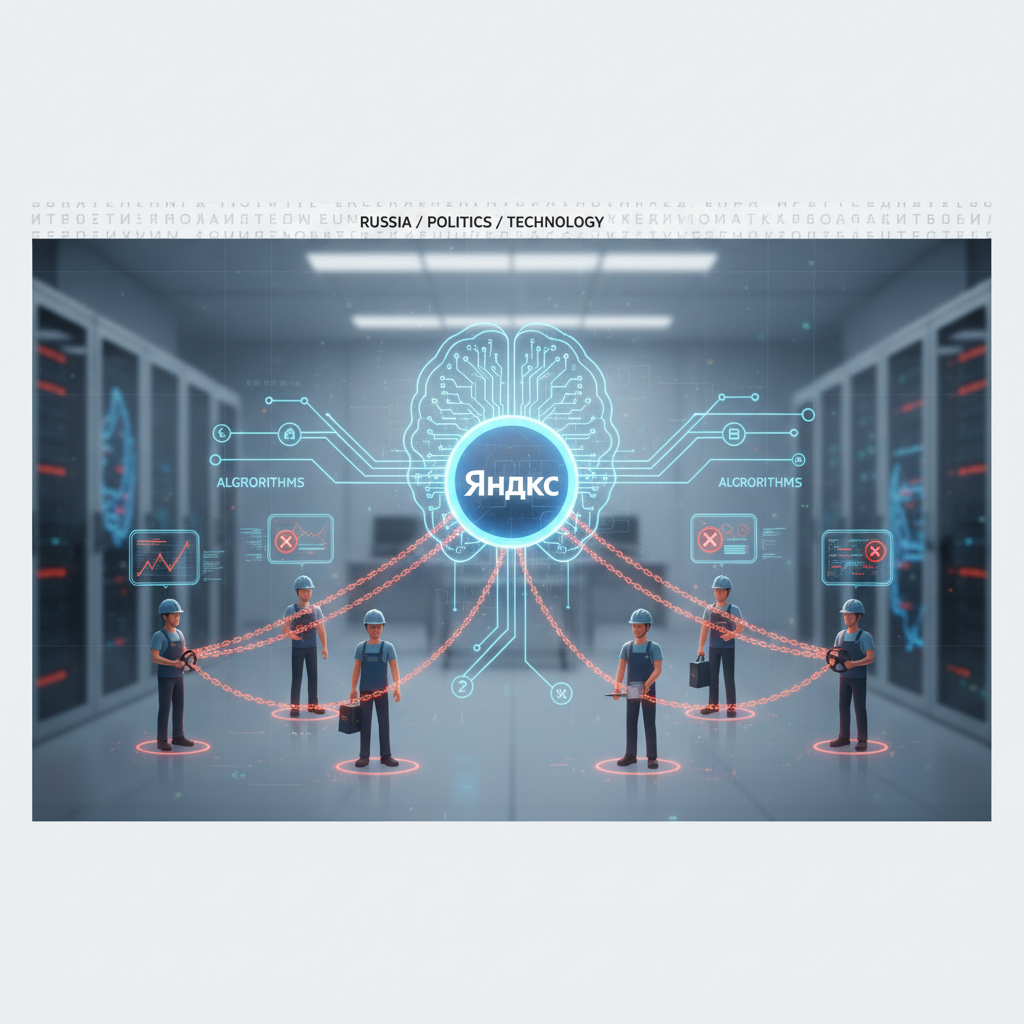
Why this matters for Russia is profound. Our nation's gig economy, dominated by behemoths like Yandex, has seen explosive growth. From Yandex.Taxi drivers navigating Moscow's congested streets to Yandex.Food couriers delivering meals across St. Petersburg, millions of Russians rely on these platforms for their livelihoods. The Kremlin's digital strategy reveals a dual ambition: to foster technological advancement while maintaining a firm grip on societal structures. This algorithmic control, therefore, presents a complex challenge, one that intertwines economic opportunity with potential social fragmentation and labor precarity.
The technical details of algorithmic control are often opaque, designed to be so. However, the University of Amsterdam's paper sheds light on several key facets. Firstly, dynamic pricing algorithms adjust service costs in real time, directly impacting worker earnings without direct human negotiation. Secondly, reputation and rating systems, while seemingly benign, act as potent disciplinary tools. A low rating, often influenced by factors beyond a worker's control, can lead to reduced work allocation or even deactivation, effectively terminating their employment without due process. Thirdly, dispatch algorithms, which assign tasks, are not simply optimizing for proximity or speed, but also for worker compliance and past performance metrics, creating a feedback loop that reinforces desired behaviors.
Dr. Konings, speaking on the implications of their work, stated, "Our research demonstrates that the 'flexibility' offered by gig platforms is often one-sided. Workers are subject to an invisible manager, an algorithm, that dictates their terms of engagement with unprecedented precision and scale." This observation resonates deeply with anecdotal evidence from Russian gig workers, many of whom express frustration over arbitrary changes in pay structures and opaque penalty systems.
My sources in the tech sector confirm that Russian platforms, while adapting to local market conditions, largely adopt similar algorithmic architectures to their Western counterparts. The underlying principles of maximizing efficiency and minimizing labor costs through automated management are universal. This is not a uniquely Russian problem, but its manifestation here is shaped by our unique socio-economic context, including a less developed framework for gig worker rights compared to some European Union nations.
The implications for Russia are far-reaching. The absence of traditional employment contracts means gig workers often lack access to social protections, such as sick leave, paid holidays, or retirement benefits. When algorithms control their income and job security, this precarity is amplified. Furthermore, the data collected by these platforms, detailing every movement and interaction of millions of citizens, represents a treasure trove of information. Moscow's AI ambitions tell a bigger story than just economic growth; it is also about data accumulation and societal influence.
The research also touches upon the psychological impact of working under algorithmic supervision. The constant pressure to maintain high ratings, the uncertainty of earnings, and the lack of human recourse can lead to significant stress and burnout. This is a human cost that cannot be quantified solely in economic terms. As one Yandex.Taxi driver in Kazan shared with me, anonymously for fear of reprisal, "You feel like a cog in a machine, always watched, always judged by something you cannot see or argue with. One bad rating, and your week's earnings are gone."
What comes next is a critical question. The University of Amsterdam's findings underscore the urgent need for regulatory frameworks that address algorithmic management. This could involve mandating greater transparency in how algorithms operate, establishing clear grievance mechanisms for workers, and reevaluating the classification of gig workers to ensure they receive adequate social protections. Some European nations are already moving in this direction, with debates around the EU's AI Act touching upon these very issues. For Russia, this means a careful balancing act between fostering innovation and protecting its citizens.
Academics and policymakers must collaborate to understand these complex systems better. Research from institutions like the MIT Technology Review consistently highlights the societal challenges posed by unchecked algorithmic power. We must move beyond simply celebrating technological progress and critically examine its consequences for the millions whose livelihoods depend on it. The future of work, both globally and within Russia, hinges on our ability to govern these powerful digital tools responsibly, ensuring that technology serves humanity, not the other way around. The current trajectory suggests that without intervention, the algorithms will continue to dictate, and the workers will continue to adapt, often at great personal cost. This is a battle for digital dignity, and it is only just beginning. Further exploration into the global impact of these systems can be found on platforms like TechCrunch.