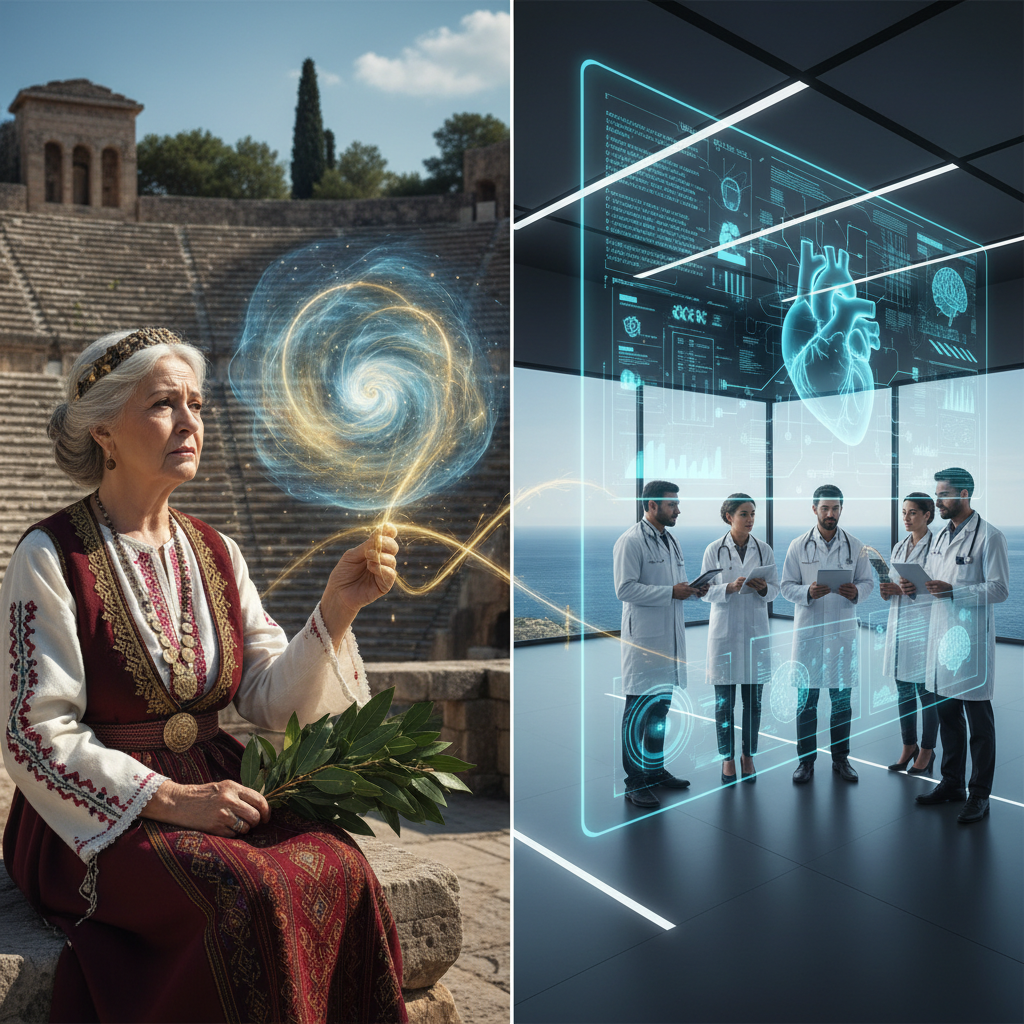

One might think that in the land where Hippocrates first laid the foundations of medicine, we would be wary of anything that claims to know more than a seasoned physician. Yet, here we are, in April 2026, watching with a mixture of skepticism and awe as FDA-approved artificial intelligence tools begin to infiltrate the sacred halls of healthcare diagnostics. These aren't just fancy spreadsheets, mind you. We are talking about sophisticated algorithms, trained on mountains of data, now given the green light to detect the earliest whispers of cancer and the subtle rumblings of heart disease. Pass the ouzo, this tech news requires it.
For centuries, Greek doctors have relied on a combination of rigorous training, clinical experience, and perhaps a touch of intuition, that indefinable quality that separates a good diagnostician from a great one. Now, the American Food and Drug Administration, that venerable gatekeeper, has stamped its approval on AI systems that claim to do it faster, and perhaps even better. Companies like Google Health and NVIDIA are at the forefront, pushing their diagnostic platforms into hospitals and clinics, not just in the US, but globally. The promise is tantalizing: earlier detection, more accurate diagnoses, and ultimately, lives saved. But the devil, as always, is in the details, and sometimes, in the data.
Take, for instance, the recent FDA clearance for an AI-powered cardiac MRI analysis tool developed by a consortium involving Siemens Healthineers and a startup I cannot even pronounce. This system, they claim, can analyze MRI scans for heart conditions with an accuracy exceeding human cardiologists in certain metrics. Similarly, we have seen breakthroughs in oncology, with AI models from companies like PathAI and IBM Watson Health (before its pivot) demonstrating remarkable proficiency in identifying cancerous cells from pathology slides. The numbers are impressive, with some studies boasting up to a 95% accuracy rate in specific cancer types, often outperforming human pathologists by a small but significant margin. According to a recent report on MIT Technology Review, the global market for AI in healthcare diagnostics is projected to reach over 15 billion dollars by 2028, a staggering sum that suggests this isn't just a fleeting fad.
But let us not get carried away by the shiny new toy. Greece to Silicon Valley: we invented logic, remember? While the potential is undeniable, my Greek sensibilities immediately raise a few philosophical eyebrows. What happens when the algorithm makes a mistake? Who is accountable? Is it the developer, the hospital, or the doctor who relied on the AI's judgment? These are not trivial questions, particularly in a country where personal relationships and trust form the bedrock of our medical system.
Dr. Eleni Petrova, a leading oncologist at the University Hospital of Ioannina, shared her cautious optimism with me.