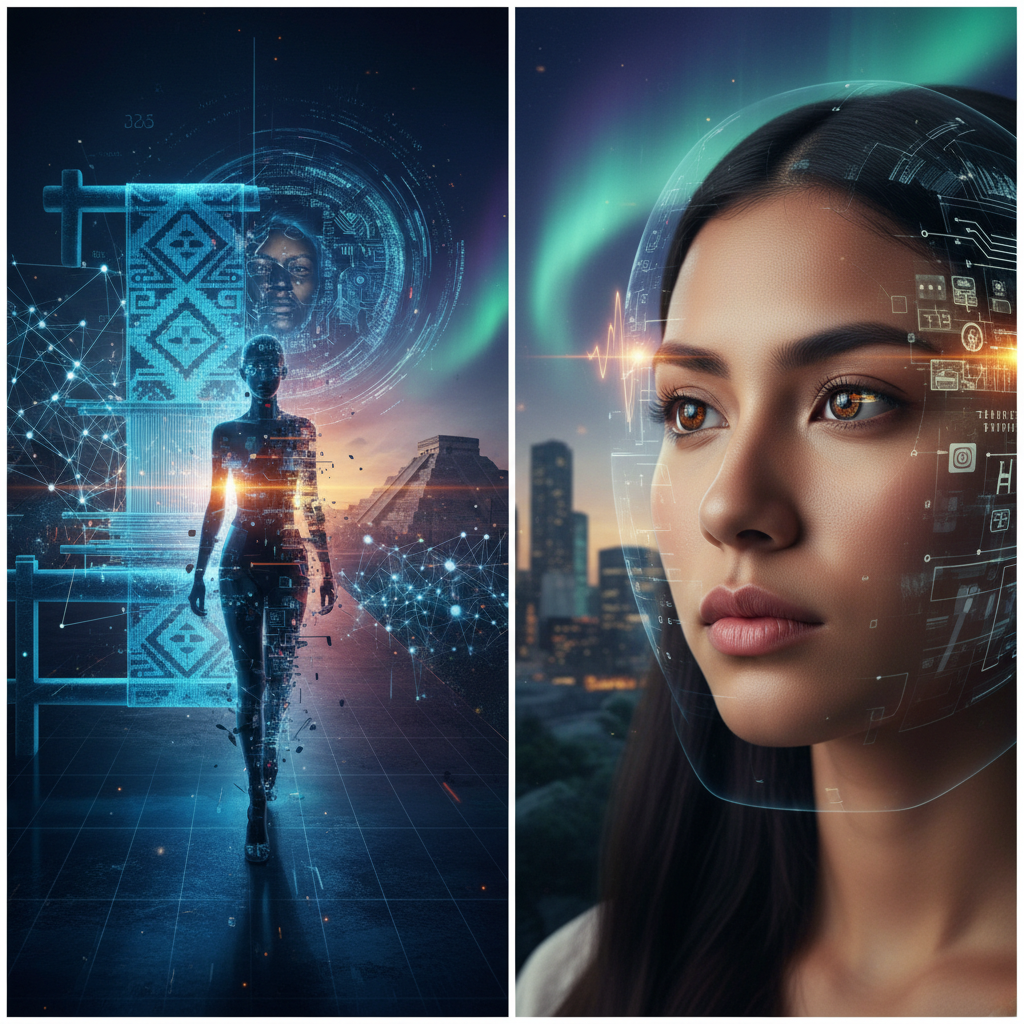

The air in San Juan La Laguna, by the shimmering waters of Lake Atitlán, always carries the scent of coffee and the quiet hum of traditional backstrap looms. Here, the threads of history and culture are woven into every textile, each pattern telling a story passed down through generations. It is a place where the tangible, the handmade, and the deeply human are cherished. So, when I first heard about Runway ML and the AI video generation revolution sweeping through Hollywood, my mind immediately turned to places like San Juan, wondering how such a distant, digital tremor might eventually ripple through our own communities.
Imagine young Mateo, a bright-eyed boy from a village near Chichicastenango, who dreams of telling stories like his grandmother. His grandmother's wisdom meets machine learning in a way she never could have imagined. Instead of painstakingly learning the ancient K'iche' narratives and performing them for his family, Mateo now sees dazzling, AI-generated short films on his cousin's old smartphone, stories conjured from a few text prompts and a click. These are not just any videos; they are hyper-realistic, emotionally resonant narratives crafted by algorithms that have devoured millions of hours of human-made content. Hollywood studios are already leveraging tools like Runway ML to conceptualize scenes, create digital doubles, and even generate entire sequences, drastically cutting production times and costs. This technological leap, while seemingly far removed from our daily lives in Guatemala, is subtly, yet profoundly, altering the very fabric of our cognitive landscape, changing how we understand reality, creativity, and even memory.
Recent research is beginning to shed light on these cognitive effects. A study published in MIT Technology Review highlighted how prolonged exposure to AI-generated media can lead to a phenomenon called 'perceptual fluency bias.' Essentially, our brains, being efficient machines, tend to process easily digestible information more readily. When AI creates flawlessly rendered, aesthetically pleasing content, our minds might begin to prioritize this over more complex, nuanced, or even 'imperfect' human-made art. "We are seeing a subtle but significant shift in how audiences interpret visual information," explains Dr. Elena Morales, a cognitive psychologist at Universidad del Valle de Guatemala. "The brain, seeking patterns and efficiency, can start to prefer the 'perfect' synthetic image, potentially diminishing our appreciation for the raw, authentic, and sometimes challenging beauty of human creation. This isn't just about entertainment; it's about how we form judgments and construct our understanding of the world around us." She noted that this could have implications for cultural preservation, as the 'perfect' AI rendition of a traditional dance might overshadow the living, breathing, evolving performance.
The psychological analysis of this phenomenon delves deeper than mere preference. Our brains are wired for social interaction and empathy. When we watch a film, we engage with the characters, their struggles, and their triumphs. This engagement is often rooted in the understanding that another human being, an actor or director, poured their soul into that creation. What happens when that human element is replaced or heavily augmented by an algorithm? "There's a potential for 'empathy fatigue' or a 'dehumanization effect' in our media consumption," says Dr. Carlos Figueroa, a media studies expert at Rafael Landívar University. "If we know a scene of profound sorrow was generated by a machine, does it still move us in the same way? Does it still build the same bridges of understanding between us? The emotional resonance might be shallower, leading to a more superficial engagement with narratives." This is a story about resilience, about how our human spirit adapts to new realities. But it also raises questions about what we might lose in the process.
The broader societal implications for a country like Guatemala are vast and complex. Our culture is rich with oral traditions, vibrant festivals, and unique artistic expressions. The ability of AI to rapidly generate content, from historical reenactments to fantastical new myths, could be a double-edged sword. On one hand, it offers incredible tools for education and cultural dissemination, allowing stories to reach wider audiences than ever before. Imagine AI-generated animated versions of Popol Vuh, the sacred book of the K'iche' Maya, brought to life with breathtaking visuals, making ancient wisdom accessible to a new generation. On the other hand, there's the risk of cultural homogenization, where the unique nuances and regional variations of our stories could be flattened by algorithms trained on global datasets. The distinct flavor of a story from the highlands might blend indistinguishably with one from the coast, losing its authentic voice.
Furthermore, the economic impact cannot be ignored. While Hollywood embraces these tools, what does it mean for local artists, animators, and filmmakers in Guatemala? If a single AI artist can generate content that once required a team of twenty, the ripple effect on creative industries here could be significant. "We must proactively engage with these technologies, not just as consumers, but as creators and shapers," urged Sofia Ramirez, director of a local film collective in Antigua. "Otherwise, we risk becoming mere spectators in a global narrative largely dictated by algorithms and distant corporations like Google and Meta, who are heavily investing in these generative models." The digital divide, which already separates many in our rural communities from urban centers, could widen further if access to these powerful tools remains concentrated in the hands of a few.
So, what practical advice can we offer to navigate this rapidly evolving landscape? First, cultivate media literacy. Understand that what you see, especially online, might not be what it seems. Question the source, consider the intent, and recognize the difference between human-crafted and AI-generated content. Second, prioritize and support local, human creativity. Seek out Guatemalan artists, filmmakers, and storytellers. Their work, with its inherent imperfections and unique perspectives, offers a vital counterpoint to the polished perfection of AI. Third, engage with AI tools thoughtfully and ethically. For creators, consider how AI can augment your vision, not replace your soul. Use it as a brush, not as the painter. Platforms like Runway ML offer immense creative potential, but the human hand, the human heart, must remain at the center.
In a small village in Guatemala, where the echoes of ancient stories still resonate, the future of our cognitive and cultural landscape depends on how we choose to interact with these powerful new technologies. Will we allow the dazzling speed of AI to overshadow the profound depth of human experience, or will we find a way to weave these new threads into the rich tapestry of our traditions, creating something even more vibrant and enduring? The answer, I believe, lies in our ability to remain critically engaged, empathetically connected, and fiercely human in an increasingly artificial world. For more insights into the psychological impacts of AI, you might find articles on The Verge helpful, offering diverse perspectives on the human-technology interface. And to understand how AI is already transforming industries closer to home, consider reading about how Microsoft Copilot is impacting enterprise in Guatemala in this related piece: From the Milpa to the Cloud: Can Microsoft Copilot's AI Truly Transform Guatemala's Enterprise Landscape? [blocked].