Let's be real, folks. The future of AI is being built in places you'd never expect, not just the gleaming campuses of Silicon Valley. It's brewing in the studios of Brooklyn, the music labs of Atlanta, and the design shops of Detroit. But as these digital tools get smarter, creating everything from hit songs to architectural blueprints, a fundamental question is shaking the very foundations of our creative economy: who owns what an AI creates? The answer, or lack thereof, has been a wild west of legal skirmishes and ethical debates, but Washington D.C. is finally trying to lay down some law.
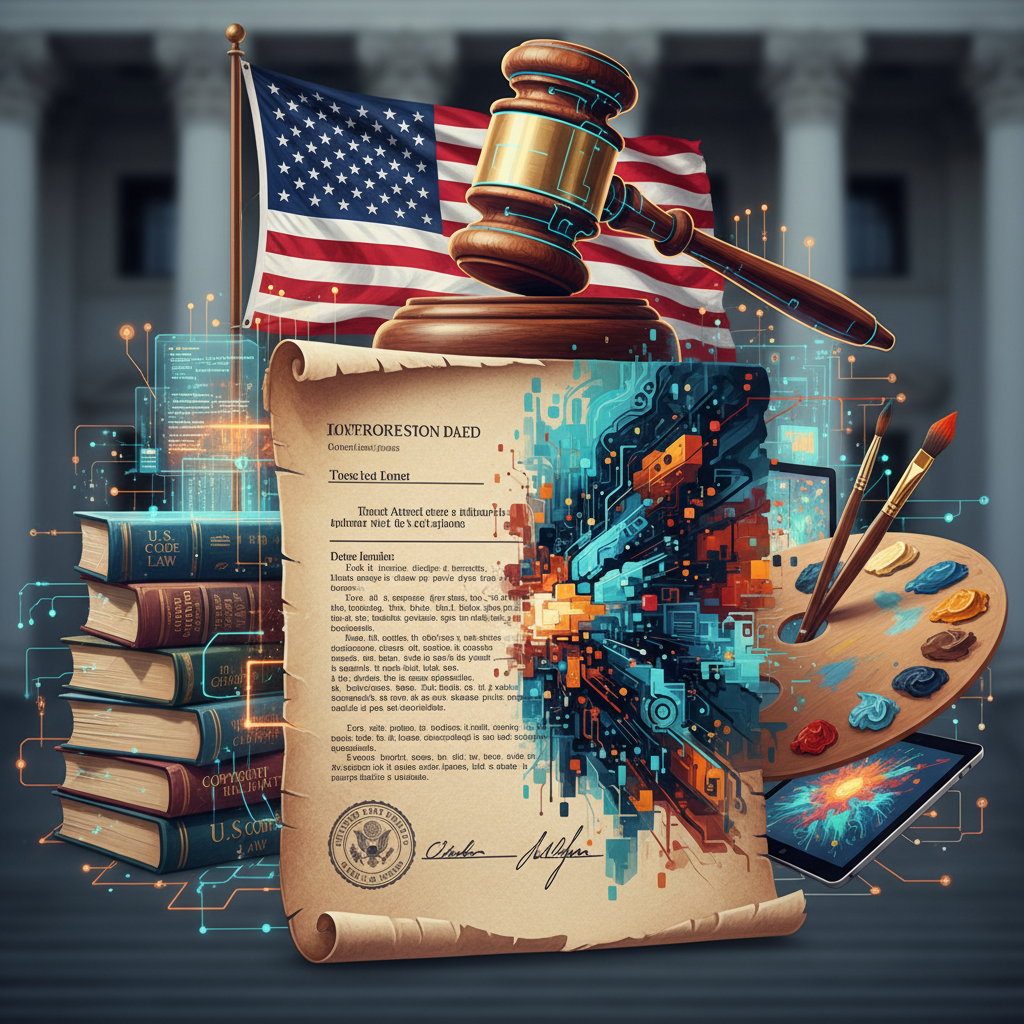
Just last month, a bipartisan group of legislators, led by Senator Maria Rodriguez from California and Representative John Chen from Texas, introduced the 'Artificial Intelligence Creative Works Act' in both chambers. This isn't some minor tweak, this is a full-blown attempt to define intellectual property rights in the age of generative AI. The bill proposes that for a work to receive copyright protection, there must be 'substantial human authorship and creative control' over the final output. It's a direct response to the U.S. Copyright Office's earlier, somewhat vague, rulings that generally denied copyright to purely AI-generated works, while still leaving a lot of room for interpretation.
Who's behind this push? Well, it's a coalition that's as diverse as America itself. On one side, you have powerful creative unions and artist advocacy groups, like the American Guild of Visual Artists and the Songwriters of America Coalition. They've been screaming for clarity, arguing that without proper protections, their livelihoods are at risk. "Our members are seeing their styles, their hard work, their very essence, ingested and regurgitated by algorithms without a dime of compensation or even attribution," stated Sarah Jenkins, President of the American Guild of Visual Artists, testifying before a Senate committee. "This bill is a crucial step towards recognizing the human element at the heart of all true creativity, even when AI is a tool."
On the other side, you've got the tech giants, the OpenAIs and Metas of the world, who are understandably nervous. They've poured billions into developing these models, and they see a future where AI is a co-creator, not just a glorified brush. However, even within big tech, there's a split. Companies like Adobe, with its Firefly suite, have been proactive in trying to source ethically trained data and offer creator compensation models. Others, less so. The bill attempts to thread this needle, acknowledging AI's role while prioritizing human input.
So, what does this mean in practice? Imagine a graphic designer in Austin, Texas, using Midjourney to generate initial concepts for a new ad campaign. Under the proposed act, if the designer simply types a prompt and uses the first image Midjourney spits out, copyright protection would likely be denied. However, if that designer uses Midjourney to generate a dozen options, then meticulously edits, combines, and refines elements in Photoshop, adding their unique artistic flair and making substantial creative decisions, then the final work could be eligible for copyright. It's about intent and intervention, not just the initial spark.
Industry reactions have been, predictably, mixed. Sam Altman, CEO of OpenAI, in a recent interview, expressed cautious optimism. "We understand the need to protect creators, absolutely. Our goal has always been to augment human creativity, not replace it. The challenge is defining 'substantial' in a way that doesn't stifle innovation or create an impossible burden for developers and users." Meanwhile, a spokesperson for Stability AI, a company known for its open-source models, voiced concerns that the bill might favor larger, more centralized AI developers who can afford extensive legal teams to navigate the new rules, potentially disadvantaging smaller startups and independent creators who rely on more accessible, less curated models. This is the real AI revolution, and it's happening in every corner of the digital world.
Civil society groups are also weighing in. The Electronic Frontier Foundation, a digital rights advocacy group, has raised concerns about the potential for overreach. "While we support creators, we must ensure that copyright law doesn't become a tool to stifle fair use, parody, or the development of truly open-source AI models," stated Jane Doe, a senior policy analyst at EFF. "Defining 'human authorship' too narrowly could have unintended consequences, creating a chilling effect on legitimate innovation and artistic expression." They argue that the focus should be on transparency and attribution, rather than an outright denial of copyright based on the tool used.
Will it work? That's the million-dollar question, or perhaps the multi-billion-dollar question in this economy. The bill faces a tough road. It's a complex piece of legislation trying to govern rapidly evolving technology. Lobbyists from both sides are already working overtime. There's a real chance it gets watered down, or even bogged down in partisan squabbles. But the fact that Congress is even tackling this head-on is a significant step. For too long, lawmakers have been playing catch-up, but this time, they're trying to get ahead of the curve, or at least keep pace with it. This isn't just about legal definitions; it's about shaping the very fabric of our creative future. As TechCrunch recently highlighted, the pace of AI innovation isn't slowing down, and neither should our efforts to govern it thoughtfully.
My take? This bill, while imperfect, is a necessary conversation starter. It acknowledges that the old rules don't fit the new reality. It puts a stake in the ground for human creativity, which is vital. We need to protect the artists, writers, and musicians who make our culture vibrant, but we also need to foster an environment where AI can continue to push the boundaries of what's possible. The trick will be finding that sweet spot, that balance between protection and progress. It won't be easy, but the stakes are too high for us to just throw our hands up. The world is watching, and the decisions made in Washington D.C. today will echo through the creative industries for decades to come, impacting everyone from a blockbuster movie studio to a kid in their bedroom making beats with an AI assistant. For more on the broader implications of AI governance, you might want to check out this article on Europe's AI Act [blocked] from our colleagues.
This isn't just about who gets paid; it's about who gets to define what art is in the 21st century. It's about ensuring that as algorithms get smarter, humanity doesn't get left behind. We're at a crossroads, and how we navigate this intellectual property maze will determine whether AI becomes a true partner in human flourishing or just another tool for exploitation. As Wired often points out, the ethical implications are as profound as the technological advancements. Let's hope our lawmakers have the foresight to build a bridge, not just another wall.