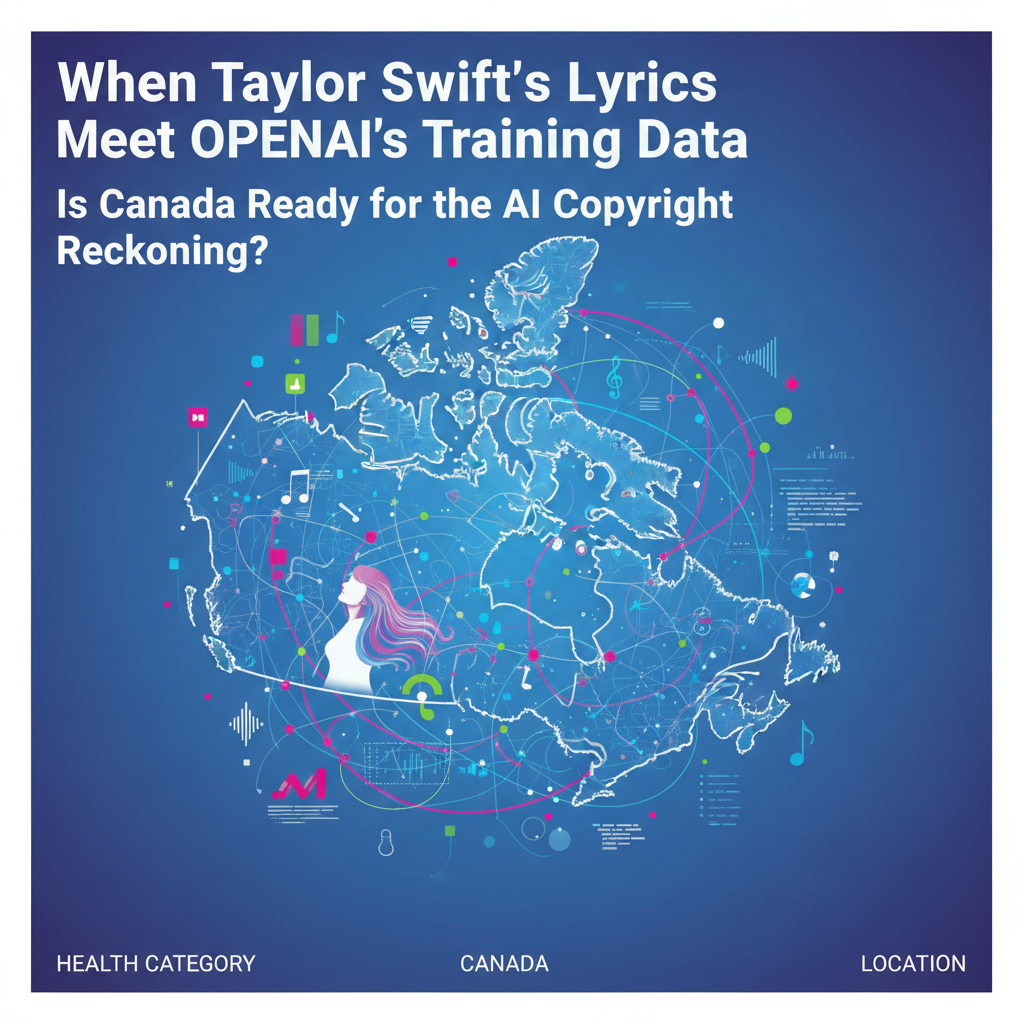

Is the AI copyright war a fleeting skirmish or the opening salvo in a battle that will redefine intellectual property for generations? Let me tell you, from my perch here in Montreal, it feels very much like the latter. We are witnessing a seismic shift, a collision between the boundless ambition of artificial intelligence and the deeply rooted principles of human creativity and ownership. It is a legal and ethical quagmire, and frankly, it is fascinating.
For decades, copyright law has been a relatively stable, if sometimes arcane, domain. It was designed for a world where creation was primarily human driven, where a song, a book, or a painting had a clear author. Now, we have generative AI models, trained on vast swathes of human-made content, capable of producing new works that mimic, adapt, and sometimes even surpass human output. The question on everyone's mind, from Nashville to Nunavut, is: what exactly constitutes fair use when a machine learns from your life's work?
This isn't a new conversation, but it has certainly escalated. Think back to the early days of digital sampling in music, or the controversies surrounding internet piracy. Those were dress rehearsals for the main event we are seeing today. The difference now is the scale and the speed. AI models like OpenAI's GPT series, Google's Gemini, and Meta's Llama have ingested petabytes of data, including copyrighted books, articles, images, and musical compositions. The argument from the tech companies is often that this is akin to a human reading a book or listening to music to learn, a transformative use that falls under fair dealing or fair use principles, depending on the jurisdiction.
However, artists and creators see it differently. They view it as unauthorized appropriation, a wholesale ingestion of their intellectual property to build commercial products without consent or compensation. The numbers involved are staggering. Consider the sheer volume of data. Reports suggest that large language models can be trained on datasets containing hundreds of billions of tokens, often scraped from the internet without explicit permission from content creators. This is not just a few isolated instances; it is a systemic approach to data acquisition that has ignited a firestorm of lawsuits.
We have seen a flurry of legal action across North America and beyond. The Authors Guild, representing thousands of writers, has filed lawsuits against OpenAI and Google, alleging mass copyright infringement. Sarah Silverman, the comedian and author, is among those who have sued OpenAI, claiming her copyrighted works were used to train ChatGPT. Musicians and visual artists are not far behind. Universal Music Group, representing a vast catalogue of artists, has been vocal about the need for licensing agreements, not just for the output of AI but for the training data itself. They are not alone; many independent artists and smaller labels are also exploring their legal options. The stakes are incredibly high, potentially billions of dollars in damages and future licensing fees.
This is where Canada's position becomes particularly interesting. Our Copyright Act, while having provisions for fair dealing, is now facing unprecedented challenges. The Canadian government has been actively consulting on AI policy, but the pace of technological change often outstrips legislative processes. Montreal's AI scene is world-class, here's the proof: we have leading researchers at Mila, the Quebec AI Institute, pushing the boundaries of generative AI. Yet, even here, the ethical and legal frameworks are still catching up. How do we foster innovation while protecting our vibrant creative sector, which is a significant part of our cultural identity and economy?
I spoke recently with Professor Michael Geist, a leading expert in internet and e-commerce law at the University of Ottawa. He highlighted the complexity of the situation. "The existing copyright framework was not designed for a world where machines can generate new content from existing works at scale," Geist explained. "We are grappling with fundamental questions about what constitutes 'copying' and 'authorship' in the AI era. It is not just about compensation; it is about control and attribution." He emphasized that a balanced approach is crucial, one that encourages technological advancement without undermining the rights of creators. You can find more of his insights on digital policy.
Another perspective comes from Marie-Eve Proulx, a Montreal-based intellectual property lawyer specializing in creative industries. "My clients, whether they are illustrators, songwriters, or novelists, are increasingly concerned," Proulx told me. "They see their unique styles and voices being replicated by AI, sometimes in ways that are indistinguishable from their own work. The current legal battles are not just about financial compensation; they are about the very essence of their professional identity and livelihood." She noted that many creators are exploring collective licensing models, similar to how performing rights organizations operate, as a potential path forward.
The research is fascinating, particularly from institutions like Mila, where they are not only building these powerful models but also grappling with their societal implications. Yoshua Bengio, the scientific director of Mila and a Turing Award laureate, has often spoken about the need for responsible AI development, which includes addressing issues of bias, fairness, and, yes, intellectual property. The challenge is immense: how do you retroactively license data that has already been ingested by models that are now foundational to many applications?
Some tech companies are attempting to proactively address these concerns. Adobe, for instance, has launched its “Content Authenticity Initiative” and offers a compensation model for artists whose work is used to train its Firefly generative AI models. This approach, while still nascent, signals a potential path towards a more collaborative future. However, it is far from a universal solution, and many artists feel that the current offerings are insufficient given the potential value being extracted from their work.
So, is this a fad or the new normal? My data-driven analysis suggests it is very much the new normal. The legal battles will likely continue for years, shaping precedents and potentially leading to new legislation. We are seeing a convergence of interests: creators demanding fair compensation and control, tech companies seeking clarity and legal certainty, and governments trying to navigate this complex landscape. The outcome will have profound implications for the creative economy, from how we consume media to how artists are compensated.
In Canada, with our strong cultural identity and a creative sector that contributes significantly to our GDP, this is not just an abstract debate. It is about protecting the next Margaret Atwood, the next Drake, or the next Group of Seven. It is about ensuring that innovation serves humanity, not just profits. The ice is thin, and the waters are deep, but the conversation has begun in earnest, and it is one we cannot afford to ignore. We need to find a way to let AI flourish without drowning out the human spirit that fuels all true creation. For more on the ongoing legal landscape, Reuters provides excellent coverage.