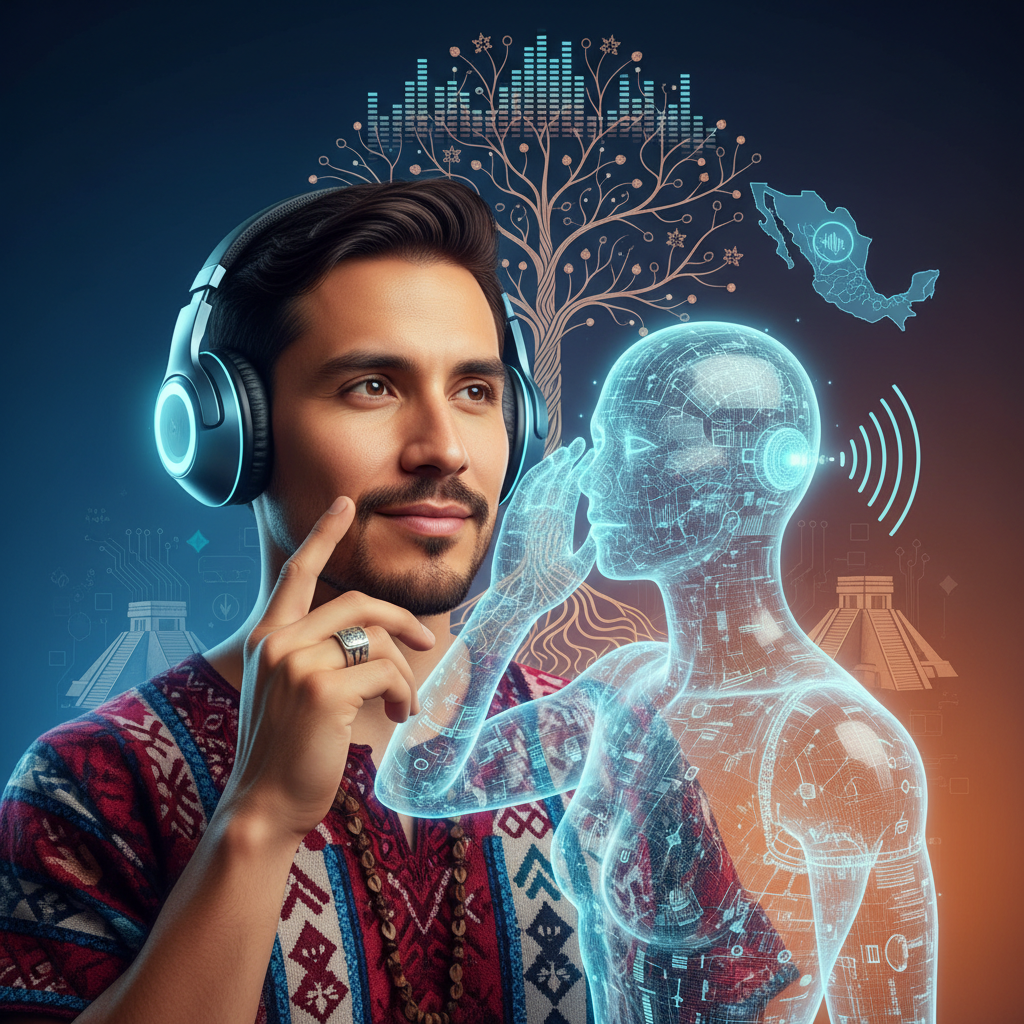

Imagine this: it is a Friday night in Mexico City, the kind of evening where the air thrums with possibility. My friend, Sofia, a brilliant graphic designer, is getting ready for a night out. She is not scrolling endlessly through playlists anymore. Instead, she is chatting with her Spotify AI DJ, asking it for something that feels like a cumbia with a modern twist, maybe a little reggaeton fusion, but with a vibe that is perfect for pre-drinks. And just like that, the AI delivers, pulling up a track by a lesser-known artist from Monterrey, a song Sofia never knew existed but instantly loves. This is not just music discovery; this is a personalized, almost intimate interaction, and it is happening millions of times a day, right here in Mexico and across the globe. This Mexican startup just might be onto something bigger than music, it is about connection.
We are living through a fascinating psychological experiment, my friends, one orchestrated by the algorithms that now whisper directly into our ears. Spotify's AI DJ and its hyper-personalized recommendations are not just changing how we listen to music; they are subtly, yet profoundly, reshaping our cognitive processes, our emotional landscapes, and even our social interactions. The question is, what are the good, the bad, and the truly unexpected consequences of having an artificial intelligence curate our sonic world?
For years, music discovery was a social act. You would hear a song at a fiesta, your cousin would burn you a CD, or you would stumble upon a new artist at a local tianguis. Now, a significant portion of that serendipity is being outsourced to an algorithm. Researchers are beginning to explore the cognitive effects of this shift. A recent study, published in the Journal of Consumer Psychology, found that while AI-driven personalization significantly increases user satisfaction and engagement, it also correlates with a decrease in active, effortful exploration of new genres or artists outside of the recommended bubble. "Users report feeling delighted and understood by the AI, but there is a subtle erosion of the 'hunter-gatherer' instinct for music," explains Dr. Elena Rojas, a cognitive psychologist at Unam, Mexico's National Autonomous University. "The AI is so good at predicting what you like that it can inadvertently narrow your musical universe, even as it expands within that niche." This is not necessarily a bad thing, but it is a change worth observing.
Think about it: the AI DJ learns your preferences, your moods, even the time of day you prefer certain beats. It is a master of pattern recognition. It can identify the subtle rhythmic patterns in a son jarocho and blend them with the electronic pulse of a global pop hit, creating a unique sonic tapestry tailored just for you. This hyper-efficiency in delivering pleasure can lead to what psychologists call "cognitive offloading." Our brains, being incredibly efficient machines, tend to delegate tasks that can be done by external tools. When it comes to music discovery, the AI DJ becomes that external tool. We spend less mental energy sifting through options, and more time simply consuming. While this frees up cognitive resources for other tasks, it could also diminish our capacity for independent exploration and critical evaluation of new sounds. We become passive recipients rather than active participants in our musical journey. This is a topic that Wired has explored in broader contexts of AI interaction, and it is fascinating to see it play out in our daily lives.
From an expert psychological perspective, the interaction with an AI DJ taps into several core human needs. There is the need for novelty, satisfied by the AI's ability to unearth obscure tracks that perfectly fit your taste. There is the need for belonging, as the AI creates a sense of being understood, almost like a friend who just gets your musical soul. "The AI DJ is a master of empathetic mimicry," says Dr. Ricardo Peña, a social psychologist and consultant for several tech firms in Guadalajara. "It is designed to make you feel heard and catered to, which can be incredibly reinforcing. It creates a feedback loop of positive reinforcement, where the more you interact, the better it understands you, and the more satisfying the recommendations become." He notes that this can foster a sense of comfort and even dependence. "We are seeing a new form of parasocial relationship emerge, not with a celebrity, but with an algorithm." The nearshoring revolution is real, and it is not just about manufacturing, it is about how we interact with technology on a deeply personal level.
But what about the broader societal implications? If our musical tastes become increasingly curated by algorithms, what happens to shared cultural experiences? Will the next big canción del verano still emerge organically, or will it be algorithmically propelled? There is a concern among some cultural critics that hyper-personalization could lead to cultural fragmentation, where individuals exist in increasingly distinct musical echo chambers. If everyone is listening to their own perfectly tailored soundtrack, will we lose common ground for shared musical appreciation and conversation? On the other hand, the AI DJ can also be a bridge, introducing listeners to genres they might never have encountered otherwise, from indigenous Mexican folk music to experimental electronic sounds from Korea. It is a double-edged sword, a doble filo.
Consider the economic impact too. For independent artists, especially in vibrant music scenes like those in Oaxaca or Veracruz, the AI DJ presents both a challenge and an opportunity. Getting discovered by an algorithm can mean global reach, bypassing traditional gatekeepers. However, it also means competing within an opaque system where algorithmic favor can be elusive. "This Mexican startup just launched a platform to help independent artists optimize their music for AI discovery, it is a whole new game," says Mariana Reyes, a music industry analyst based in Mexico City. "The artists who understand how to feed the beast, so to speak, will thrive." This is a critical development for the burgeoning creative economy here, and it is something TechCrunch often highlights in its coverage of global tech trends.
So, what is the practical advice for us, the listeners, navigating this brave new world of algorithmic soundscapes? First, embrace the magic, but always maintain a healthy curiosity. Let your AI DJ introduce you to new sounds, but do not stop there. Occasionally, step outside your personalized bubble. Seek out music through traditional means: ask friends for recommendations, explore local radio stations, or attend live performances. Second, be mindful of the cognitive offloading. Engage actively with your music; do not just let it wash over you. Try to understand why you like a particular song recommended by the AI. This active engagement helps keep your critical faculties sharp. Third, remember that your AI DJ is a tool, not a guru. It is there to serve you, to enhance your experience, but the ultimate arbiter of taste and meaning remains you. Finally, support the artists, especially the local ones. If the AI introduces you to a new favorite, seek out their other work, buy their merchandise, or go to their concerts. Let the human connection flourish alongside the algorithmic one. Mexico City is on fire, in the best way, with these kinds of innovations and cultural dialogues.
The future of music discovery is here, and it is a fascinating blend of human intuition and artificial intelligence. It is a journey we are all on together, one song at a time. And as we dance to the rhythm of these new algorithms, let us remember to keep our minds open, our ears curious, and our hearts connected to the vibrant, unpredictable pulse of human creativity. It is truly an exciting time to be alive, and to be listening.