
The air in Mexico City, even with its constant hum, feels heavy these days, not just with the usual traffic and street vendors, but with an unspoken tension. It is a tension that stretches across borders, from the bustling markets of La Merced to the gleaming towers of Silicon Valley. We are talking about the AI copyright war, a battle being fought in courtrooms and corporate boardrooms, but one that has profound implications for every artist, author, and musician, especially here in Mexico and across Latin America.
For too long, the narrative around AI has been dominated by voices from the Global North, by the tech giants who build these powerful systems. But let me tell you, Mexico's AI story is not being told, until now. We need to understand that when artists in New York or Paris sue OpenAI or Stability AI for using their work without permission, it is not just their fight. It is our fight too. It is the fight for the future of our culture, our heritage, and the livelihoods of creators who pour their souls into their craft.
Consider the recent flurry of lawsuits. Authors like Sarah Silverman and the Authors Guild have taken on OpenAI and Google, alleging that their large language models, like GPT and Gemini, were trained on copyrighted books without consent or compensation. Musicians and record labels are also stepping into the ring, accusing companies of using their songs to train AI models that can then generate new music in their style. The stakes are incredibly high, with billions of dollars on the table and the very definition of creativity being challenged. It is a modern-day David versus Goliath, but this time, Goliath has an army of algorithms and an endless appetite for data.
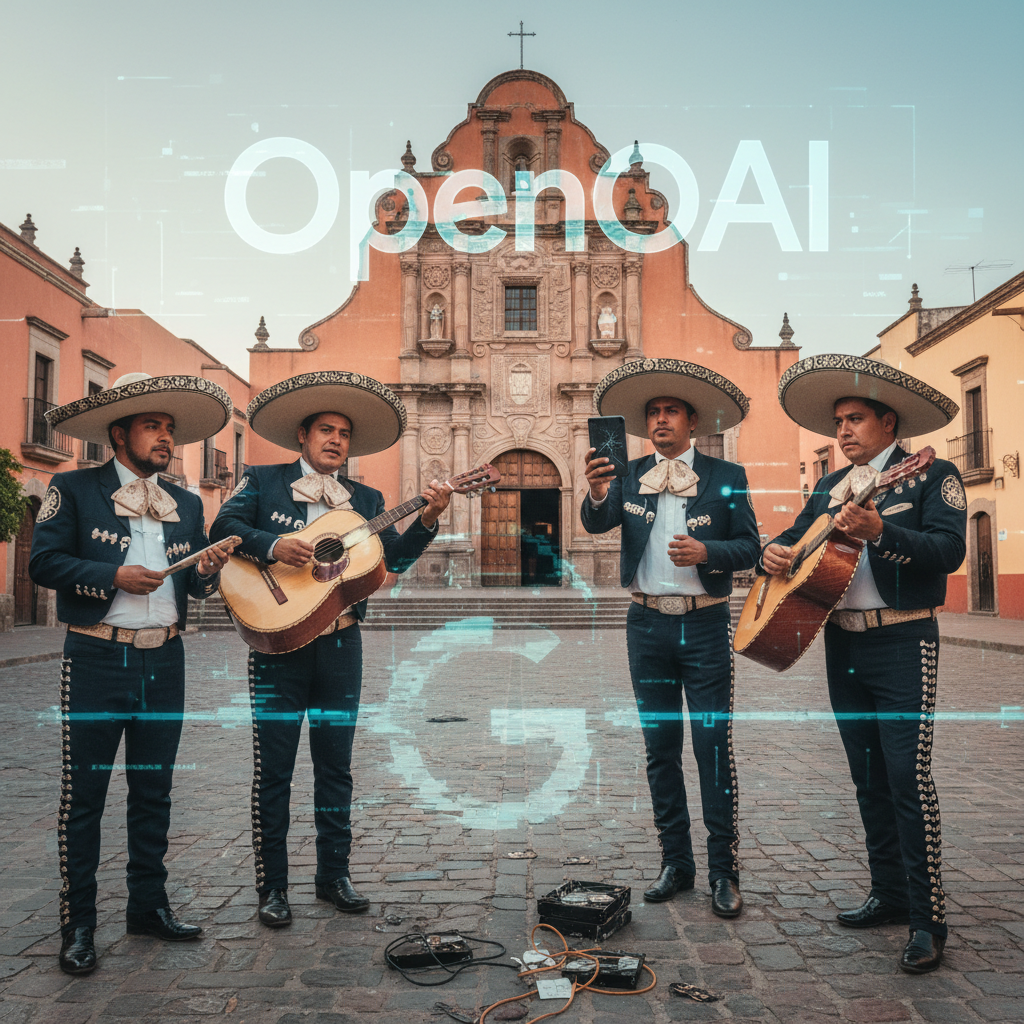
Here in Mexico, our cultural output is immense and incredibly rich. From the intricate patterns of Indigenous textiles to the soulful melodies of mariachi music, from the vibrant murals of our great artists to the magical realism of our literature, our creative spirit is our national treasure. What happens when an AI model, trained on countless images of Frida Kahlo's paintings or the lyrics of José Alfredo Jiménez, starts generating 'new' art or songs that mimic their style, potentially devaluing the originals and robbing future generations of artists of their unique voice? This is not a hypothetical question; it is a terrifying reality we are already facing.
“The current legal frameworks were simply not designed for an era where machines can ingest and reproduce human creativity at this scale,” says Dr. Elena Rojas, a leading intellectual property lawyer at the National Autonomous University of Mexico, Unam. “We are seeing a fundamental clash between innovation and protection. The tech companies argue fair use, but for many creators, it feels like theft, pure and simple. We need global solutions, but also strong national protections that reflect our unique cultural values.” Her words resonate deeply, reminding us that laws must evolve, and quickly.
The argument from companies like Meta, with its Llama models, and Microsoft, with its Copilot tools, is often that their AI systems are merely learning, much like a human artist learns by studying other works. They claim that the output is transformative, not derivative. But tell that to a struggling musician in Guadalajara whose unique sound is replicated by an AI without a single peso of royalties. Tell that to a writer in Oaxaca whose stories are rehashed into bland, algorithm-generated content. The nuance of 'learning' versus 'copying' becomes a very thin line when it affects someone's ability to put food on the table.
We are not talking about stopping progress. La tecnología es para todos, yes, but it must be ethical, and it must be fair. The promise of AI is immense, but its development cannot come at the cost of human dignity and creative ownership. A recent report by the Mexican Institute of Copyright (imda) indicated that over 60% of Mexican artists surveyed expressed significant concern about AI using their work without consent, and nearly 40% reported already seeing AI-generated content that closely mimicked their style or themes. These are not just numbers; these are the fears and experiences of real people.
“The economic impact on developing nations, where artists often struggle for fair compensation even in traditional markets, could be devastating,” explains Ricardo Sánchez, director of the Mexican National Institute of Fine Arts and Literature. “If AI models are allowed to freely exploit our cultural heritage, it will exacerbate existing inequalities and stifle new creative expression. We risk a future where only the tech giants profit from the richness of global art.” His concern is palpable, and rightly so.
What are the solutions? Some propose licensing models, where AI companies pay a collective fee to rights holders for the use of their data. Others advocate for stricter opt-out mechanisms, giving creators more control over whether their work is used for training. There is also the call for transparent data provenance, so we know exactly what data went into training an AI model. OpenAI recently launched a 'copyright shield' for enterprise users, promising to cover legal costs if they are sued for AI-generated content, but this does little to address the fundamental issue of original creators being exploited.
The global nature of AI means that these issues cannot be solved in isolation. We need international cooperation, perhaps even a new global treaty on AI and intellectual property. The World Intellectual Property Organization, Wipo, has been discussing these issues, but progress is slow. Meanwhile, the algorithms continue to churn, ingesting more and more of our world's creative output. According to TechCrunch, venture capital funding in generative AI alone reached over $20 billion in 2023, a staggering sum that highlights the immense economic power behind these technologies.
We must demand that our governments, our cultural institutions, and our legal systems step up. We need to ensure that the voices of artists, authors, and musicians, especially those from regions like Latin America, are not drowned out by the algorithmic roar. We need to champion policies that protect creative ownership and ensure fair compensation. This is not just about money; it is about preserving the very essence of what makes us human: our ability to create, to tell stories, and to connect through art. This affects every family in Latin America, because our culture is part of our identity, part of our soul.
As we look to the future, we must remember that technology is a tool. It can be used to uplift and empower, or it can be used to exploit and diminish. The choice is ours, and we must choose wisely, with justice and equity as our guiding stars. We cannot allow Silicon Valley's algorithms to silence our mariachis, or any other voice that adds to the beautiful symphony of human creation. We must fight for a future where AI serves humanity, not the other way around. The battle for copyright in the age of AI is a battle for our collective future, and it is one we cannot afford to lose. For more insights into the societal impact of AI, I often look to Wired's AI coverage. We must continue to ask the hard questions and demand accountability from those shaping our digital world, as explored in articles like NVIDIA's Liability Shield [blocked] which touches on accountability in the tech world. The conversation is just beginning, and we must ensure our voices are heard, loud and clear.