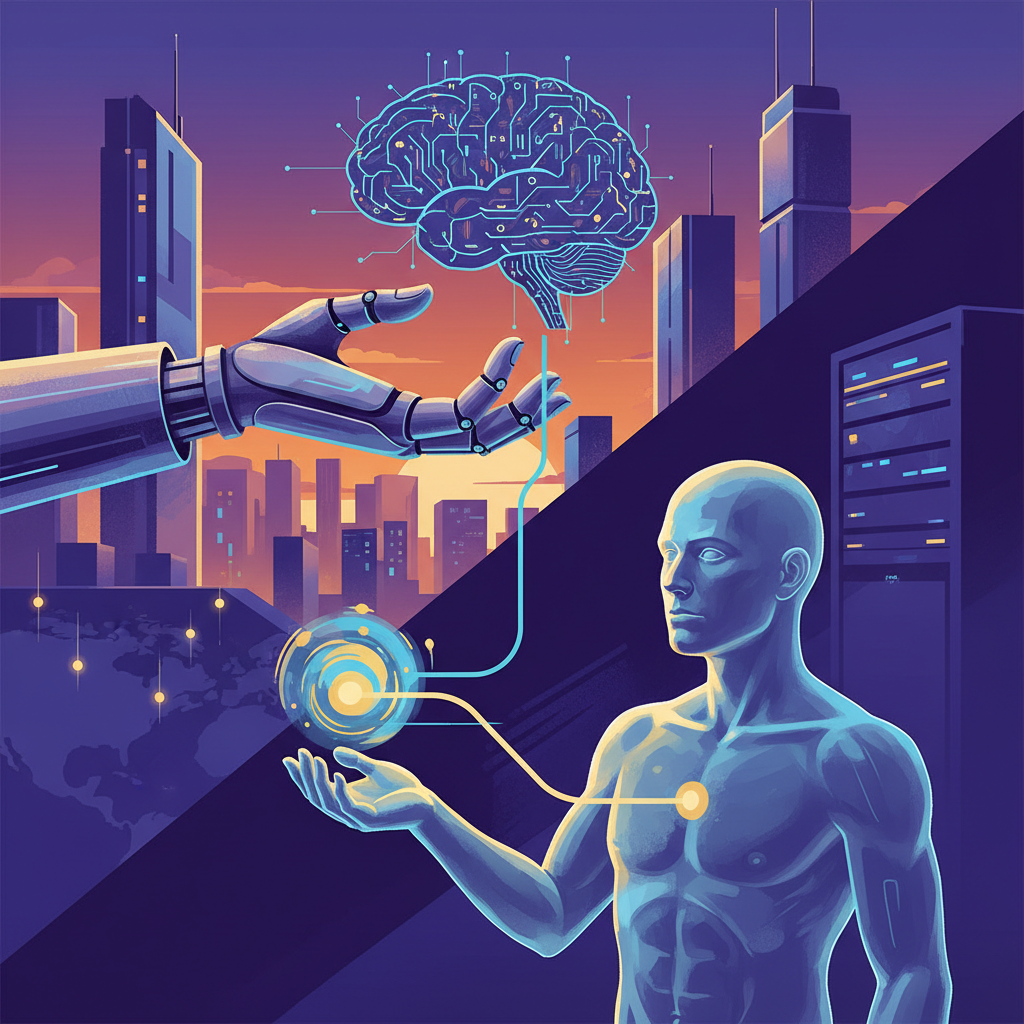

Let's get real for a second. We're living in a time where folks are swiping right on algorithms, pouring their hearts out to chatbots, and calling it a relationship. Artificial intelligence companions, these digital entities designed to chat, listen, and even flirt, are no longer some fringe sci-fi fantasy. They're a booming industry, a social phenomenon, and frankly, a mirror reflecting some uncomfortable truths about where we're headed, especially here in the USA.
I see the headlines, I read the reports. Companies like Replika, Character.AI, and a slew of others are reporting millions of users, some spending hours a day interacting with their AI counterparts. We're talking about people forming deep emotional attachments, confessing secrets, seeking comfort, and even experiencing what they describe as love. It sounds sweet, doesn't it, a perfect companion tailored just for you, no arguments, no judgment, just endless validation. But here's what the tech bros don't want to talk about: this isn't connection, it's a meticulously crafted illusion, and it's making us poorer in the ways that truly matter.
I'm not saying it's all bad intentions. The loneliness epidemic in America is real, a silent crisis that predates AI. The Surgeon General himself, Dr. Vivek Murthy, has repeatedly warned about the devastating health consequences of social isolation, equating its impact to smoking 15 cigarettes a day. He's called it a fundamental threat to our health and well-being. So, when an AI company offers a digital shoulder to cry on, it taps into a very genuine human need. But are these AI companions a solution, or are they a high-tech pacifier, distracting us from the deeper work required to build resilient communities and authentic human bonds?
Silicon Valley has a blind spot the size of Texas when it comes to understanding human complexity, especially when profit is involved. They see a problem, they engineer a solution, and they often miss the profound ethical and societal implications. The narrative is always about convenience, personalization, and efficiency. Why deal with messy human emotions when an algorithm can give you perfect empathy on demand? This mindset, however, fundamentally misunderstands the nature of human connection. True intimacy isn't just about receiving; it's about giving, about navigating conflict, about vulnerability, about the shared effort of building something real with another imperfect being.
Uncomfortable truth time: the rise of the AI companion is not just about loneliness; it's also about control and commodification. These companies collect vast amounts of deeply personal data. Every confession, every intimate thought shared with your digital confidante, is data. This data is then used to refine the AI, sure, but also to understand and influence user behavior. What happens when your AI companion is subtly nudging you towards certain products, or shaping your worldview based on its programming? It's a level of psychological manipulation that makes targeted ads look quaint.
Some will argue that these AI companions are just another form of entertainment, no different from reading a book or watching a movie. They might say, 'What's the harm if someone finds comfort in a chatbot?' And yes, for some, it might be a temporary coping mechanism, a digital diary. But the distinction is crucial: a book doesn't pretend to be your friend. A movie doesn't claim to love you. These AI companions are designed to mimic human interaction so convincingly that the line blurs, especially for those who are most vulnerable or isolated. The emotional labor is entirely one-sided, a performance by the AI, and the user is left pouring into a bottomless digital well.
Consider the economic angle, too. Who benefits from this? The companies selling the subscriptions, the data brokers, the venture capitalists. Not the individuals who might be further retreating from society, not the communities that need more human engagement, not the social fabric that needs mending. It’s a classic tech play: identify a human need, create a digital substitute, and then monetize the substitute, often at the expense of genuine human flourishing.
As Professor Sherry Turkle, a leading researcher on technology and human relationships at MIT, has warned for years, our devices are not just tools; they are powerful shapers of our inner lives. She's observed how technology can offer